Disclaimer: Information found on CryptoreNews is those of writers quoted. It does not represent the opinions of CryptoreNews on whether to sell, buy or hold any investments. You are advised to conduct your own research before making any investment decisions. Use provided information at your own risk.
CryptoreNews covers fintech, blockchain and Bitcoin bringing you the latest crypto news and analyses on the future of money.


For the past 17 days, Bitcoin (BTC) has traded within a narrow 8.5% range between $27,250 and $29,550, causing the 40-day volatility metric to drop below 40%. This trend is not limited to cryptocurrencies; the S&P 500 index’s historical volatility has reached 17%, its lowest level since December 2021.
Will $28,000 become the new resistance level? Recent Bitcoin futures and options data suggest otherwise. Nevertheless, macroeconomic conditions remain the primary driver of price fluctuations in risk markets in the near to medium term.
BTC Price Flattens as Investors Lose Risk Appetite
Several factors could explain the relatively low price oscillations in risk markets, including recession expectations, investor reluctance to place new bets until the U.S. Federal Reserve ends its rate hikes, or increased demand for fixed-income trades.
The challenge is that no one can definitively prove what is causing investors to restrict their risk appetite and drive Bitcoin’s price sideways. Many fear that commercial real estate is becoming a growing concern, which could trigger major turbulence ahead—a view shared by multi-billionaire fund manager Warren Buffett.
While some believe that the U.S. debt ceiling discussion and the banking crisis could further weaken the U.S. dollar, Buffett does not foresee viable alternatives. The finance mogul is a long-term critic of gold, as his investment thesis prioritizes yield-providing assets.
The debt ceiling drama has prompted Treasury Secretary Janet Yellen to warn that a “steep economic downturn” would follow if Congress fails to act in the coming weeks.
On one hand, the government faces pressure to sustain economic activity and contain the banking crisis. Ultimately, increasing the debt limit will add liquidity to the markets, potentially triggering further inflation.
This complex environment of inflation risks, an economic downturn, and a weakening U.S. dollar may have caused investors to lose interest in risk assets and concentrate their bets on fixed-income trades, as interest rates have moved above 5% annually.
For Bitcoin, an alarming sign would be a negative futures contract premium or increased costs for hedging using options. Therefore, investors should closely track these BTC derivatives metrics.
Bitcoin Futures Display Weak Demand from Longs
Bitcoin quarterly futures are popular among whales and arbitrage desks. However, these fixed-month contracts typically trade at a slight premium to spot markets, indicating that sellers demand more money to delay settlement.
Related Posts
Consequently, BTC futures contracts in healthy markets should trade at a 5% to 10% annualized premium—a situation known as contango, which is not unique to crypto markets.
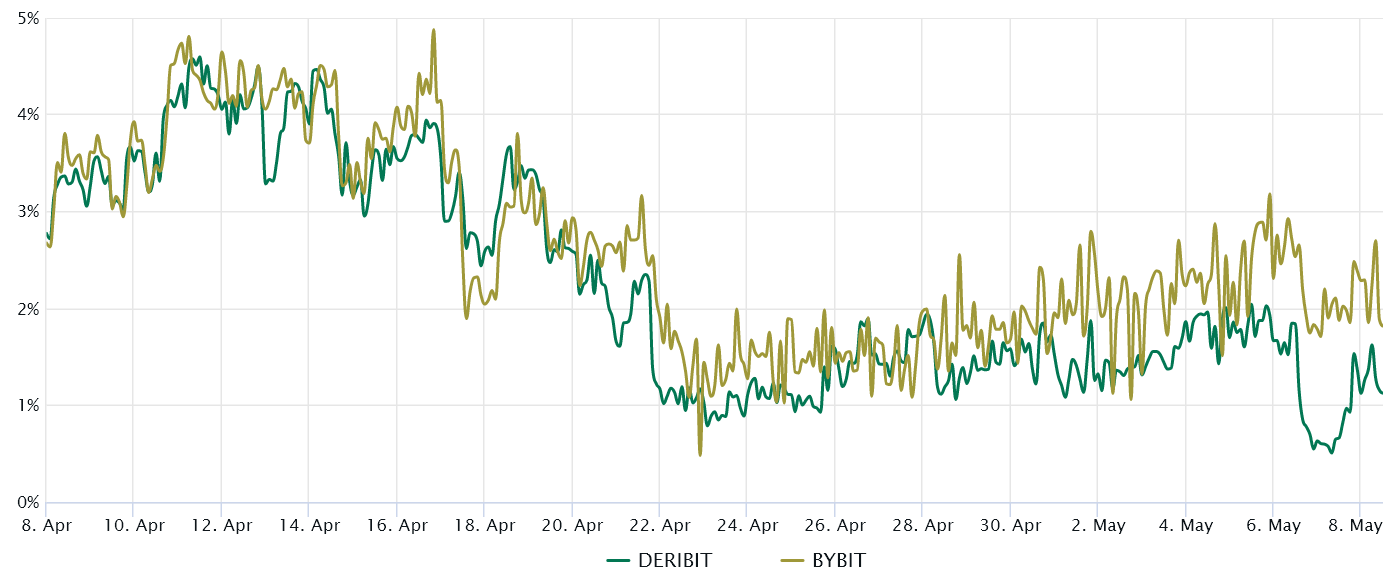
Bitcoin traders have been extremely cautious in the past two weeks. Even during the recent rally toward $29,850 on May 6, there was no surge in demand for leveraged longs. Moreover, the subsequent 6.8% correction down to $27,800 brought the BTC futures premium to its lowest level in two months at 1.5%.
Bitcoin Options Risk Metric Stands Neutral
Traders should also analyze options markets to determine whether the recent correction has made investors more optimistic. The 25% delta skew is a telling indicator when arbitrage desks and market makers overcharge for upside or downside protection.
In short, if traders anticipate a Bitcoin price drop, the skew metric will rise above 7%, while phases of excitement tend to feature a negative 7% skew.
Related: ‘Bitcoin is not under attack:’ BTC maxis allay fears of a DoS offensive
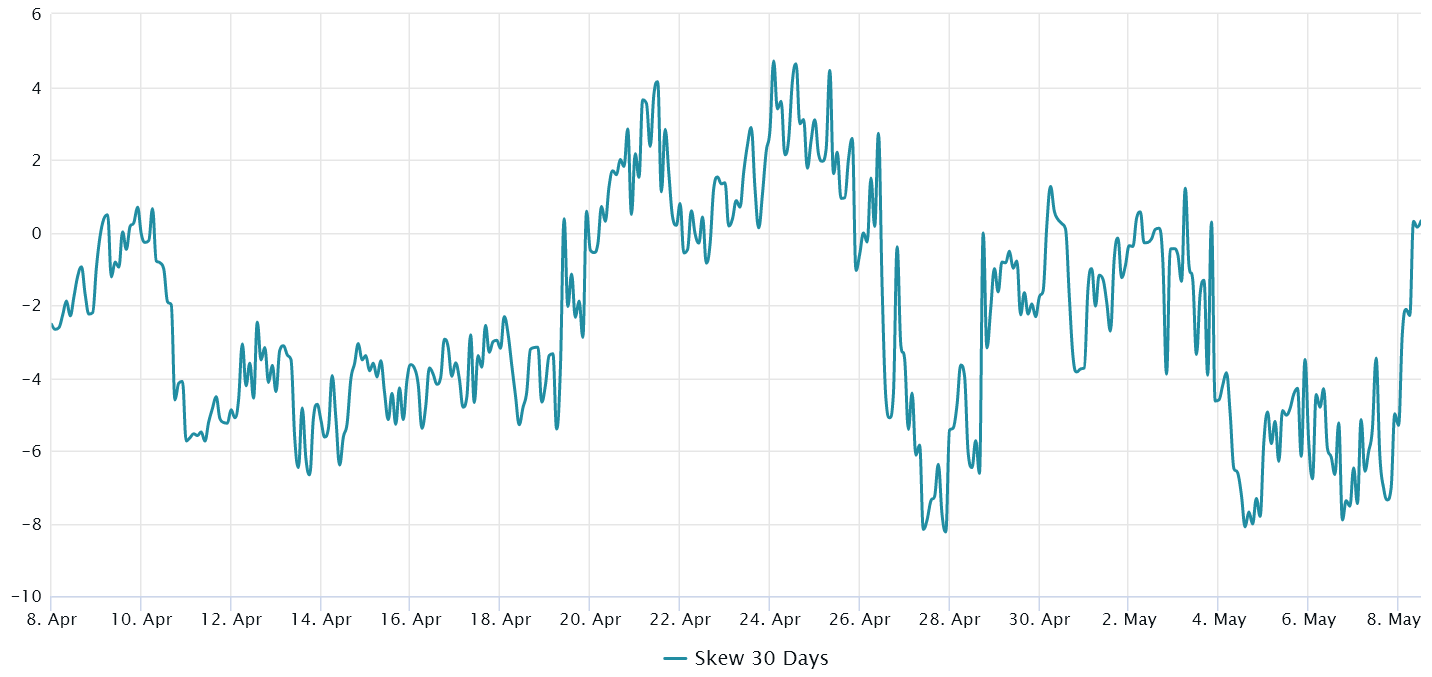
As shown above, the options delta 25% skew recently flirted with excessive optimism. On May 7, protective put options traded at a 7% discount relative to similar neutral-to-bullish call options.
However, the trend quickly reverted as the Bitcoin price tested levels below $28,000. Currently, this indicates a balanced risk appetite according to BTC options pricing, as the 25% delta skew indicator stands near 0%.
Bitcoin options and futures markets suggest that professional traders are less confident, favoring sideways trading. Thus, traders should not become bearish due to weakening derivatives indicators.
In other words, if there were enough conviction that $28,000 would become resistance, one would expect a much higher appetite for risk-averse put options and a negative BTC futures premium, or “backwardation.”
This article does not contain investment advice or recommendations. Every investment and trading move involves risk, and readers should conduct their own research when making a decision.
