Disclaimer: Information found on CryptoreNews is those of writers quoted. It does not represent the opinions of CryptoreNews on whether to sell, buy or hold any investments. You are advised to conduct your own research before making any investment decisions. Use provided information at your own risk.
CryptoreNews covers fintech, blockchain and Bitcoin bringing you the latest crypto news and analyses on the future of money.

Crypto Insights: The Temporary Nature of Bitcoin’s Quantum Concerns Similar to Climate Anxieties

In this week’s Crypto Long & Short Newsletter, Martin Gaspar discusses how bitcoin aims to address quantum concerns, reminiscent of previous climate controversies.
 (Jacob Postuma/ Unsplash+)
What to know:
You’re reading Crypto Long & Short, our weekly newsletter offering insights, news, and analysis for the professional investor. Sign up here to receive it in your inbox every Wednesday.
Welcome to our institutional newsletter, Crypto Long & Short. This week:
- Martin Gaspar discusses how bitcoin aims to address quantum fears, reminiscent of past climate controversies
- Key headlines institutions should monitor by Francisco Rodrigues
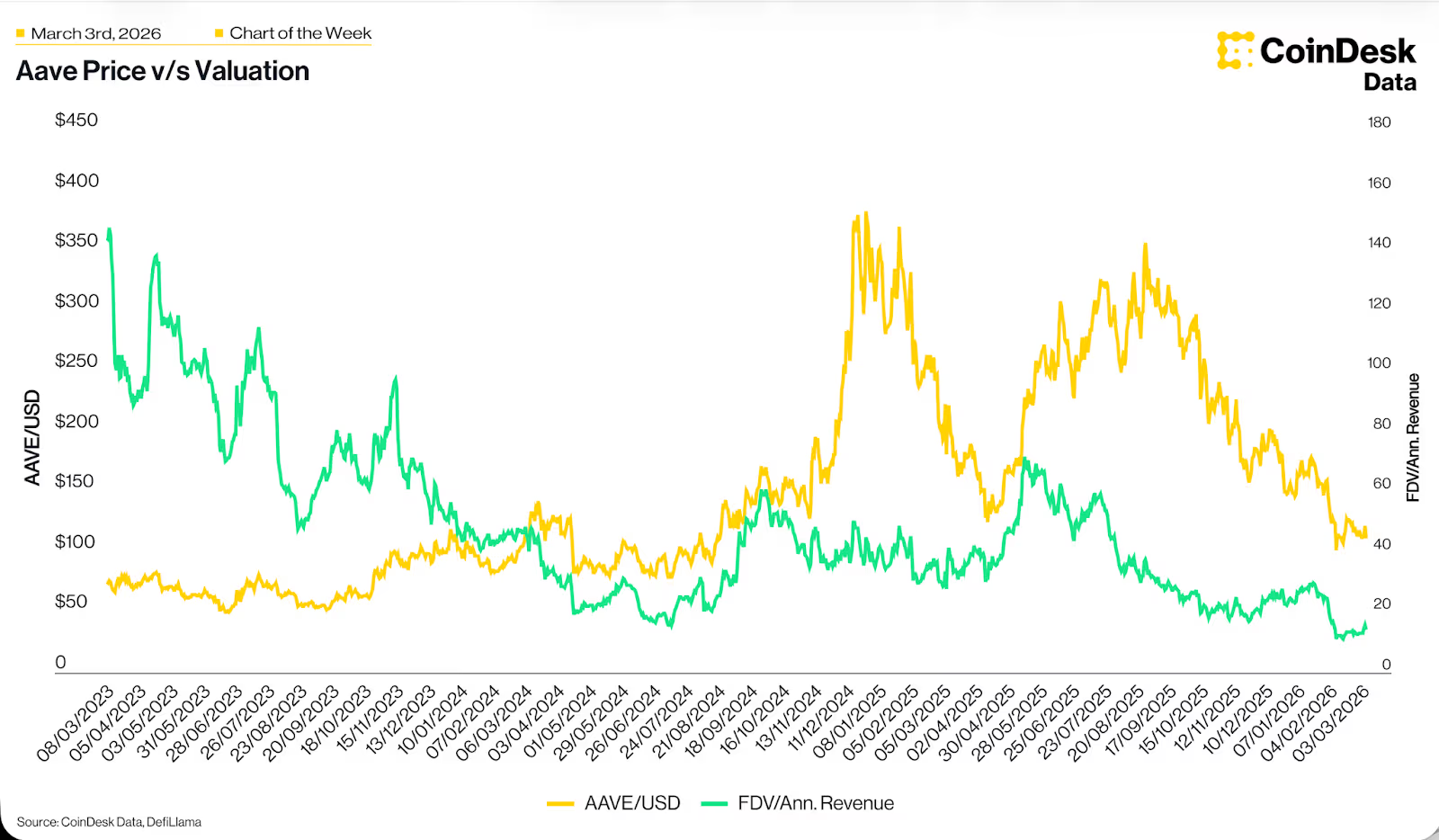
- Aave’s revenue multiples reach 2024 lows despite price increases in Chart of the Week
Thank you for being with us!
-Alexandra Levis
Expert Insights
Why bitcoin’s quantum fears will fade like the climate panic
By Martin Gaspar, senior crypto market strategist, FalconX
Quantum has emerged as a significant theme in crypto over the last few months, partly due to advances in technology and also as investors search for possible reasons for the stagnation of crypto prices after October. Quantum risk may appear as a critical threat to bitcoin due to the possibility of malicious entities accessing legacy accounts such as Satoshi’s. Nonetheless, a better understanding of the threat and a growing industry focus on solutions are steering toward an optimistic outcome.
There are notable similarities to the anxieties regarding the energy consumption and climate effects of Bitcoin’s Proof of Work (PoW) mining that captured headlines in 2021. Those concerns also felt critical, as the headline risk rendered BTC socially unacceptable. Even though industry insiders recognized climate concerns were misplaced (relative to other sectors, such as technology’s data centers, BTC’s energy usage is low), fears persisted, culminating when Tesla ceased accepting BTC as a payment option due to climate risk. At that time, Elon Musk’s support for BTC was a significant influence on market sentiment, so this decision surprised many. If a forward-thinking figure like Elon deemed the issue serious enough to withdraw his backing of BTC, more conservative groups might attempt to ban it or otherwise hinder BTC’s adoption. From an investor perspective, why would one invest in an asset with such uncertainty? This question resonates today and is particularly relevant as declining crypto prices affect sentiment.
The positive aspect is that the industry can navigate this challenge. In 2021, it required industry leaders to collaborate with BTC miners to publish data on the renewable sources of their energy usage. While it was widely known within the crypto community that BTC miners naturally pursue the lowest energy costs, often from renewable sources, compiling concrete data helped sway skeptics. The industry was able to restore credibility to help alleviate concerns.
Related Posts
We are witnessing similar dynamics as industry veterans unite to disseminate information regarding quantum risk. Coinbase recently formed a quantum computing and blockchain working group that will help provide recommendations for industry participants to safeguard against quantum threats and analyze quantum advancements. Additionally, on February 5, as BTC sharply declined towards $60,000, Strategy announced a quantum security program during its earnings call, which may have mitigated further sell-offs. This initiative aims to collaborate with the “global cyber, crypto, and bitcoin security community” to aid Bitcoin’s quantum transition.
Simultaneously, various startups are developing post-quantum technologies for blockchains, such as Project Eleven and BTQ Technologies. These advancements suggest that the crypto community is swiftly advancing towards solutions, which should help alleviate immediate concerns.
BTC stands to progress through its proactive initiatives to counter quantum anxiety. Once the industry presents clear data and a credible strategy, this issue will resolve, much like the PoW climate concerns from previous years.
Headlines of the Week
Francisco Rodrigues
Geopolitical uncertainties have demonstrated once more this week that liquidity in the cryptocurrency market prompts investors to exit as soon as possible. The renewed conflict in the Middle East has resulted in significant outflows from Iran, while in the U.S., investors have also been retreating. However, builders seem to remain unaffected.
- Over $9 billion has exited bitcoin and ether ETFs in four months: U.S.-listed spot bitcoin and ether exchange-traded funds have experienced record outflows in the last four months, with investors withdrawing $6.39 billion from BTC funds and $2.76 billion from ether funds.
- Iranian crypto outflows surge 700% minutes after U.S.-Israeli airstrikes: Blockchain analytics firm Elliptic reported that crypto outflows from Iran’s largest cryptocurrency exchange Nobitex skyrocketed within moments following the initial U.S.-Israeli airstrikes on the country.
- Ethereum Foundation reveals most ambitious roadmap in years, aiming for finality in seconds by 2029: The Foundation’s long-term strategy outlines seven hard forks, focusing on performance, post-quantum cryptography, and privacy enhancements.
- Morgan Stanley seeks Bank Charter to Custody Crypto Assets: The firm has applied to the Office of the Comptroller of the Currency (OCC) for a national trust bank charter to provide crypto trading, custody, and staking services for U.S. clients.
- Indiana plans to include bitcoin in its public retirement plans: This decision places Indiana among at least 21 states investing in or considering cryptocurrencies for public funds.
Chart of the Week
Aave’s revenue multiples hit 2024 lows despite higher prices
Aave is currently undergoing a fundamental valuation reset: while the token price remains above its 2024 lows, the FDV/annual revenue ratio has plummeted back to those levels (<20x), indicating that the protocol is generating significantly more revenue in relation to its market cap than during the speculative peaks of 2025. This divergence implies that the market is heavily discounting Aave’s current earnings potential, likely factoring in the execution risk following the narrow passage of the “Aave Will Win” proposal on March 1 and the high-profile departure of core developer BGD Labs.
Listen. Read. Watch. Engage.
- Listen: Dave LaValle, President of CoinDesk Data & Indices speaks with FinTech.TV about the recent market trends.
- Read: Stablecoin Market Dominance Surges As Digital Assets Trend Lower by CoinDesk Research.
- Watch: CoinDesk TV’s brief roundup of the day’s top news that you might have missed in the digital asset sector.
- Engage: Consensus Miami is gaining momentum. View the speakers and register today before prices increase!
Looking for more? Stay updated with the latest crypto news from coindesk.com and explore our extensive Data & Indices offerings by visiting coindesk.com/institutions.
Note: The opinions expressed in this column are those of the author and do not necessarily represent those of CoinDesk, Inc., CoinDesk Indices, or its owners and affiliates.
