Disclaimer: Information found on CryptoreNews is those of writers quoted. It does not represent the opinions of CryptoreNews on whether to sell, buy or hold any investments. You are advised to conduct your own research before making any investment decisions. Use provided information at your own risk.
CryptoreNews covers fintech, blockchain and Bitcoin bringing you the latest crypto news and analyses on the future of money.

Circle’s strong performance underscores USDC’s resilience, according to optimistic Wall Street analyst.

William Blair indicated that Circle’s recent surge is attributed to more than just macroeconomic influences, highlighting the resilience of USDC and the increasing acknowledgment of the company’s advantage in stablecoin infrastructure.
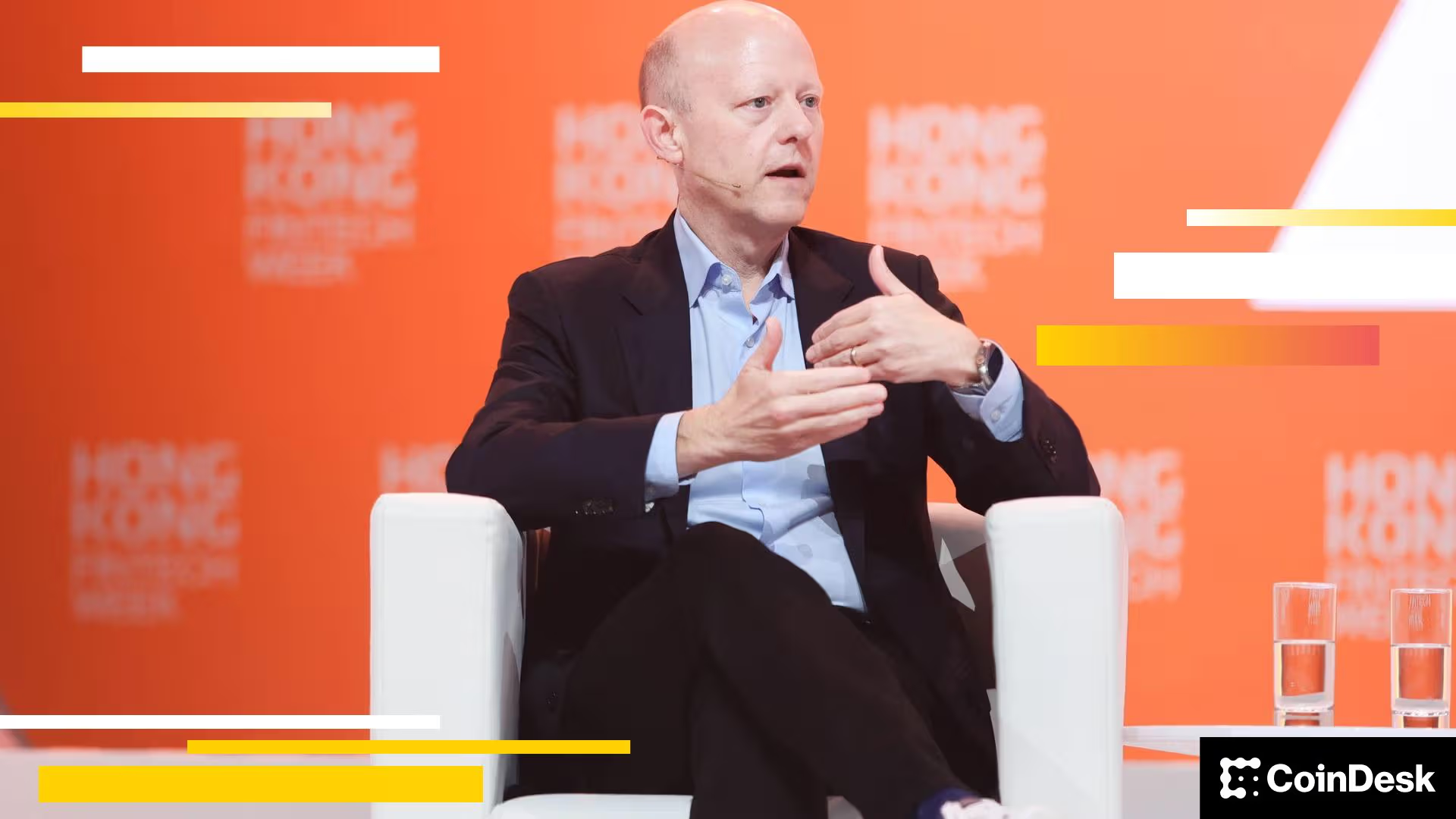 Jeremy Allaire, Co-Founder, Chairman and CEO, Circle. (HK Fintech Week, modified by CoinDesk))
What to know:
- William Blair stated that Circle’s superior performance is indicative of the stability of USDC‘s market capitalization and a growing appreciation for its infrastructure business.
- The bank suggested that stablecoins are set to revolutionize cross-border payments, with USDC positioned as a potential standard.
- Circle’s payments network and infrastructure framework may help mitigate fragmentation as additional companies consider launching stablecoins.
Circle (CRCL) has recently surpassed other crypto-related equities, a trend that investment bank William Blair attributes to more than just changing macroeconomic circumstances.
“It is easy to attribute the recent strength to rising oil prices and potentially a more hawkish Fed,” noted analysts Andrew Jeffrey and Adib Choudhury in a Thursday client note.
“However, we believe there are additional factors involved, including the resilience of USDC’s market cap despite a downturn in the cryptocurrency market and an increasing recognition of Circle’s economic model and leadership in stablecoin infrastructure,” the analysts remarked.
The bank reaffirmed its outperform rating for the stock, contending that the rally, which has seen shares rise approximately 126% since a February low, indicates a more favorable sentiment toward stablecoin infrastructure rather than short-lived market fluctuations.
Related Posts
At the time of publication, shares were up by 1.2%, trading near $114.20.
Crypto-related equities have generally mirrored, and often intensified, the recent decline in digital assets, with shares of exchanges, miners, and crypto-treasury firms dropping as bitcoin fell from its late-2025 peaks.
Stocks like Coinbase (COIN) and other firms exposed to cryptocurrency have typically moved in sync with digital asset prices, reflecting the sector’s close ties to trading volumes and token valuations, and in some instances have declined even more steeply than the underlying assets during market stress.
Japanese bank Mizuho indicated in a report last week that part of Circle’s rise could be linked to the recent spike in oil prices due to escalating tensions in the Middle East. Rising crude prices might renew inflation concerns, the bank stated, potentially suppressing expectations for interest rate cuts by the Federal Reserve.
William Blair analysts noted that investors had previously been overly pessimistic about Circle amid regulatory uncertainties and speculations regarding interest rate cuts. Currently, the firm observes signs that the market is starting to acknowledge the company’s fundamental premise: stablecoins could evolve into a crucial layer of global payments infrastructure.
USDC might emerge as one of a select few dominant standards in cross-border trade, highlighting its liquidity, first-mover advantage, and integration across crypto networks, according to the analysts.
The report also highlighted increasing activity within Circle’s payments and infrastructure network, including its stablecoin payments system, as evidence that the market for stablecoin-based settlement is beginning to take form.
While other businesses and tech platforms have suggested launching their own stablecoins, the report emphasized that Circle’s minting, cross-chain transfer, and payment orchestration infrastructure could offer a lasting competitive advantage as the sector evolves.
Read more: How the war in Iran and trader positioning could be behind the surge in Circle’s stock
