Disclaimer: Information found on CryptoreNews is those of writers quoted. It does not represent the opinions of CryptoreNews on whether to sell, buy or hold any investments. You are advised to conduct your own research before making any investment decisions. Use provided information at your own risk.
CryptoreNews covers fintech, blockchain and Bitcoin bringing you the latest crypto news and analyses on the future of money.

Circle surpasses BlackRock in tokenized Treasuries as market reaches unprecedented $11 billion high.

Circle’s USYC tokenized U.S. Treasury fund has reached $2.2 billion, exceeding BlackRock’s BUIDL fund as investors increasingly pursue onchain yield and collateral.
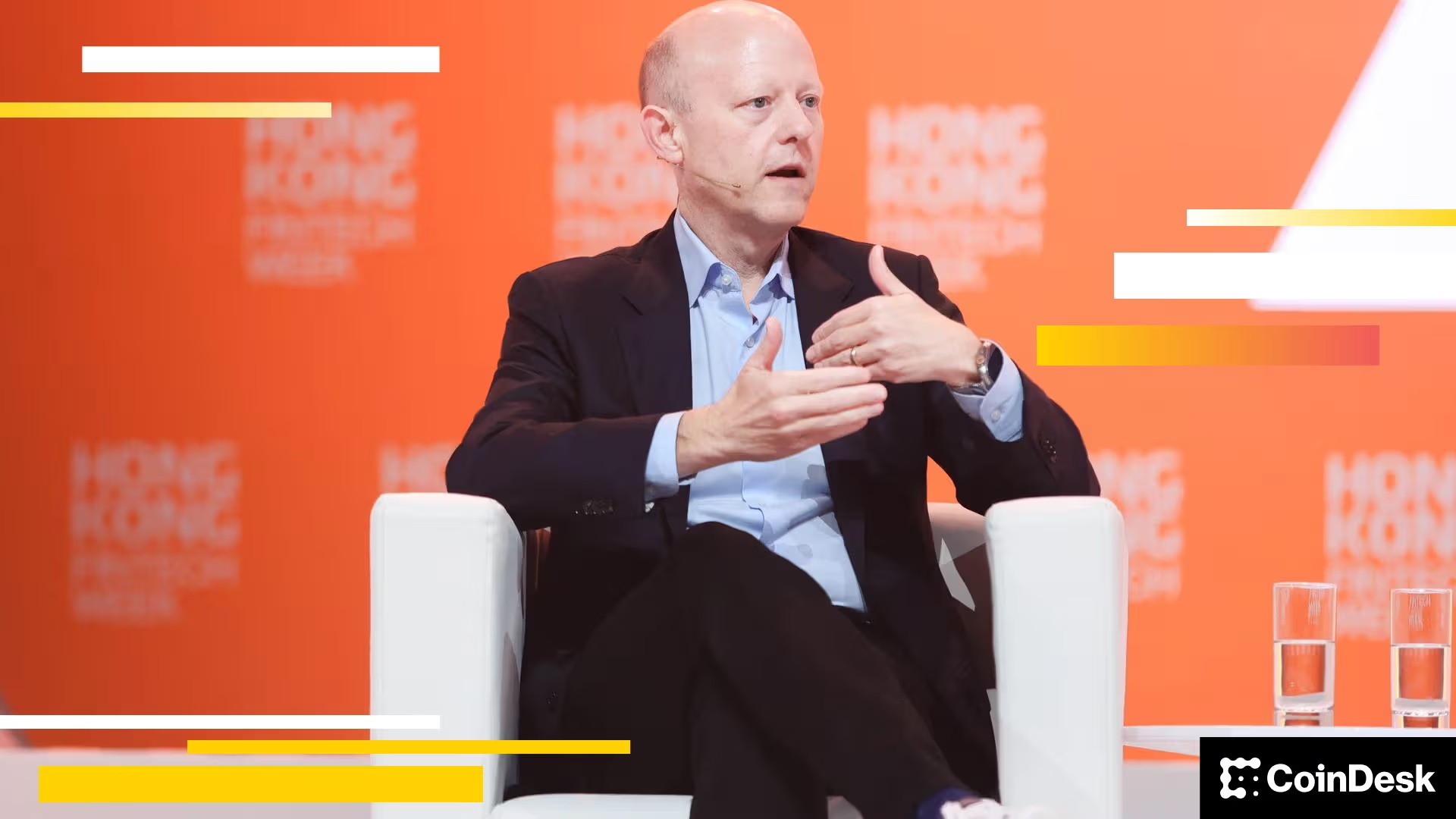 Jeremy Allaire, Co-Founder, Chairman and CEO, Circle Speaks at Hong Kong Fintech Week in 2024 (HK Fintech Week)
What to know:
- Circle’s USYC token has emerged as the largest tokenized U.S. Treasury offering, with approximately $2.2 billion in circulation, surpassing BlackRock’s BUIDL fund.
- A significant portion of USYC’s recent development is associated with its utilization on BNB Chain, where Binance has adopted the token for off-exchange collateral in institutional derivatives trading.
- The overall market for tokenized U.S. Treasuries has reached a new high of over $11 billion, reflecting a 27% increase this year, driven by investor interest in yield and a secure place to allocate capital during the crypto market slump.
The rapidly expanding market for tokenized U.S. Treasuries has identified a new frontrunner.
Circle (CRCL), primarily recognized as the issuer of the USDC (USDC) stablecoin, has positioned itself as the leading provider of tokenized Treasury access after its USYC token grew to approximately $2.2 billion in supply, based on data from RWA.xyz.
This expansion has propelled USYC ahead of BlackRock’s USD Institutional Digital Liquidity Fund (BUIDL) – which is issued in partnership with tokenization expert Securitize – that currently manages around $2 billion in assets. BUIDL’s market share has diminished from a peak of 46% in May to 18% as competition has intensified with the entry of new players.
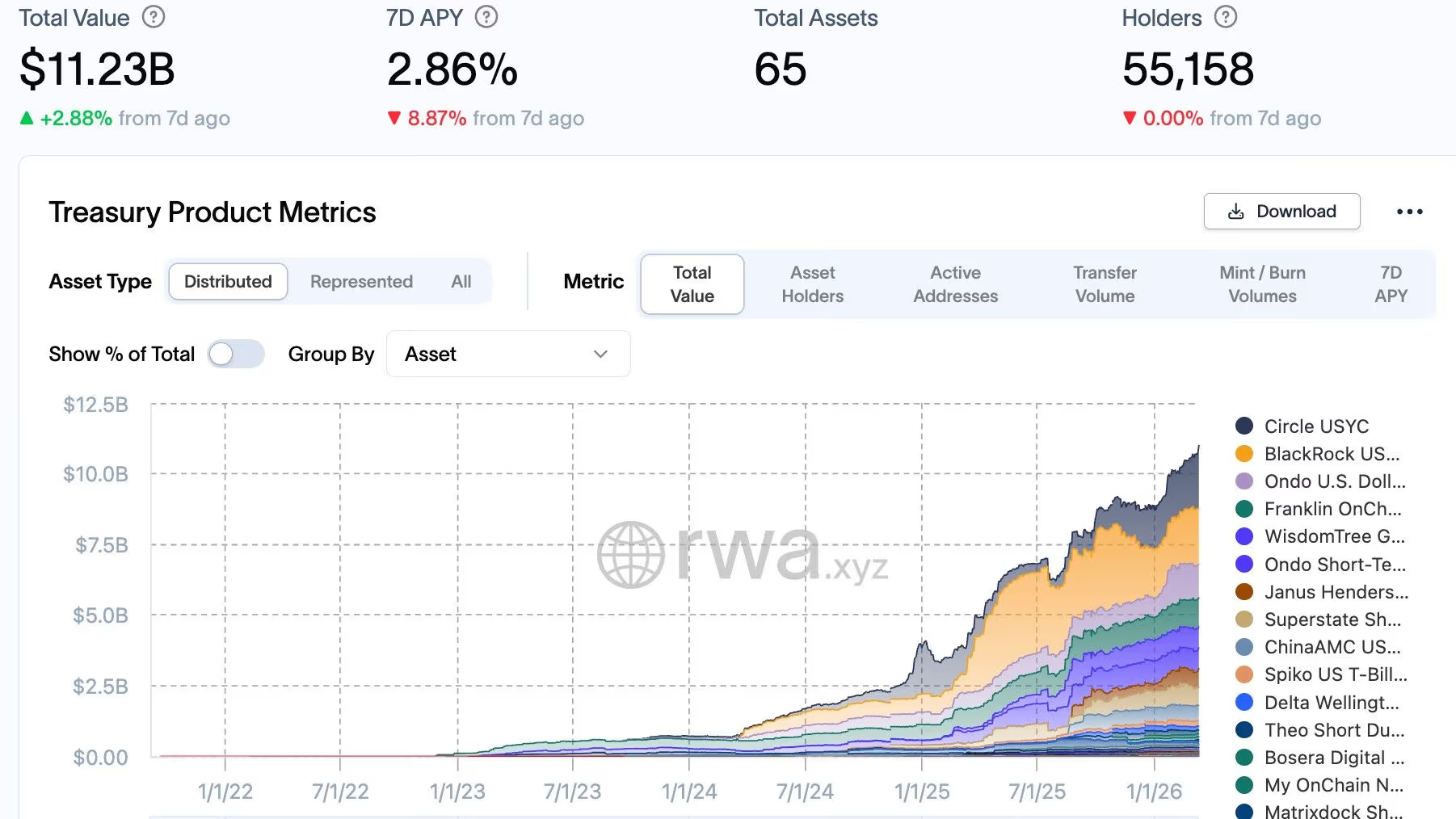 Tokenized U.S. Treasury market (RWA.xyz)
Tokenized real-world assets, including Treasury bills and money-market funds, are becoming increasingly popular among crypto traders and institutional investors as yield-generating collateral and a means to securely hold onchain cash. In contrast to conventional financial systems, blockchain-based tokens facilitate near-instantaneous settlements, transparent reserves, and 24/7 accessibility.
Related Posts
Tokens backed by Treasuries also provide an extra benefit: they enable investors to earn interest while using these assets as collateral in trading strategies, potentially enhancing capital efficiency compared to maintaining stablecoins or cash.
Circle entered the tokenized fund market following its acquisition of Hashnote, the issuer of USYC, in early 2025.
BUIDL issuer Securitize did not respond to a request for comment by the time of publication.
A booming market
An in-depth look at the data reveals that a significant portion of USYC’s recent growth seems to be associated with transactions on BNB Chain, where the cryptocurrency exchange giant Binance has launched the token as off-exchange collateral for institutional derivatives trading.
In this arrangement, USYC can be held with partner banks through Binance Banking Triparty or with Ceffu, Binance’s institutional custody platform.
Since its introduction in July, USYC’s supply on BNB has surged to $1.84 billion, according to available data.
“Tokenized treasuries and repo as collateral represent a significant emerging use case, and we take pride in the speed of this growth,” Circle CEO Jeremy Allaire stated on Friday in a post on X.
The overall tokenized Treasury market is also thriving, achieving a new record high of over $11 billion, based on data from RWA.xyz. This sector has increased in market value by approximately $2.5 billion, or 27%, since the beginning of the year.
The growth has accelerated during the downturn in the crypto market in January, indicating that some investors may be opting to park their capital in tokenized Treasuries to secure a stable yield while awaiting opportunities to reinvest in digital assets.
