Disclaimer: Information found on CryptoreNews is those of writers quoted. It does not represent the opinions of CryptoreNews on whether to sell, buy or hold any investments. You are advised to conduct your own research before making any investment decisions. Use provided information at your own risk.
CryptoreNews covers fintech, blockchain and Bitcoin bringing you the latest crypto news and analyses on the future of money.

CFTC Chairman Selig to facilitate approval for U.S. perpetual futures in the upcoming weeks.

The chairman of the Commodity Futures Trading Commission, speaking alongside his Securities and Exchange Commission counterpart, indicated that several policies regarding cryptocurrency are on the horizon.
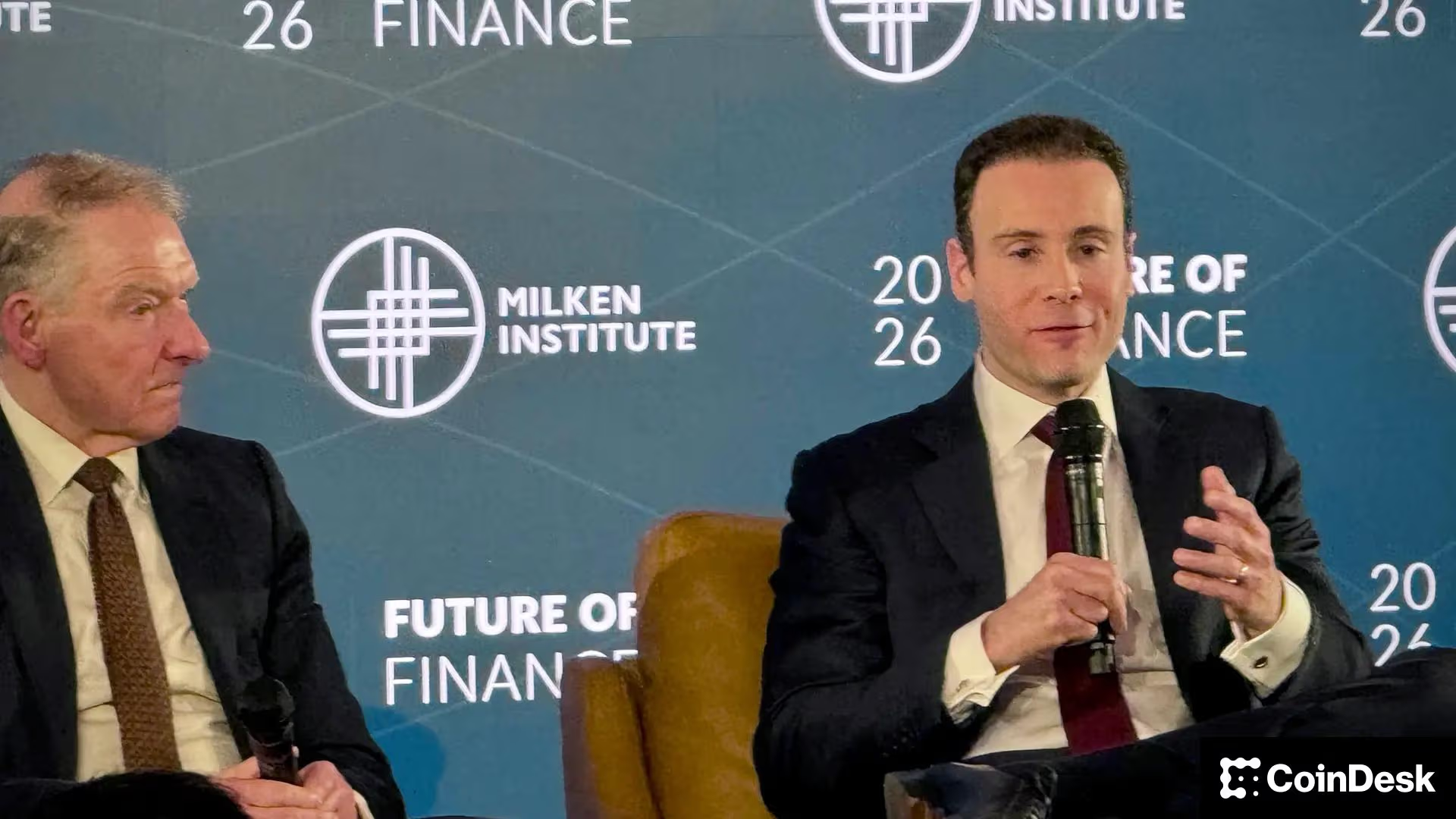 U.S. Commodity Futures Trading Commission Chairman Mike Selig (right) stated that perpetual futures are set to debut in the U.S. (Jesse Hamilton/CoinDesk)
Related Posts
Key Points:
- U.S. Commodity Futures Trading Commission Chairman Mike Selig mentioned that his agency is nearing the introduction of policies for crypto perpetual futures.
- This is part of several imminent digital asset regulations that the agency plans to unveil alongside the Securities and Exchange Commission, its collaborator in Project Crypto, as he indicated.
- The CFTC chief also mentioned that regulations for prediction markets are forthcoming.
WASHINGTON, D.C. — According to U.S. Commodity Futures Trading Commission Chairman Mike Selig, crypto perpetual futures have primarily emerged outside the U.S. due to the nation’s hesitance to implement industry regulations, and his agency will soon issue guidance on the management of this business.
Such derivative contracts, which do not have an expiration date and are frequently linked to leverage, have garnered significant interest within the industry. For instance, U.S. exchange Kraken has recently announced an entry into perpetual futures for tokenized stocks aimed at non-U.S. clients.
Selig stated that his agency is “working towards introducing professional futures, genuine professional futures here in the U.S. within the next month or so,” during a Milken Institute event in Washington on Tuesday. “We anticipate making that announcement very soon.”
He pointed out that the previous administration pushed many of these firms and their liquidity offshore.
This theme was echoed in the comments from both him and his counterpart at the U.S. Securities and Exchange Commission, Chairman Paul Atkins. They have frequently appeared together to emphasize their united efforts on digital assets, which they refer to as Project Crypto.
One of their initiatives includes “innovation exceptions” to facilitate crypto experimentation without the fear of regulatory enforcement. Selig mentioned that they will also soon clarify how decentralized finance (DeFi) developers will be approached following years of legal actions and regulatory unpredictability.
As the sole member on the CFTC’s five-member commission, Selig can act independently, and he also stated that prediction markets — which are closely related to the crypto sector — will receive “guidance in the very near future” from the agency. “We will establish very clear standards.” He also mentioned that the agency is working towards a more comprehensive rulemaking process, aiming to provide a more permanent framework than guidance, which can be easily rescinded and rewritten.
Regulatory oversight of event-contract firms, including prominent players like Polymarket and Kalshi, is currently contested, with state gambling regulators asserting their jurisdiction over the firms’ sports contracts. Selig has intervened in courts to defend the CFTC’s role as the primary regulator of these firms’ activities.
“They can coexist,” he remarked on Tuesday regarding the two regulatory frameworks.
Atkins, however, addressed a challenge faced by regulators: legal authority. Despite his earlier assurance that the SEC could proceed without new legislative directives for its crypto initiatives, he stated on Tuesday, “We genuinely require statutory clarity.”
“We need the backing of Congress,” he added.
A U.S. Supreme Court ruling two years prior diminished a substantial amount of authority that federal regulators previously held in legal disputes concerning their actions, making it easier for agencies to face challenges on policy guidance. As a result, the SEC and CFTC can now be more readily contested, and their positions can be easily altered by incoming officials at the commissions.
The U.S. Senate is still progressing on the Digital Asset Market Clarity Act, which aims to create a regulatory framework for the U.S. crypto markets. This legislative initiative is currently stalled due to discussions involving the industry, bankers, lawmakers from both parties, and the White House. Its prospects for approval in 2026 are becoming increasingly challenging as midterm elections approach and available Senate floor time diminishes.
Read More: The chief of the SEC is headlining an event sponsored by a crypto firm at war with it
