Disclaimer: Information found on CryptoreNews is those of writers quoted. It does not represent the opinions of CryptoreNews on whether to sell, buy or hold any investments. You are advised to conduct your own research before making any investment decisions. Use provided information at your own risk.
CryptoreNews covers fintech, blockchain and Bitcoin bringing you the latest crypto news and analyses on the future of money.

Celsius Lawsuit: Judge Initiates Key Legal Conflict with Tether Over $4 Billion Bitcoin Liquidation

BitcoinWorld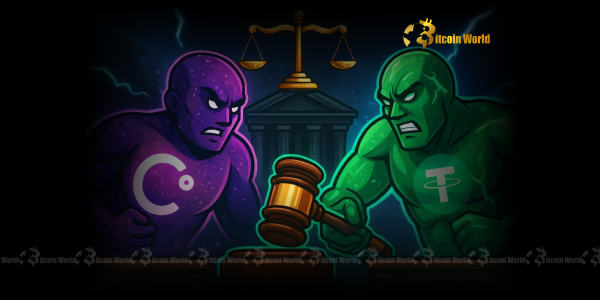
Celsius Lawsuit: Judge Unleashes Crucial Legal Battle Against Tether Over $4 Billion Bitcoin Liquidation
The cryptocurrency industry is once again engrossed in a dramatic legal saga, as a U.S. bankruptcy judge has authorized bankrupt crypto lender Celsius to advance its lawsuit against Tether. This ruling signifies a noteworthy advancement in a case that has the potential to redefine the crypto sector’s approach to asset management, liquidation protocols, and contractual agreements. Central to this conflict are accusations of improper liquidation of an astounding 39,500 BTC, estimated at around $4 billion, during Celsius’s chaotic downfall in 2022. This issue transcends mere financial implications; it aims to establish precedents in an emerging yet swiftly evolving financial domain.
The Genesis of the Celsius Lawsuit: A Shocking Allegation
The story began when Celsius, once a leading figure in crypto lending, declared Chapter 11 bankruptcy in July 2022. This decision reverberated through the market, immobilizing billions in user funds and leaving a multitude of investors in uncertainty. In its quest to reclaim assets for creditors, Celsius’s legal team directed its focus towards Tether, the issuer of the world’s largest stablecoin, USDT. The crux of the Celsius lawsuit centers on accusations that Tether engaged in dubious practices during a phase of intense market turbulence, particularly concerning a considerable Bitcoin holding.
Celsius asserts that Tether’s conduct constituted a breach of contract and a fraudulent transfer under U.S. bankruptcy legislation. The magnitude of the alleged liquidation—39,500 BTC—underscores the significant financial ramifications of this case. For perspective, this volume of Bitcoin accounts for a substantial fraction of Celsius’s total assets at the time of its collapse, making recovery vital for creditors aiming to reclaim their investments. This legal endeavor highlights the intricate interdependencies within the crypto ecosystem and the frequently ambiguous contractual frameworks that regulated relationships among major participants during the bull market.
Unpacking the Controversial Tether Liquidation
What precisely transpired during the alleged Tether liquidation? Celsius contends that Tether, acting as a counterparty, liquidated a significant portion of Bitcoin collateral held by Celsius under unfavorable terms or in a manner that breached their existing agreements. While the specific details of the contract between Celsius and Tether remain confidential, Celsius’s legal documents indicate that Tether’s actions did not align with the agreed-upon stipulations, particularly regarding the timing and method of liquidation. This conflict is not merely about pricing; it delves into the fundamental tenets of contract law and the obligation of parties to act in good faith, especially when managing distressed assets.
The accusations of ‘fraudulent transfer’ carry serious implications. In the realm of bankruptcy law, a fraudulent transfer generally refers to an asset transfer executed by a debtor with the aim to deceive creditors or a transfer conducted for less than fair market value while the debtor was insolvent. If substantiated, this would suggest that Tether obtained an undue advantage at the expense of Celsius’s creditors. This assertion indicates a deliberate action rather than merely a market-driven liquidation, significantly raising the stakes for both parties involved. The court’s decision to permit these claims to advance suggests that Celsius has put forth a credible argument that merits further examination.
Navigating the Labyrinth of Crypto Bankruptcy
The Celsius case is one among several high-profile examples of crypto bankruptcy that surfaced following the 2022 market downturn, alongside failures like FTX and Three Arrows Capital. These instances have revealed serious weaknesses in the crypto sector, particularly concerning asset segregation, transparency, and consumer protection. Unlike conventional financial bankruptcies, crypto bankruptcies frequently involve novel legal dilemmas related to the nature of digital assets, jurisdiction over decentralized entities, and the enforceability of smart contracts.
For Celsius, the lawsuit against Tether is a vital element of its broader strategy to maximize asset recovery for its creditors. The outcome of this claim could dramatically affect the eventual distribution for those who had funds tied up on the platform. The hurdles in navigating crypto bankruptcy are considerable, ranging from identifying and tracing digital assets across diverse blockchains to addressing international jurisdictions and the inherent complexity of crypto financial products. Thus, this lawsuit is not solely about Tether; it represents a test case for how courts will manage similar disputes in the future, providing essential clarity in a convoluted legal environment.
A Pivotal Bitcoin Legal Battle: What’s at Stake?
This unfolding legal confrontation signifies a pivotal Bitcoin legal battle, impacting not just the directly involved parties, but the entire cryptocurrency sector. With $4 billion in Bitcoin at stake, the financial implications are immense. For Tether, a loss could lead to substantial financial repercussions and, perhaps more critically, damage its reputation as a dependable stablecoin issuer. The integrity and stability of stablecoins are crucial to the broader crypto ecosystem, and any perceived misconduct could undermine investor confidence.
Beyond the immediate financial implications, the outcome of this lawsuit could establish a significant precedent for how liquidations are managed in the crypto arena, particularly during times of market strain. It could compel crypto firms to adopt more transparent and well-defined liquidation policies, ensuring equitable treatment for all involved parties. Furthermore, it underscores the rising trend of legal and regulatory scrutiny on major crypto entities, pushing the industry toward enhanced accountability and compliance. This conflict highlights that even within the decentralized realm, traditional legal principles will ultimately prevail.
The Authority of the US Bankruptcy Court
Related Posts
A vital aspect of this development is the ruling by the US bankruptcy court. Tether had submitted a motion to dismiss the lawsuit, contending, among other things, a lack of U.S. jurisdiction and that Celsius’s claims were not legally adequate. However, the judge dismissed critical components of Tether’s motion, concluding that there were sufficient U.S. connections to establish jurisdiction and that Celsius’s claims of breach of contract and fraudulent transfer were credible enough to proceed to discovery and potentially trial.
This ruling is indicative of the increasing readiness of U.S. courts to assert jurisdiction over global crypto entities when there are clear links to U.S. financial systems or investors. It conveys that merely operating in a decentralized fashion or from offshore locations does not automatically exempt companies from U.S. legal oversight, particularly when U.S. investors or bankruptcy matters are involved. The court’s ruling sends a decisive message: allegations of significant financial misconduct in the crypto sector will be rigorously scrutinized under existing legal frameworks.
What Are the Core Claims Against Tether?
Celsius’s lawsuit against Tether fundamentally rests on two primary allegations:
- Breach of Contract: Celsius contends that Tether contravened the terms of their agreement regarding the management and liquidation of the Bitcoin collateral. This could encompass issues related to notice periods, liquidation prices, or the procedures by which the assets were managed.
- Fraudulent Transfer: This is a more serious accusation, indicating that the transfer of Bitcoin from Celsius to Tether was executed with the intention to deceive creditors or was conducted for less than fair market value at a time when Celsius was insolvent. If validated, this could facilitate the recovery of the transferred assets for the advantage of Celsius’s creditors.
Why Did Tether’s Dismissal Attempt Fail?
Tether’s motion to dismiss was based on several assertions, including a lack of personal jurisdiction and the inadequacy of Celsius’s claims. However, the court concluded:
- Sufficient U.S. Ties: The judge determined that Tether possessed enough operational and financial links to the U.S. to justify jurisdiction, enabling the case to proceed in a U.S. court.
- Plausible Claims: The court found that Celsius had provided enough factual allegations to render its claims of breach of contract and fraudulent transfer plausible, meaning they were not frivolous and warranted further litigation.
What Does This Mean for Celsius Creditors?
For the multitude of Celsius creditors, this ruling provides a flicker of hope. While it does not assure recovery, it opens a significant pathway for potentially enlarging the asset pool available for distribution. A favorable outcome for Celsius in this lawsuit could inject billions into the bankruptcy estate, greatly enhancing the chances for creditors to reclaim a larger portion of their lost investments. However, legal disputes are often lengthy and expensive, and the path to resolution remains fraught with challenges.
The Broader Impact on the Crypto Ecosystem
This lawsuit transcends a mere dispute between two firms; it carries extensive implications for the entire crypto ecosystem:
- Increased Scrutiny: It emphasizes the escalating regulatory and legal scrutiny faced by major crypto players, particularly those engaged in lending, stablecoins, and asset management.
- Importance of Clear Contracts: The case highlights the essential need for robust, legally sound, and transparent contractual agreements among crypto entities, especially when large sums of collateral are involved.
- Risk Management: It serves as a poignant reminder for both institutional investors and individual users about the inherent risks within the crypto market, stressing the importance of due diligence and comprehension of the terms of service associated with any platform.
- Precedent Setting: The outcome could establish a significant legal precedent for how future disputes related to crypto liquidations and alleged fraudulent transfers are resolved in U.S. courts.
The journey ahead for the Celsius lawsuit against Tether promises to be captivating and intricate. As the legal proceedings unfold, the crypto community will be closely monitoring, recognizing that the repercussions extend far beyond the immediate parties involved. This case represents a crucial step in delineating the legal boundaries and responsibilities within the digital asset domain, advocating for heightened accountability and clarity in an industry that continues to advance at a rapid pace. It serves as a testament to the principle that even in a decentralized environment, the rule of law ultimately prevails.
To learn more about the latest crypto market trends, explore our article on key developments shaping Bitcoin price action.
This post Celsius Lawsuit: Judge Unleashes Crucial Legal Battle Against Tether Over $4 Billion Bitcoin Liquidation first appeared on BitcoinWorld and is written by Editorial Team
