Disclaimer: Information found on CryptoreNews is those of writers quoted. It does not represent the opinions of CryptoreNews on whether to sell, buy or hold any investments. You are advised to conduct your own research before making any investment decisions. Use provided information at your own risk.
CryptoreNews covers fintech, blockchain and Bitcoin bringing you the latest crypto news and analyses on the future of money.


Two historically contrarian indicators are activating concurrently for ADA, with average holders significantly in the red and derivatives traders increasing their aggressive short positions to the highest level in almost three years.

What to know:
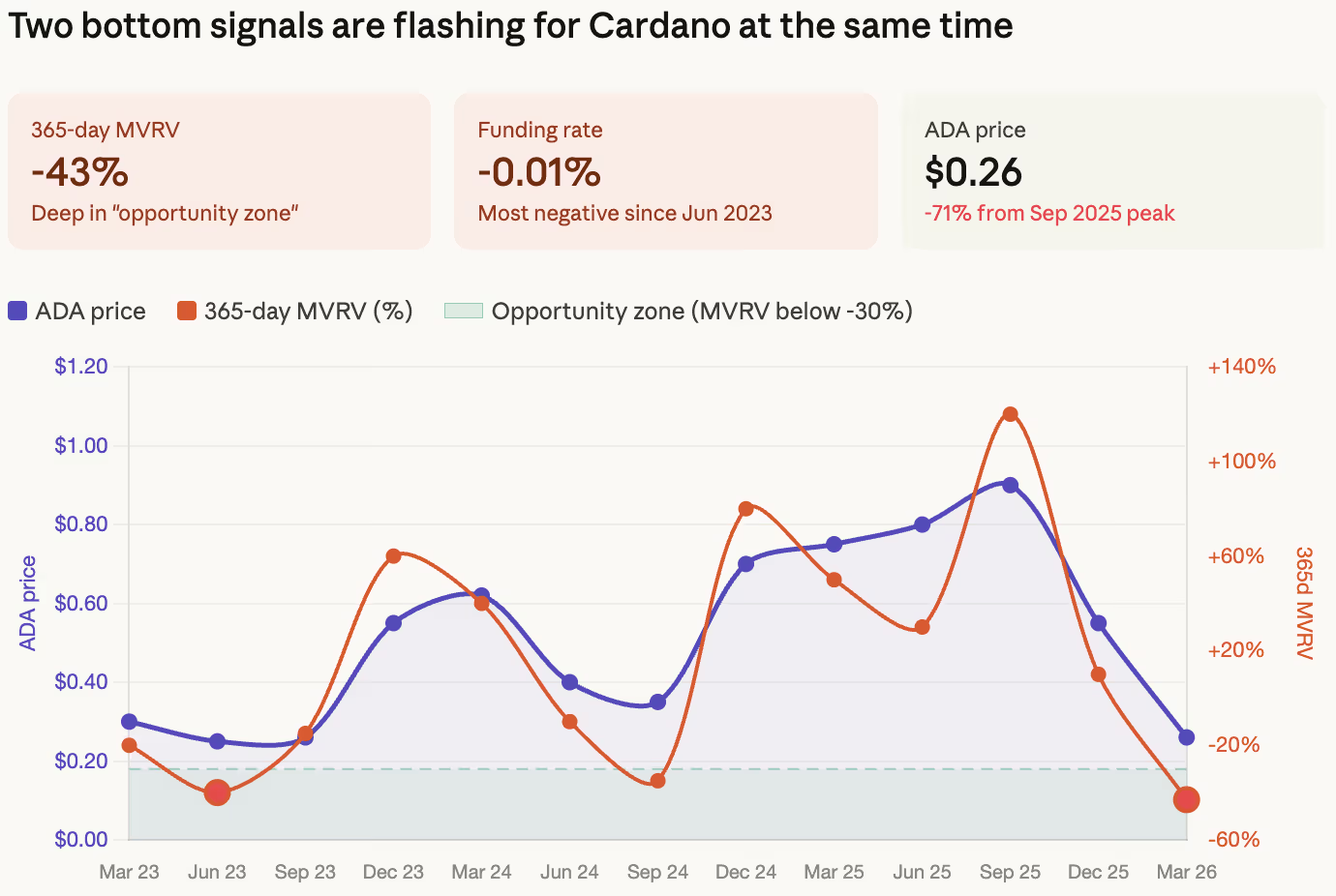
- Cardano holders who purchased within the past year are experiencing average losses around 43%, placing the token in an on-chain “opportunity zone” that has historically foreshadowed price recoveries.
- Derivatives data indicate that ADA funding rates are at their most negative since June 2023, suggesting a heavily populated short trade that has frequently led to short squeezes instead of further declines.
- While macroeconomic challenges and sluggish ecosystem expansion imply that a rally is not guaranteed, the current positioning—with significant holder losses and shorts at a three-year peak—indicates that any potential upward movement could surprise most traders as ADA hovers around $0.26.
The typical Cardano holder who acquired assets in the past year is down 43%. The derivatives market anticipates further declines. However, the occurrence of both situations simultaneously has historically signified the contrary.
Santiment data reveals that ADA’s 365-day Market Value to Realized Value (MVRV) ratio has decreased to -43%, indicating that wallets active on the Cardano network over the past year are facing an average loss of 43% on their investments.
This metric is deeply within what Santiment refers to as the “opportunity zone,” a range that has preceded recoveries in previous instances in 2023 and late 2024 as the MVRV tends to revert to zero.
Related Posts
MVRV assesses average trading returns over a specified period, and it consistently trends back toward zero over time. When it is significantly negative, those holders likely to panic-sell have typically already sold.
The remaining supply is held by individuals who are either committed to retaining their assets or have already acknowledged their losses. This type of positioning alleviates additional selling pressure and creates conditions for a rebound when any catalyst emerges.
Simultaneously, Binance’s weekly average funding rate for ADA has reached its most negative level since June 2023. Funding rates indicate the equilibrium between long and short positions in perpetual futures. A profoundly negative rate suggests that shorts are predominant and compensating longs to maintain their positions. In simpler terms, the derivatives market is heavily skewed toward bearish sentiment.
This crowding generates a contrarian indicator. When shorts are this concentrated, any favorable price movement triggers liquidations that compel short sellers to repurchase their positions, which drives the price higher, resulting in further liquidations.
The reverse cascade can also occur, but historical patterns for ADA indicate that funding rate extremes of this nature have more frequently led to short squeezes than to additional declines.
The last occurrence of both signals aligning so clearly was in mid-2023, when ADA was valued at around $0.25 before surging approximately 300% in the following 18 months. However, this does not guarantee the same outcome, as ADA has fallen 71% since its peak in September, the broader market is facing geopolitical tensions, persistent inflation, and no anticipated rate cuts, while Cardano’s ecosystem metrics have not demonstrated the kind of usage growth that would warrant a fundamental revaluation.
Nonetheless, bottom signals are not contingent on fundamentals. They are based on positioning. The current conditions in Cardano, with average holders facing -43% returns and shorts at a three-year high, represent a scenario where the next movement could take many traders by surprise.
ADA was priced at $0.26 on Tuesday, reflecting a decline of approximately 7% over the week.
