Disclaimer: Information found on CryptoreNews is those of writers quoted. It does not represent the opinions of CryptoreNews on whether to sell, buy or hold any investments. You are advised to conduct your own research before making any investment decisions. Use provided information at your own risk.
CryptoreNews covers fintech, blockchain and Bitcoin bringing you the latest crypto news and analyses on the future of money.


Project Samara will persist in testing the issuance, trading, and settlement of bonds utilizing digital Canadian dollars on a distributed ledger.
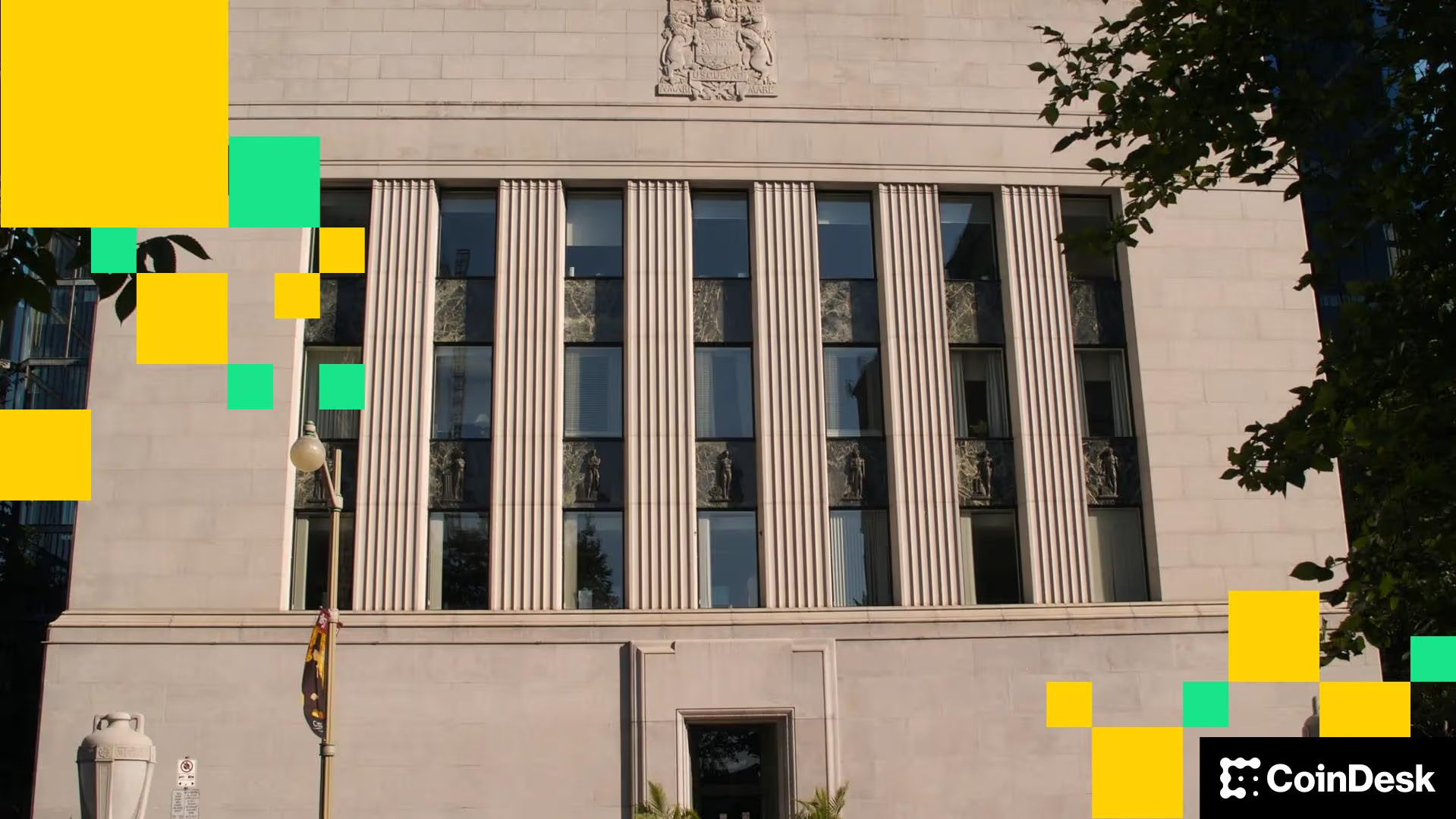 Bank of Canada and TD are engaged in a tokenization initiative. (Colin Rose-Wikimedia Commons/Modified by Coindesk)
Key Points:
- The Bank of Canada alongside significant financial institutions finalized a test involving the issuance, trading, and settlement of a C$100 million ($73 million) bond on a distributed ledger.
- The Project Samara trial demonstrated that a singular blockchain-based system could accommodate the entire lifecycle of a bond, encompassing issuance, bidding, coupon payments, secondary-market trading, and redemption.
- This pilot occurs as Canada prepares to enhance regulation of digital assets, with forthcoming legislation addressing stablecoins and new custody guidelines aimed at mitigating crypto-related risks.
The Bank of Canada announced the successful completion of an experiment examining how tokenized bonds can circulate within financial markets, conducted in collaboration with several of the nation’s leading lenders.
Related Posts
The government’s Export Development Canada issued a C$100 million ($73 million) security with a maturity of under three months, which was sold to a select group of investors.
The Project Samara test also included RBC Dominion Securities, RBC Investor Services Trust, and the TD Securities division of Toronto-Dominion Bank. The consortium explored how bonds issued by EDC can be generated, traded, and settled utilizing distributed ledger technology.
The platform, run by RBC, facilitated the complete lifecycle of a bond transaction. The bond was issued in a tokenized format on the ledger, permitting participants to place bids, manage coupon payments, redeem bonds, and trade in secondary markets via the same system.
The experiment additionally assessed digital settlement using tokenized versions of wholesale Canadian dollars developed and administered by the Bank of Canada. These digital currencies were transacted on the same ledger as the bonds, enabling transactions to be settled within the platform.
In its November budget, the federal government indicated intentions to propose legislation governing Canadian-dollar-backed stablecoins, with oversight anticipated to involve the Bank of Canada and regulations centered on reserve backing, redemption procedures, and risk management.
Recently, the country’s investment regulator, CIRO, unveiled a digital asset custody framework aimed at enhancing how crypto assets are secured by trading platforms, tightening standards to minimize risks such as hacking, fraud, and insolvency in light of previous industry challenges.
