Disclaimer: Information found on CryptoreNews is those of writers quoted. It does not represent the opinions of CryptoreNews on whether to sell, buy or hold any investments. You are advised to conduct your own research before making any investment decisions. Use provided information at your own risk.
CryptoreNews covers fintech, blockchain and Bitcoin bringing you the latest crypto news and analyses on the future of money.


On September 20, the Federal Reserve communicated a message that resonated throughout financial markets: interest rates are anticipated to remain at their highest point in over twenty years, potentially exceeding the expectations of many market participants. This stance is set against a backdrop of persistently high inflation, with the core inflation rate standing at 4.2%, significantly above the central bank’s 2% target, and unemployment rates at historic lows.
As investors navigate this new landscape, a critical question emerges: Will the S&P 500 and Bitcoin (BTC) continue to lag amid a stricter monetary policy?
The repercussions of the Fed’s decision were immediate and pronounced. The S&P 500 dropped to its lowest level in 110 days, indicating increasing apprehension among investors.
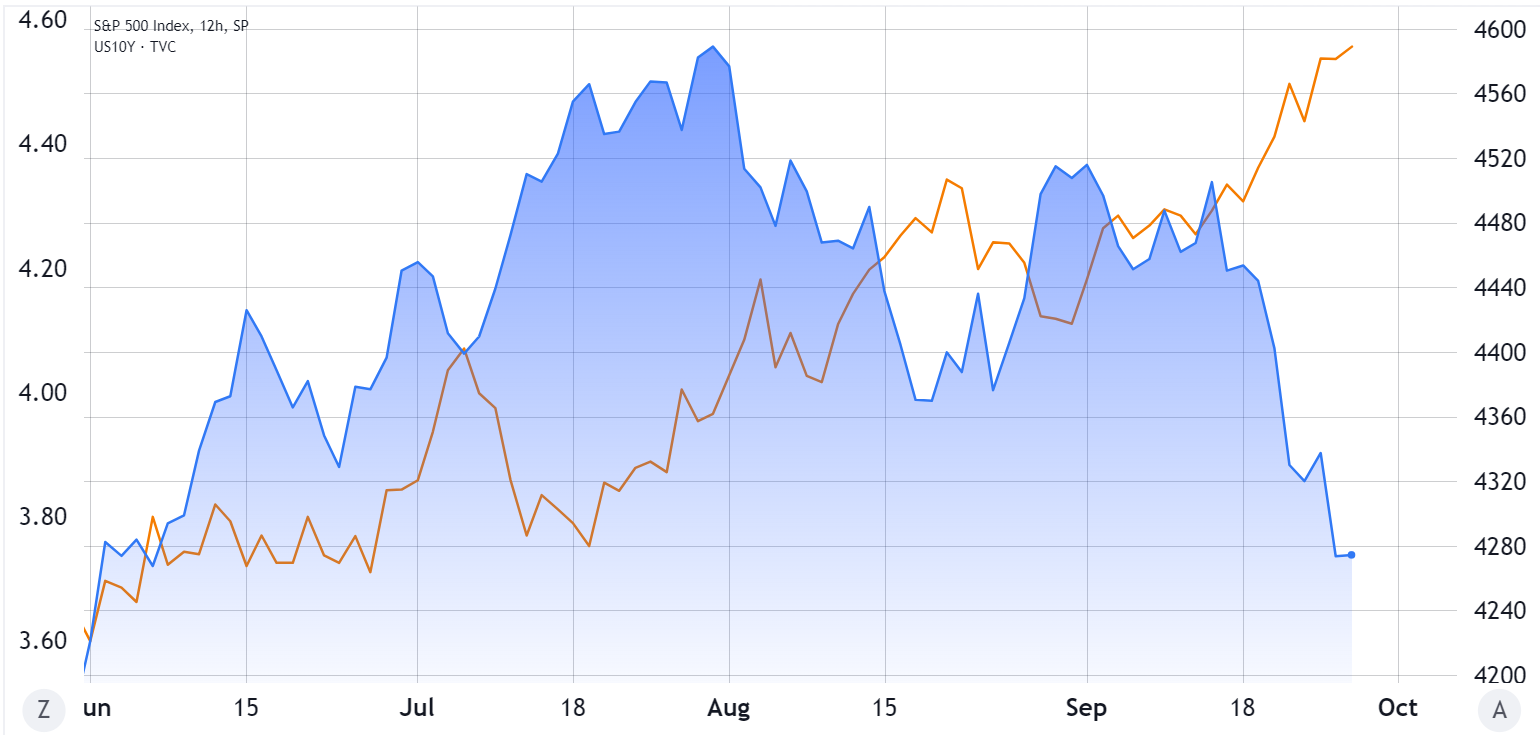 S&P 500 index (blue, right) vs. U.S. 10-year Treasury yield (orange, left)
Significantly, the 10-year Treasury yield surged to heights not observed since October 2007. This movement reflects the market’s perception that rates will continue to rise, or at the very least, that inflation will eventually align with the current 4.55% yield. In either scenario, concerns are escalating regarding the Fed’s capacity to maintain these elevated interest rates without destabilizing the economy.
Bitcoin does not necessarily follow traditional markets
One noteworthy development amid this financial upheaval is the evident disconnect between the S&P 500 and cryptocurrencies, especially Bitcoin. Over the last five months, the 30-day correlation between these two assets has shown no definitive trend.
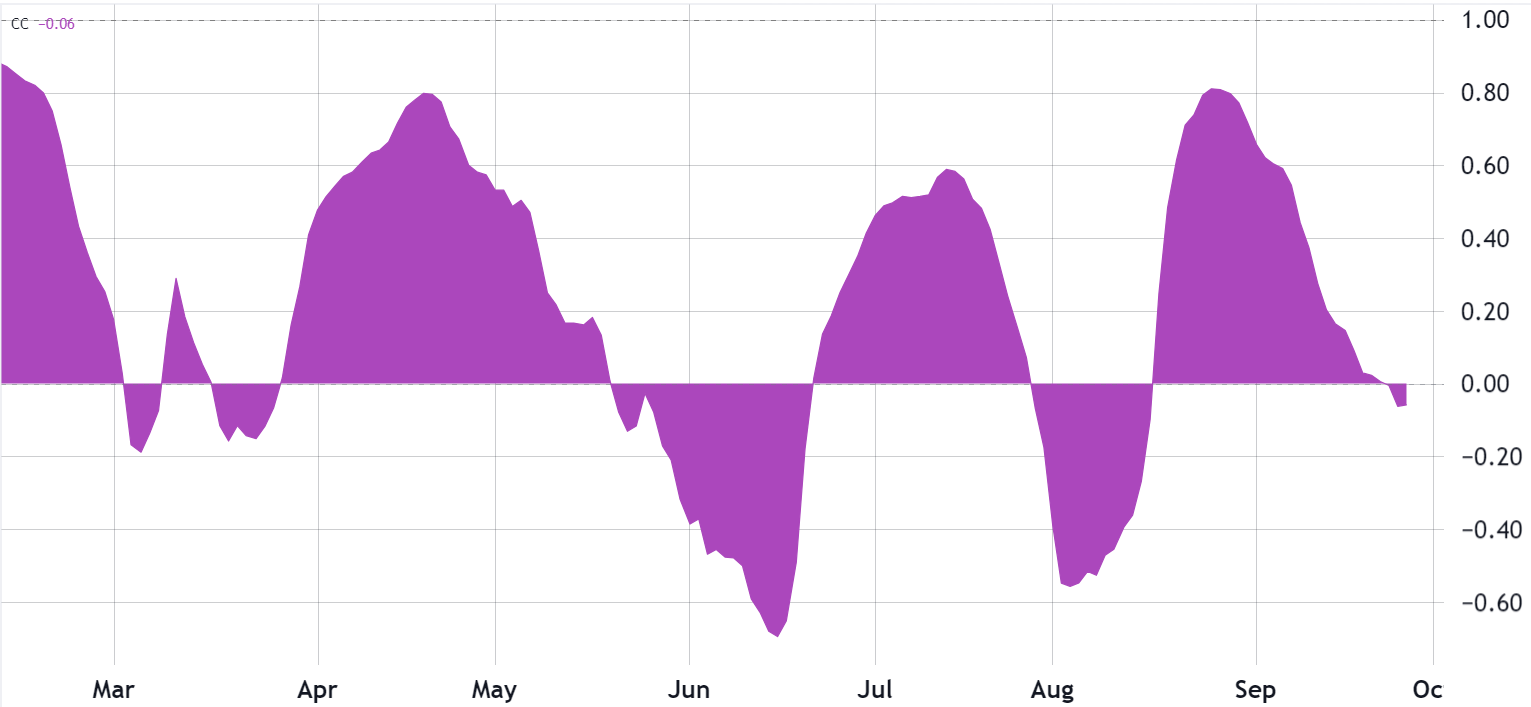 30-day rolling correlation: S&P 500 futures vs. Bitcoin/USD. Source: TradingView
This divergence implies that either Bitcoin has anticipated the stock market correction, or other external factors are influencing the situation. One possible reason for this separation is the excitement surrounding the potential launch of a spot Bitcoin ETF and regulatory issues that have limited the upward potential of cryptocurrencies. Meanwhile, the S&P 500 has gained from strong second-quarter earnings reports, although it is crucial to note that those figures reflect conditions from three months earlier.
Related Posts
As the Fed remains steadfast in its commitment to high-interest rates, the financial environment is venturing into uncharted territory. While some may view the central bank’s position as essential to combat inflationary pressures, others express concern that maintaining elevated rates could impose burdens on families and businesses, particularly as existing loans mature and need to be refinanced at significantly higher rates.
A decoupling could favor Bitcoin price
Several elements could contribute to the decoupling of cryptocurrencies from traditional markets, such as the S&P 500. If the government faces challenges in issuing long-term debt, it may raise concerns. The inability to issue long-term bonds could signal fiscal instability, prompting investors to seek hedges against potential economic downturns. In such scenarios, alternative assets like gold and Bitcoin may become appealing options.
Related: Will Bitcoin price hold $26K ahead of monthly $3B BTC options expiry?
Even with a robust dollar, inflation may compel the U.S. Treasury to increase the debt limit, leading to currency devaluation over time. This risk remains pertinent as investors look to protect their wealth in assets less vulnerable to inflation.
Moreover, the condition of the housing market is crucial. If the housing market continues to decline, it could adversely affect the broader economy and the S&P 500. The interconnectedness of the housing market with the banking sector and the potential for consumer credit deterioration could trigger a shift towards assets with scarcity and hedging capabilities.
There is also the possibility of political instability, both globally and during the U.S. elections in 2024. This could introduce uncertainty and affect financial markets. In some nations, there is an increasing fear of capital controls, and historical instances of international financial embargoes underscore the risk of governments imposing such controls, further driving investors towards cryptocurrencies.
Ultimately, unlike traditional stocks and bonds, cryptocurrencies are not linked to corporate earnings, growth, or yields above inflation. Instead, they operate independently, influenced by factors such as regulatory changes, resilience to attacks, and predictable monetary policy. Thus, Bitcoin could significantly outperform the S&P 500 without relying on any of the scenarios discussed above.
This article is for general information purposes and is not intended to be and should not be taken as legal or investment advice. The views, thoughts, and opinions expressed here are the author’s alone and do not necessarily reflect or represent the views and opinions of Cointelegraph.
