Disclaimer: Information found on CryptoreNews is those of writers quoted. It does not represent the opinions of CryptoreNews on whether to sell, buy or hold any investments. You are advised to conduct your own research before making any investment decisions. Use provided information at your own risk.
CryptoreNews covers fintech, blockchain and Bitcoin bringing you the latest crypto news and analyses on the future of money.

Bitcoin unexpectedly surpasses gold as a hawkish Federal Reserve and rising oil prices drive cautious market sentiment.

Bitcoin decreased by 2%, while gold and silver experienced more significant drops as oil prices increased and the Federal Reserve indicated a hawkish stance.
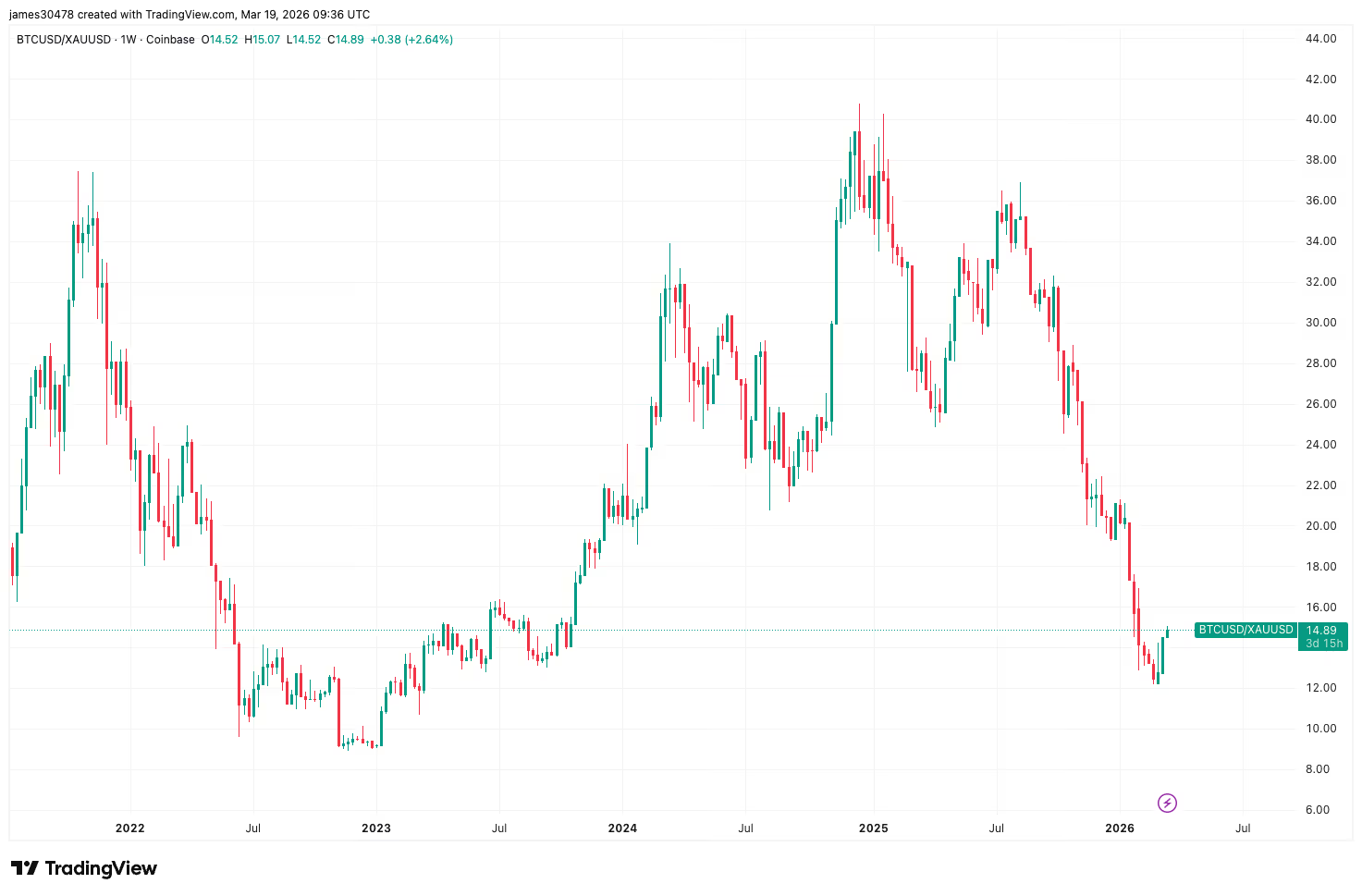 Bitcoin-gold ratio (TradingView)
What to know:
- Bitcoin has performed better than gold, declining 1% while the precious metal fell twice that amount, nearing bear-market levels.
- Macro pressures are escalating as a hawkish Federal Reserve and rising oil prices impact risk assets and inflation expectations.
Bitcoin is, unusually, outpacing gold even as increasing oil prices and hawkish indications from the U.S. Federal Reserve lead to greater risk aversion in financial markets.
Related Posts
Gold, which is conventionally regarded as a safe haven and store of value during turbulent times, has seen a 2% decline since midnight UTC, while the largest cryptocurrency has only experienced half that decline. This performance has increased the ratio between the two by 1% in 24 hours, with one bitcoin now purchasing approximately 15 ounces of gold.
The unexpected trading behavior can be partly attributed to gold’s significant rise in February. Prior to the Middle East conflict that began at the end of the month, gold had secured a 90% increase over the past year and was trading at a historic peak. This created an overbought situation, making it challenging to maintain the rally despite deteriorating geopolitical conditions.
Since the onset of the war, the trajectories of bitcoin—considered by some advocates as digital gold—and gold have diverged. Bitcoin has emerged as one of the top-performing assets outside of energy, having dropped 50% since October and now appears oversold. Gold is currently about 17% lower than its peak in January, approaching bear-market territory.
The macroeconomic environment is intensifying the pressure. The Federal Reserve adopted a more hawkish tone than anticipated in Wednesday’s remarks, countering market expectations for immediate interest-rate reductions in the world’s largest economy.
This has impacted risk assets, with U.S. equities lower in premarket trading and the Invesco QQQ exchange-traded fund, which tracks the Nasdaq 100 index, declining by 0.5% on Thursday. Crypto-related stocks have also fallen, with Strategy (MSTR), Galaxy Digital (GLXY), and Coinbase (COIN) all witnessing declines in pre-market trading.
Simultaneously, the conflict with Iran has driven Brent crude oil prices up by more than 6% in the last 24 hours, nearing $117 per barrel. The expanding disparity between Brent and West Texas Intermediate, now the widest since 2013, indicates global supply disruptions and logistical challenges, contributing to inflationary pressures and complicating the outlook for central banks.
