Disclaimer: Information found on CryptoreNews is those of writers quoted. It does not represent the opinions of CryptoreNews on whether to sell, buy or hold any investments. You are advised to conduct your own research before making any investment decisions. Use provided information at your own risk.
CryptoreNews covers fintech, blockchain and Bitcoin bringing you the latest crypto news and analyses on the future of money.


Bitcoin and ether experience modest gains while altcoins rally on an oversold rebound, although low liquidity and macroeconomic pressures maintain a delicate overall trend.
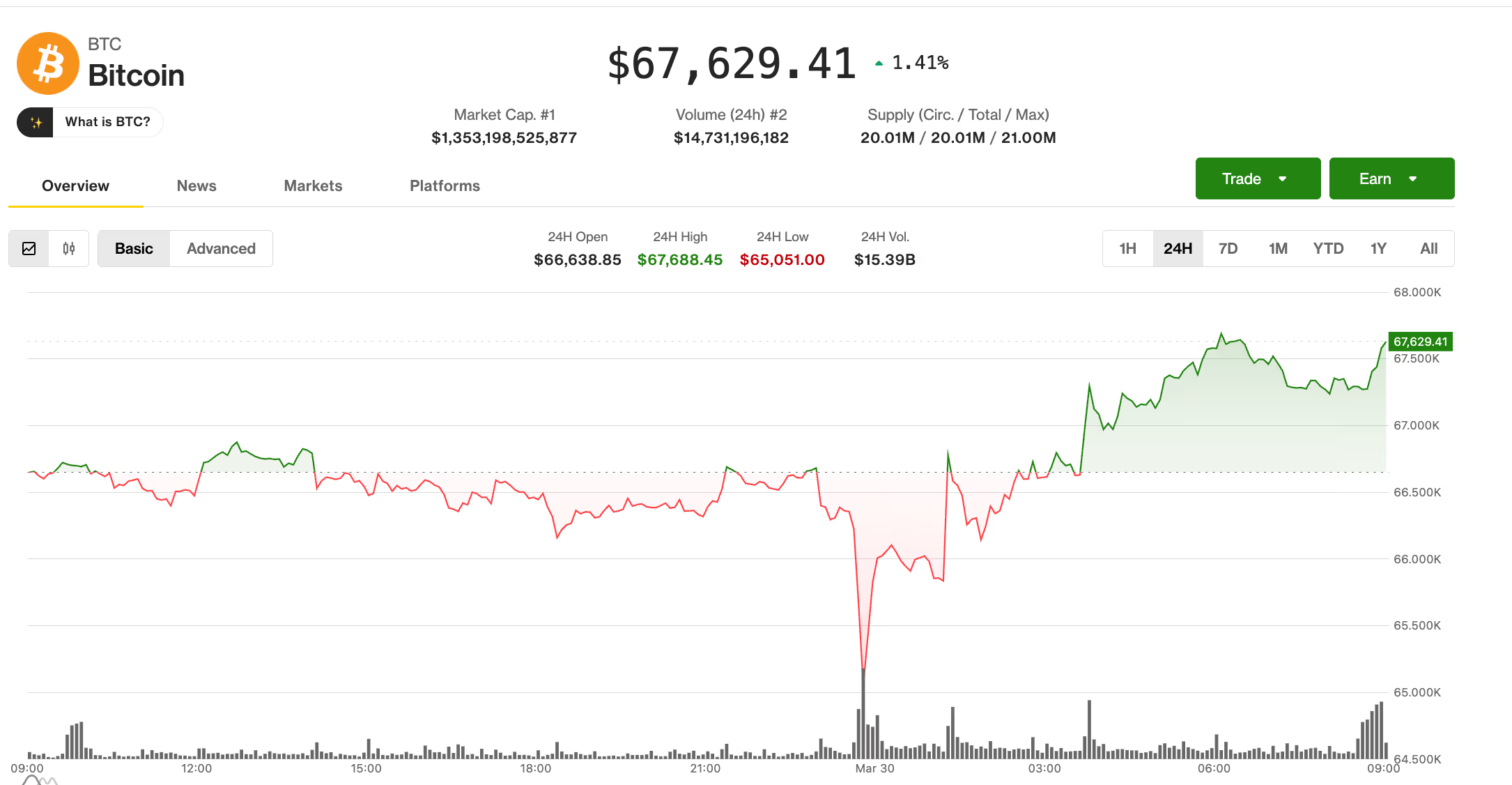 Bitcoin chart (CoinDesk Data)
Key points:
- Bitcoin climbed to $67,300 and ether reached $2,045, yet both are still confined within a broader bearish range, unable to breach significant resistance levels.
- Altcoins showed stronger performance, with assets like CHZ, FET, and OP increasing up to 9%, indicative of a relief rally prompted by oversold market conditions.
- Persistent issues in Iran and ongoing liquidity challenges continue to limit upward momentum, necessitating a BTC breakout to restore market dynamics.
The cryptocurrency market exhibited a rebound on Monday with bitcoin increasing by 2.1% since midnight UTC, while ether (ETH) appreciated by 3.1%. More substantial gains were noted in the altcoin sector, with tokens such as chiliz (CHZ), and optimism recording increases exceeding 6%.
Despite the shift in market sentiment, investors remained apprehensive as the conflict in Iran extends into its fifth week. Although Pakistan has indicated a willingness to facilitate “meaningful” peace discussions, market confidence has yet to respond positively. Brent crude oil prices surged to $108 per barrel over the weekend, reflecting widespread skepticism regarding the potential for a swift resolution. Prior to the outbreak of hostilities, prices were in the low $70s.
Related Posts
U.S. stock index futures reacted favorably to Pakistan’s remarks: Nasdaq 100 futures and S&P 500 futures both rose by 0.25%, while the dollar index (DXY) remained stable at 100.2 points.
The cryptocurrency market continues to be entrenched in a bearish trend on longer time frames, characterized by a sequence of lower highs and lower lows since October. Bitcoin has maintained its trading range since early February, unable to surpass $75,000 on the upside or drop below $62,800 on the downside.
Derivatives analysis
- Growth in bitcoin futures open interest (OI) has stalled after reaching a near two-month peak of 748.65 BTC on Saturday. The near-zero perpetual funding rates and negative 24-hour cumulative volume delta (CVD) indicate a preference for bearish short positions.
- BTC OI saw a notable decline during the spot price recovery from the Asian-session low of around $65,000. This suggests that the rally is primarily driven by spot trading and lacks support from leveraged traders.
- On Bitfinex, the number of BTC/USD long positions reached its highest level since November 2023. Historically, this has served as a contrary indicator, often accompanying price declines.
- OI in most major cryptocurrencies, including XRP, ETH, DOGE, and SOL, has remained relatively stable over the past 24 hours.
- AVAX and LTC are notable exceptions, showcasing double-digit percentage increases in futures OI, indicative of capital inflows. However, most inflows appear to be associated with bearish positions, as suggested by their negative CVDs.
- Bitcoin’s 30-day implied volatility index is experiencing downward pressure again, declining to nearly 55% after reaching 58% over the weekend. Overall, the index continues to reflect market stability despite the turmoil in traditional markets related to the conflict in Iran. Ether’s volatility index depicts similar trends.
- On Deribit, BTC and ETH put options remain more expensive than call options across all time frames, indicating ongoing concerns about downside risks. Dealer gamma is predominantly negative between $65,000 and $70,000, implying that dealers may buy low and sell high, which could keep prices within a confined range.
Token updates
- The CoinDesk Memecoin Index (CDMEME) and the DeFi Select Index (DFX) were the top performers on Monday, increasing by 2.8% and 2.2%, respectively, while the bitcoin-centric CoinDesk 20 (CD20) gained 1.5%.
- The perceived robustness of the altcoin market can be attributed to a general lack of liquidity across the market. When prices fell on Friday, the supply on exchanges exceeded demand significantly. This pushed several assets into “oversold” conditions, leading to today’s relief rally.
- This liquidity shortfall has affected the cryptocurrency market since October, following a $19 billion liquidation event that disrupted market structure, leaving many traders and market makers in a difficult position.
- To break this cycle, bitcoin, as the market’s anchor, needs to trade above $80,000 and maintain that level, which would allow gains to flow into the more speculative altcoin market to establish macro support levels.
