Disclaimer: Information found on CryptoreNews is those of writers quoted. It does not represent the opinions of CryptoreNews on whether to sell, buy or hold any investments. You are advised to conduct your own research before making any investment decisions. Use provided information at your own risk.
CryptoreNews covers fintech, blockchain and Bitcoin bringing you the latest crypto news and analyses on the future of money.

Bitcoin poised for strongest week since September 2025 as its relationship with technology shares diminishes.

Bitcoin has been surpassing equities and gold since the onset of the Middle East conflict, as institutional inflows return amid a generally cautious market sentiment.
 Bitcoin Logo (CoinDesk)
Key points:
- Bitcoin has appreciated approximately 8.5% this week and over 13% since the escalation of the Middle East conflict, surpassing technology stocks, gold, and U.S. equities.
- U.S. spot bitcoin ETFs have seen around $1.3 billion in net inflows so far in March, likely marking the first positive month for inflows since October.
Bitcoin is poised to conclude its strongest week since September 2025, with an increase of about 8.5%, trading above $71,000.
This movement is particularly notable compared to other significant assets.
In the past week, bitcoin has started to show slight divergence from the wider market. Utilizing BlackRock’s iShares Bitcoin Trust (IBIT) as a five-day indicator, IBIT has risen by approximately 3.5% and neared a one-month peak on Friday.
Conversely, the iShares Expanded Tech Software ETF (IGV), gold, and U.S. equities have all experienced declines as the week progressed. This indicates that bitcoin may be beginning to decouple from its strong correlation with software and tech, at least temporarily.
Related Posts
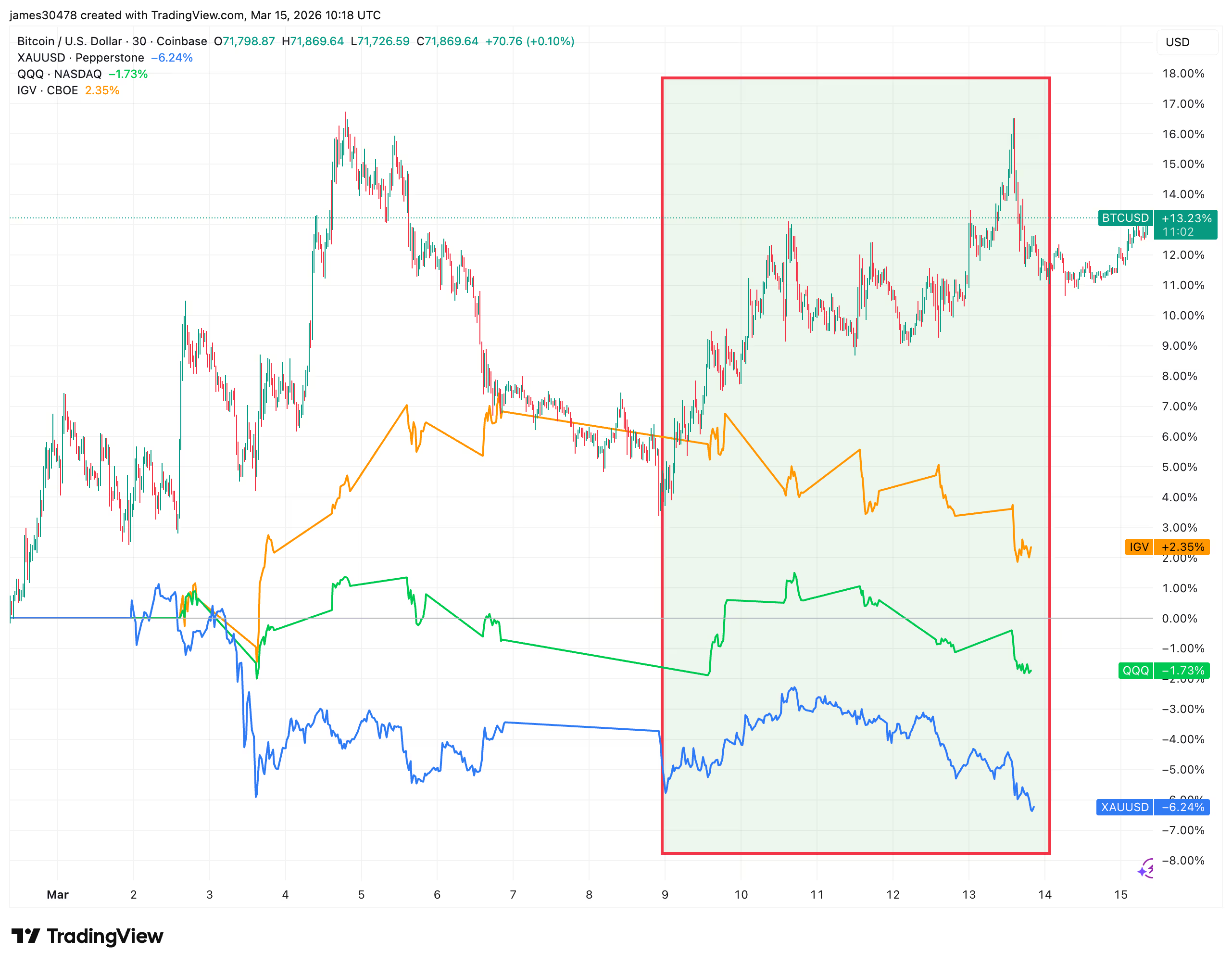 BTC divergence versus IGV, QQQ and Gold. (TradingView)
This divergence occurs as bitcoin has begun to part ways from its usual counterparts. Since the onset of the Middle East conflict over two weeks ago, bitcoin has appreciated around 13%, outshining both traditional risk assets and safe havens. During the same timeframe, IGV has increased by about 3%, while gold has decreased by approximately 6%, and U.S. equities have also experienced declines.
On a monthly timeline, the asset has risen about 7% so far in March, indicating its first positive month since September. This recovery follows five straight months of losses in which bitcoin fell as much as 50% from its peak in October.
The purchasers of the leading digital asset seem to be based in the U.S., as institutional interest from the area appears to be gradually coming back. U.S. spot bitcoin ETFs have observed about $1.3 billion in net inflows thus far in March, placing them on a path for their first month of net inflows since October.
Nevertheless, the divergence does not imply that bitcoin is entirely in the clear.
Market sentiment remains notably cautious. The crypto fear and greed index has remained in the “extreme fear” zone. Concurrently, perpetual futures funding rates continue to be negative. Funding rates are periodic payments exchanged between participants in perpetual futures markets to keep contract prices aligned with the spot market. When funding rates are negative, short sellers compensate long positions, signifying that bearish positioning is prevalent and traders are willing to pay to maintain short exposure.
While this may not indicate that bitcoin is set to surge, it does suggest that investors are no longer viewing it solely as a high-risk asset.
As highlighted by CoinDesk analysis, this shift might indicate that bitcoin has possibly evolved into a 24/7 leading indicator of how the broader market could respond to macro events. The conflict in the Middle East exemplifies this, as bitcoin’s price movement preceded any shifts in other asset classes when the conflict initially commenced. Now, it appears that other assets are following its price trajectory, while bitcoin remains stable.
Read more: Bitcoin’s recent crash to $60,000 warned stocks first – now they’re following
