Disclaimer: Information found on CryptoreNews is those of writers quoted. It does not represent the opinions of CryptoreNews on whether to sell, buy or hold any investments. You are advised to conduct your own research before making any investment decisions. Use provided information at your own risk.
CryptoreNews covers fintech, blockchain and Bitcoin bringing you the latest crypto news and analyses on the future of money.


Although bitcoin has demonstrated relative resilience against gold since the onset of the conflict in Iran, investors are advised to hold onto their “dry powder” as price fluctuations continue in response to news, according to Bryan Tan of Wintermute.
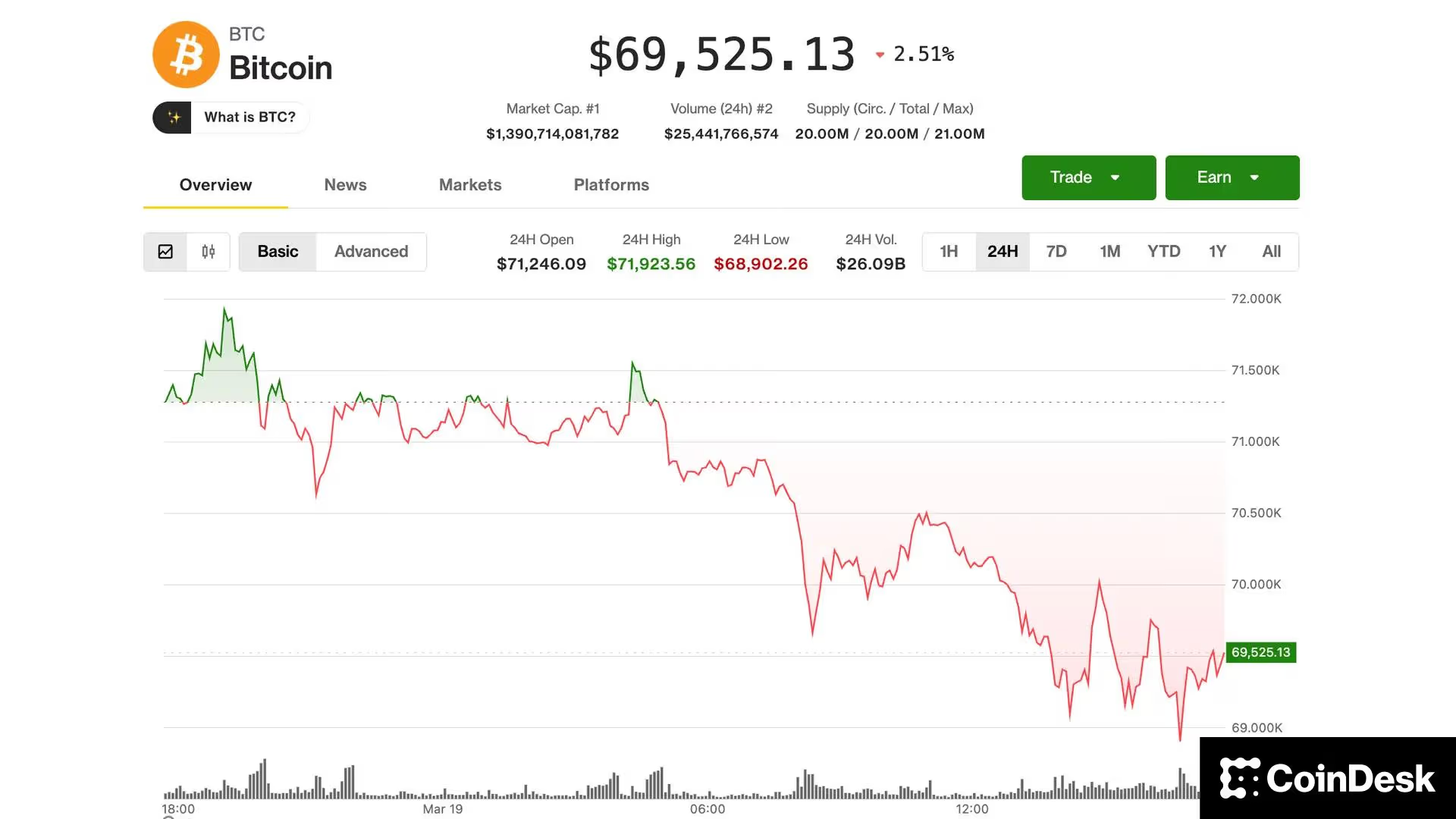 Bitcoin (BTC) price on Thursday (CoinDesk)
What to know:
- Bitcoin dropped to $69,000 but fared better than many conventional assets as tensions in the Middle East and assaults on energy infrastructure unsettled global markets.
- Oil prices approached $100 per barrel, reigniting inflation concerns and the anticipation that central banks may maintain elevated interest rates for an extended period. Concurrently, gold and silver declined to their lowest points since early February.
- Bitcoin has surpassed gold since the onset of the Iran conflict, but the inability to sustain levels above $75,000 indicates that investors should remain prudent regarding dip purchases, said Wintermute trader Bryan Tan.
Bitcoin moved toward $69,000 on Thursday amidst escalating conflict in Iran, impacting energy infrastructure and affecting global markets.
Oil remained a focal point, as investors retreated from risk amid new reports regarding attacks on energy infrastructure. Prices moved back toward $100 a barrel following a Politico article indicating that the U.S. is not contemplating a crude export ban, reversing prior declines and maintaining inflation concerns.
This environment affected traditional markets, particularly as investors began to speculate that central banks might postpone rate reductions or even contemplate rate increases due to inflationary pressures stemming from energy shocks and supply disruptions. The S&P 500 and Nasdaq both fell nearly 1% in morning trading, reaching new lows for 2026.
Related Posts
However, a more significant shift was observed in the metals market. Gold fell 5% to approximately $4,500 per ounce, marking its lowest level since early February, while silver dropped 6.6%, continuing a sharp correction following weeks of significant gains.
In contrast, the crypto market appeared relatively stable. Bitcoin was last seen trading around $69,400, down around 2.6% for the day. Most major cryptocurrencies, including ether (ETH), XRP (XRP), BNB and solana (SOL), experienced declines, but losses remained below 3%, with the broader CoinDesk 20 Index down approximately 2.1%.
Stocks related to crypto also saw declines, though not to the same degree as other sectors. Crypto exchange Coinbase (COIN) fell 1.7%, bitcoin treasury firm Strategy (MSTR) decreased 2.6%, while stablecoin issuer Circle (CRCL) retracted 6%, giving back some gains after surging over the previous three weeks.
Bitcoin maintains stability amid risk aversion
The concurrent decline in both gold and bitcoin indicates a widespread de-risking rather than a shift toward safe-haven assets, stated Alvin Kan, COO of Bitget Wallet. Increasing energy costs are contributing to inflation expectations, reinforcing a “higher-for-longer” interest rate perspective and tightening liquidity — a challenging combination for risk assets, he noted.
Nonetheless, bitcoin has outperformed gold by roughly 20% during the initial stages of the Iran conflict, emphasized Bryan Tan, trader at Wintermute, an atypical situation for an asset usually regarded as more speculative. However, the failure to maintain levels above $75,000 indicates that markets are cautious and rangebound.
“As sentiment fluctuates with each headline regarding the conflict, and the correlation to oil prices remains high, maintaining a neutral position is prudent,” he stated. “We prefer to hold onto our dry powder until a significant confirmation in either direction or a substantial shift in market conditions occurs.”
