Disclaimer: Information found on CryptoreNews is those of writers quoted. It does not represent the opinions of CryptoreNews on whether to sell, buy or hold any investments. You are advised to conduct your own research before making any investment decisions. Use provided information at your own risk.
CryptoreNews covers fintech, blockchain and Bitcoin bringing you the latest crypto news and analyses on the future of money.


According to recent research, Bitcoin (BTC) holdings by speculators are nearly 90% in the red following the “flash crash” to $26,000.
In the most recent issue of its weekly newsletter, “The Week On-Chain,” analytics firm Glassnode highlights the actual impact of last week’s BTC price decline on new investors.
Short-term holders “increasingly sensitive” to BTC price
Although the decline in BTC/USD was only about 10%, it significantly disrupted market sentiment toward the end of last week.
With BTC price forecasts now targeting $25,000 and potentially lower, the market is adjusting after a prolonged period of sideways trading.
This shift is particularly evident among short-term holders (STHs), who represent the more speculative segment of the hodler spectrum.
Glassnode defines an STH as an entity that retains BTC for 155 days or less, contrasting with long-term holders (LTHs), commonly referred to as traditional “hodlers.”
“Out of the 2.56M BTC held by STHs, only 300k BTC (11.7%) remains profitable,” the research indicates.
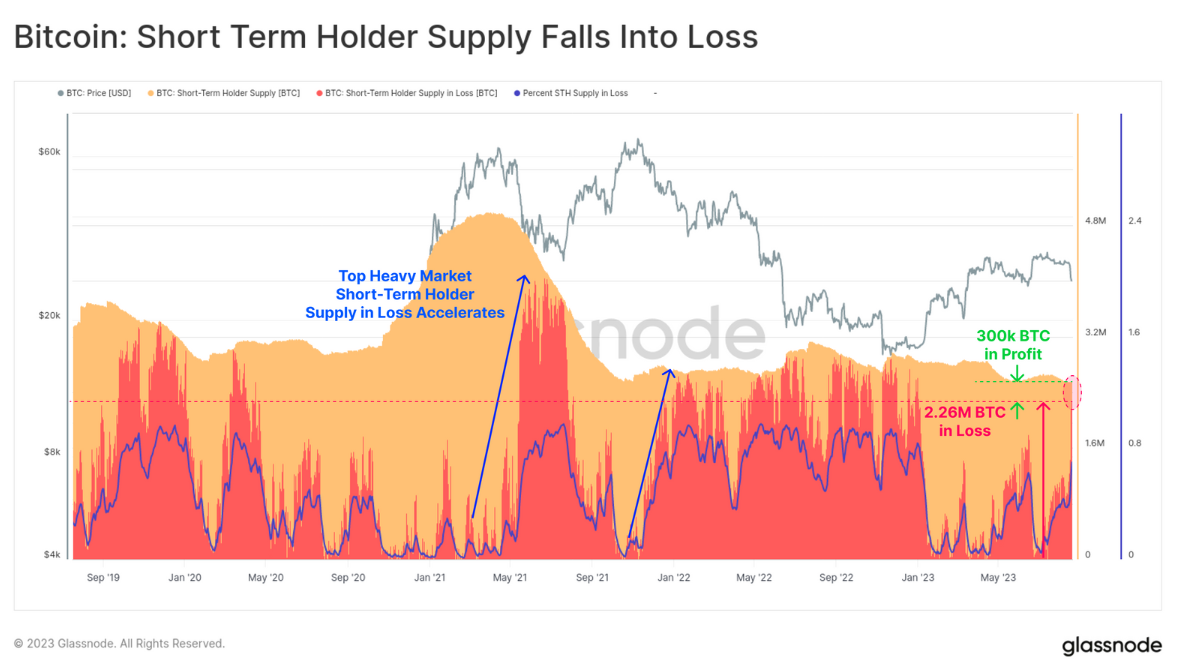 Bitcoin STH supply profit and loss chart (screenshot). Source: Glassnode
As reported by Cointelegraph, the overall percentage of BTC supply held by STHs has reached multi-year lows. Nevertheless, the past week has significantly altered profitability within this group, which previously established the framework for BTC trading ranges.
The aggregate breakeven point for STHs, known as the realized price, currently exceeds $28,500.
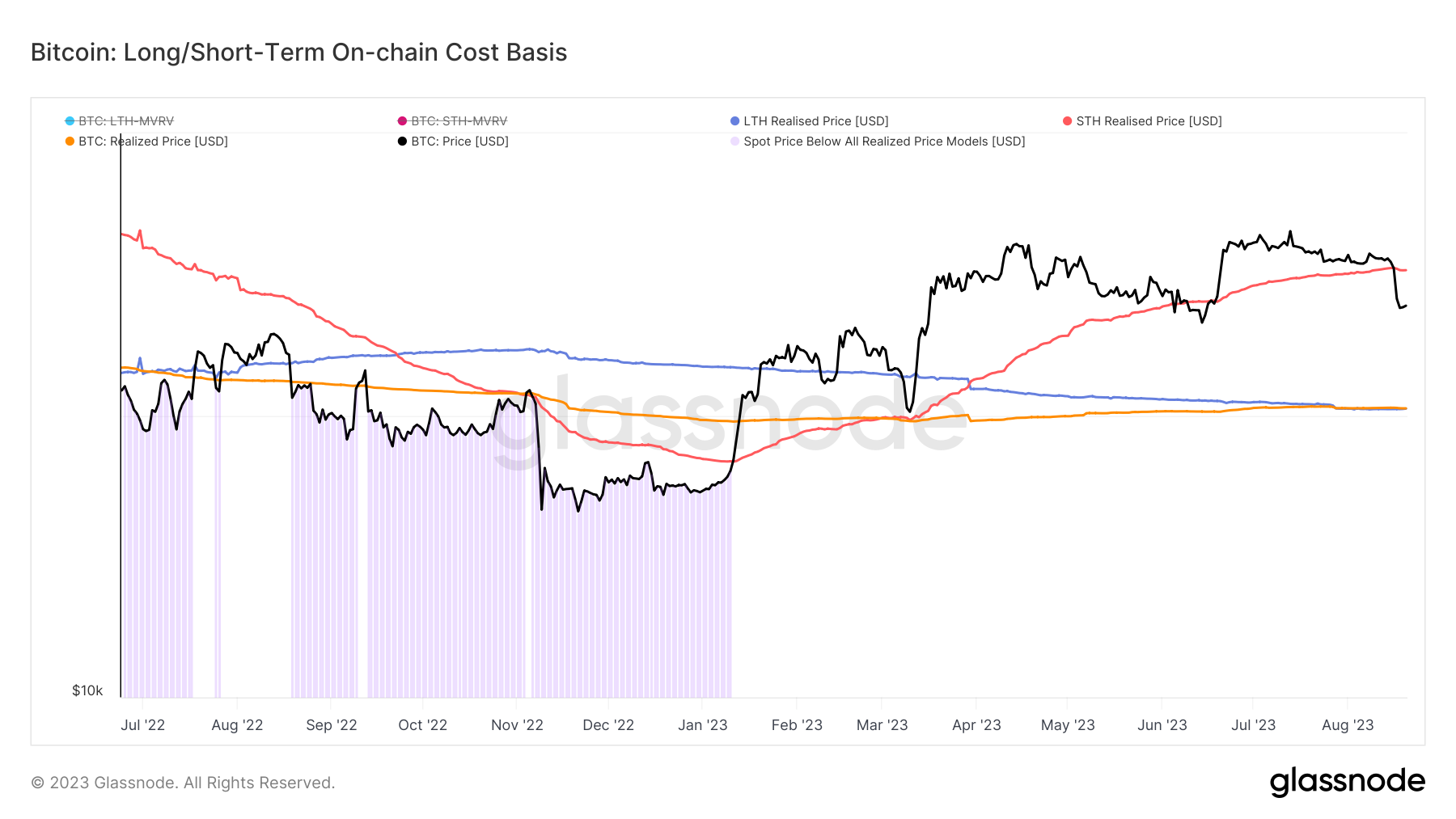 Bitcoin STH/LTH cost basis (realized price) chart. Source: Glassnode
In examining the ratio of exchange inflows from STH entities in profit versus loss, Glassnode cautions that this group is becoming increasingly “sensitive” to market fluctuations.
Related Posts
“We observe a consistent decline in profit dominance as the 2023 rally progressed, with more STHs acquiring coins at a progressively higher cost basis,” it notes.
“This week, we recorded the largest loss dominance since the March sell-off to $19.8k. This indicates that the STH group is largely underwater on their holdings and becoming more price sensitive.”
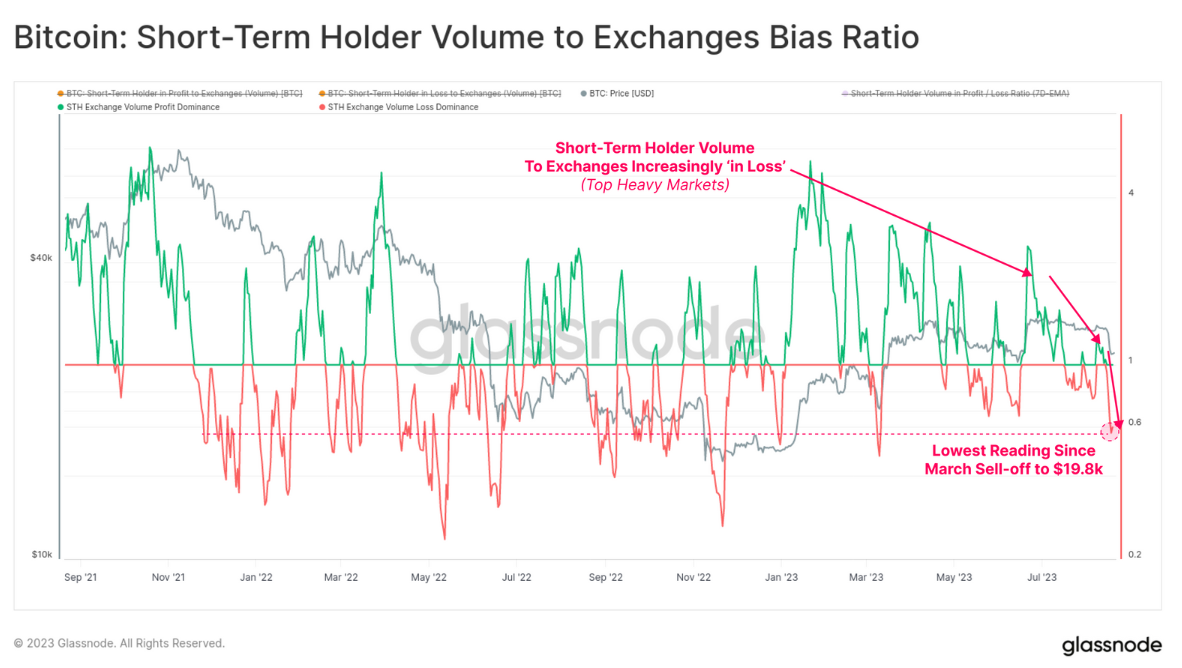 Bitcoin STH volume to exchanges bias ratio chart (screenshot). Source: Glassnode
Seasoned hodlers’ BTC supply share reaches new peak
In contrast, the LTH investor group has not shown any significant reaction to the drop to $26,000 and below.
Related: Most fear since SVB collapse — 5 things to know in Bitcoin this week
“When we examine the response from Long-Term Holders (LTHs), we find that there is virtually no reaction,” Glassnode confirms.
“The LTH group did not significantly increase the volume sent to exchanges, and their total balance actually rose to a new all-time high this week.”
An accompanying chart illustrating LTH exchange inflows describes these as “negligible.”
“Long-Term Holders remain largely unaffected and unresponsive, which is a typical behavior pattern for this group during periods of bear market hangover,” concludes “The Week On-Chain.”
“Short-Term Holders, however, are of greater concern, with 88.3% of their held supply (2.26M BTC) now at an unrealized loss. This is further exacerbated by an increase in STH realized losses being sent to exchanges, along with the loss of key technical moving average support, placing the bulls at a disadvantage.”
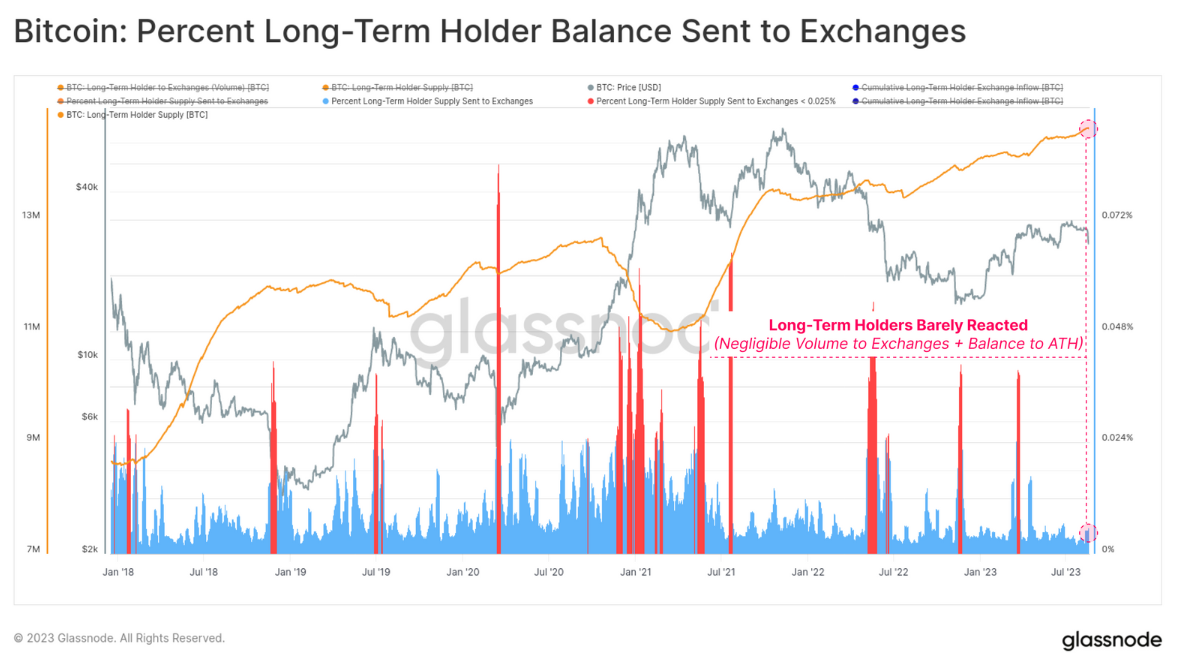 Bitcoin % LTH balance sent to exchanges chart (screenshot). Source: Glassnode
Collect this article as an NFT to preserve this moment in history and show your support for independent journalism in the crypto space.
This article does not provide investment advice or recommendations. Every investment and trading decision carries risk, and readers should perform their own research before making a choice.
