Disclaimer: Information found on CryptoreNews is those of writers quoted. It does not represent the opinions of CryptoreNews on whether to sell, buy or hold any investments. You are advised to conduct your own research before making any investment decisions. Use provided information at your own risk.
CryptoreNews covers fintech, blockchain and Bitcoin bringing you the latest crypto news and analyses on the future of money.

Bitcoin initially declined when the U.S.-Iran conflict started, but two weeks later, it is surpassing most assets.

Every escalation in the Iran conflict has been more significant than the previous one, yet each bitcoin downturn has been less severe.
 (Digital Storm/Shutterstock/Modified by CoinDesk)
Key points:
- Bitcoin, which was the sole major asset trading at the onset of the conflict on a Saturday, initially dropped by 8.5 percent but has since risen approximately 11 percent from its opening-day lows.
- Despite experiencing sell-offs with each negative news report, bitcoin has consistently bounced back to higher lows, establishing a rising support level between about $64,000 and over $70,000, while encountering resistance in the range of $73,000 to $74,000.
- In comparison to other assets during the same two-week period, bitcoin has surpassed gold, the S&P 500, and Asian equities, behaving less like a conventional safe haven and more like a 24/7 liquidity pool that swiftly absorbs geopolitical shocks compared to other markets.
Bitcoin was the first asset to adjust to the Iran war as it was the only liquid market open when the U.S. and Israel initiated their assault on a Saturday, a few weeks ago.
It experienced an 8.5% decline on that day. Two weeks later, it has outperformed gold, the S&P 500, Asian equities, and the Korean stock market. Only oil and the dollar have shown better performance, both being direct beneficiaries of the conflict.
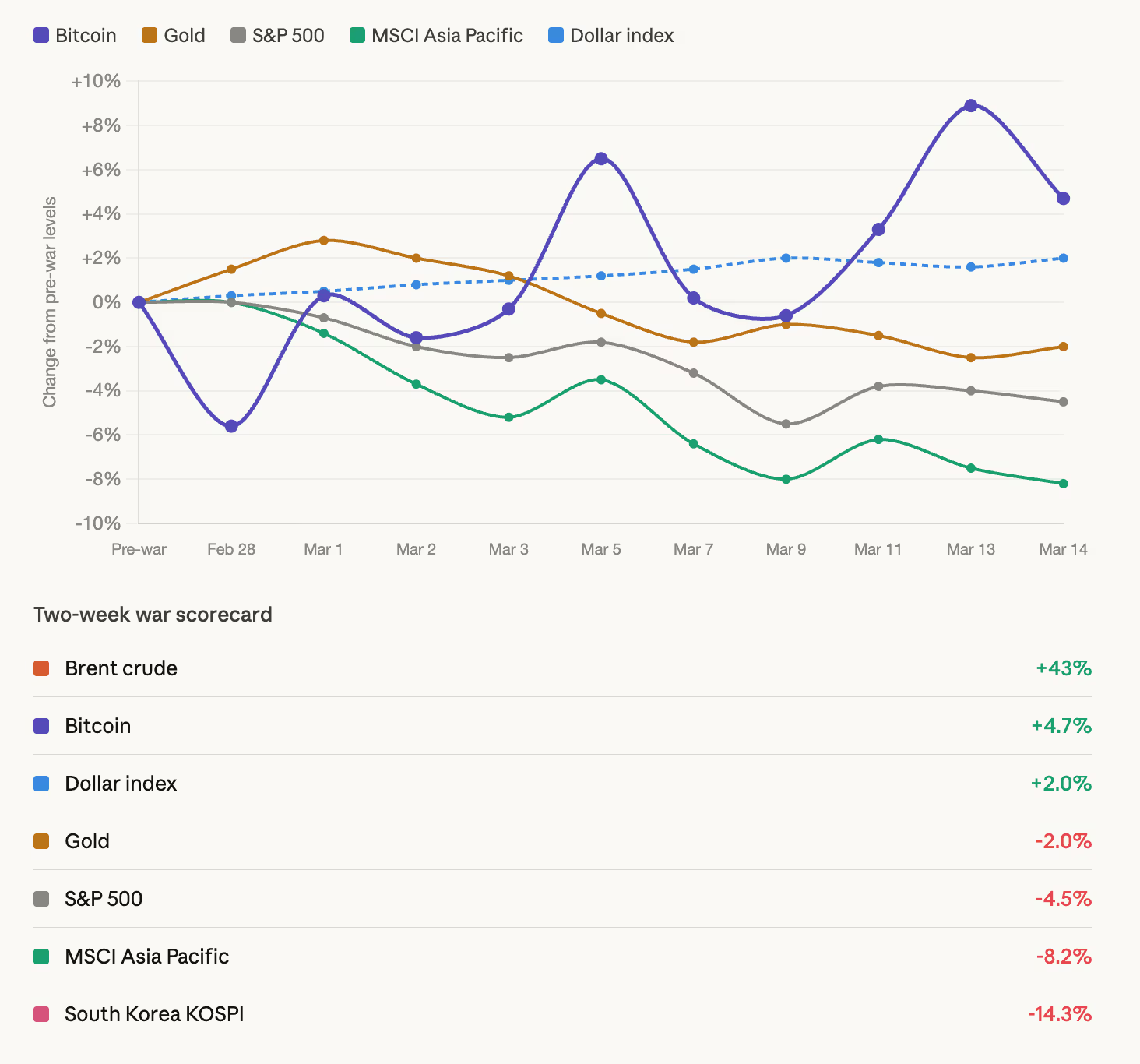
Bitcoin’s status as a safe haven—an idea that faced challenges during last year’s price downturn—seems to have returned to the forefront of investors’ considerations. Additionally, it is functioning as the quickest shock absorber in global markets as escalations increase while downturns diminish.
The trend is more evident when observing where bitcoin has attracted buyers following each decline.
Related Posts
On February 28, the day of the initial attacks, it hit a low of $64,000. On March 2, after Iran’s retaliatory missiles targeted Gulf states, the new low was $66,000. By March 7, following a week of ongoing conflict, the low had risen to $68,000. After the tanker incidents on March 12, it maintained a floor at $69,400. Following the events at Kharg Island on Saturday, the low reached $70,596.
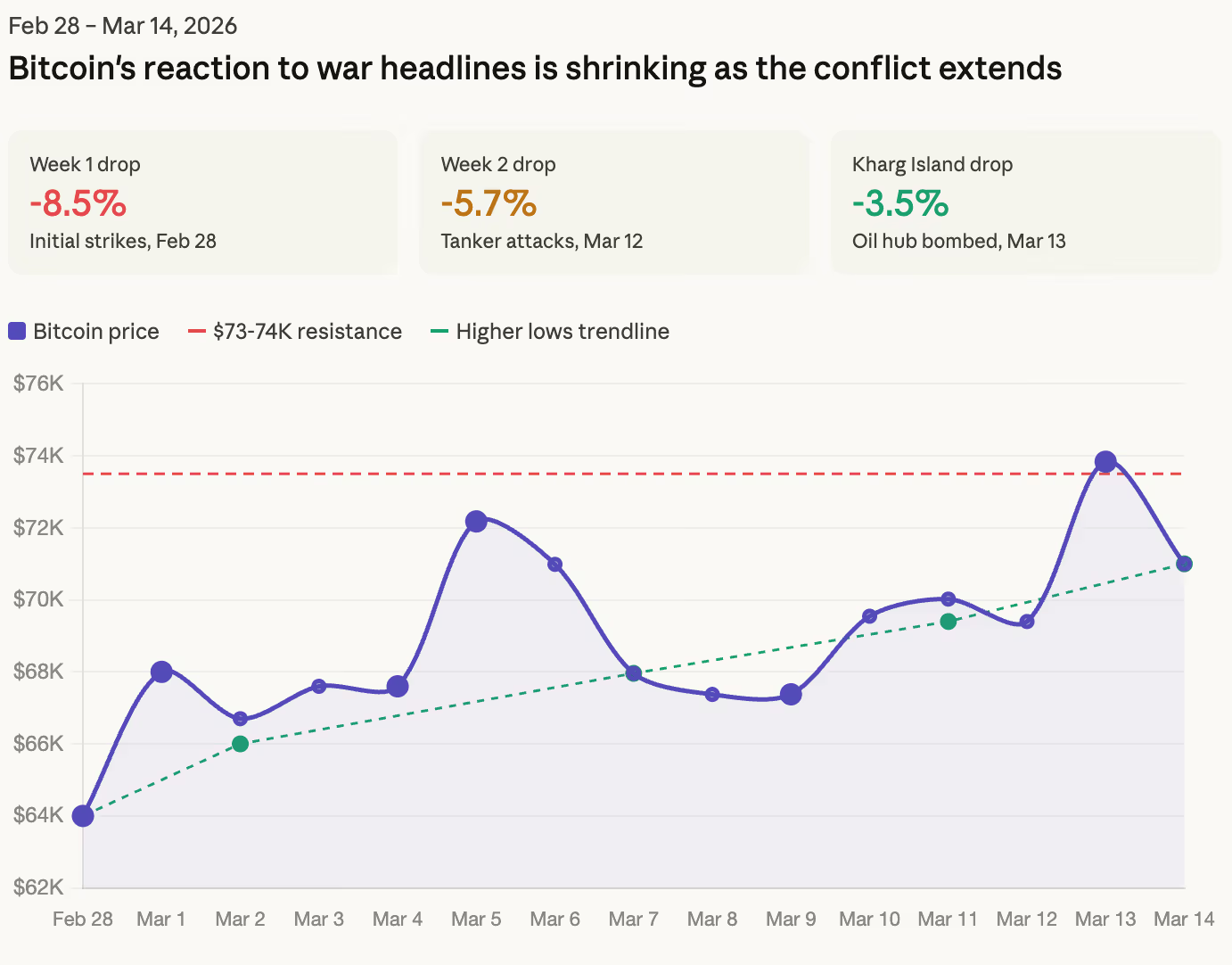
In simpler terms, each sell-off finds buyers at progressively higher levels.
The trend of increasing lows has been rising by approximately $1,000-$2,000 with each event, tightening the range from below, while $73,000-$74,000 remains a ceiling that has now rejected bitcoin four times.
This compression will eventually need to resolve. Either the floor will meet the ceiling, allowing bitcoin to break above $74,000 on the next attempt, or the pattern will fail, and a more significant escalation will ultimately overwhelm the buying pressure.
Staying resilient
The most notable aspect is bitcoin’s performance compared to other assets over the past two weeks.
Oil has risen over 40% since the war commenced, as illustrated in the chart below. The S&P 500 has declined. Gold has shown volatility in both directions. Asian equities experienced their most challenging week since March 2020.
