Disclaimer: Information found on CryptoreNews is those of writers quoted. It does not represent the opinions of CryptoreNews on whether to sell, buy or hold any investments. You are advised to conduct your own research before making any investment decisions. Use provided information at your own risk.
CryptoreNews covers fintech, blockchain and Bitcoin bringing you the latest crypto news and analyses on the future of money.


A declining hash rate and the ensuing strain on miners might indicate a potential capitulation phase, which could lead to further price declines
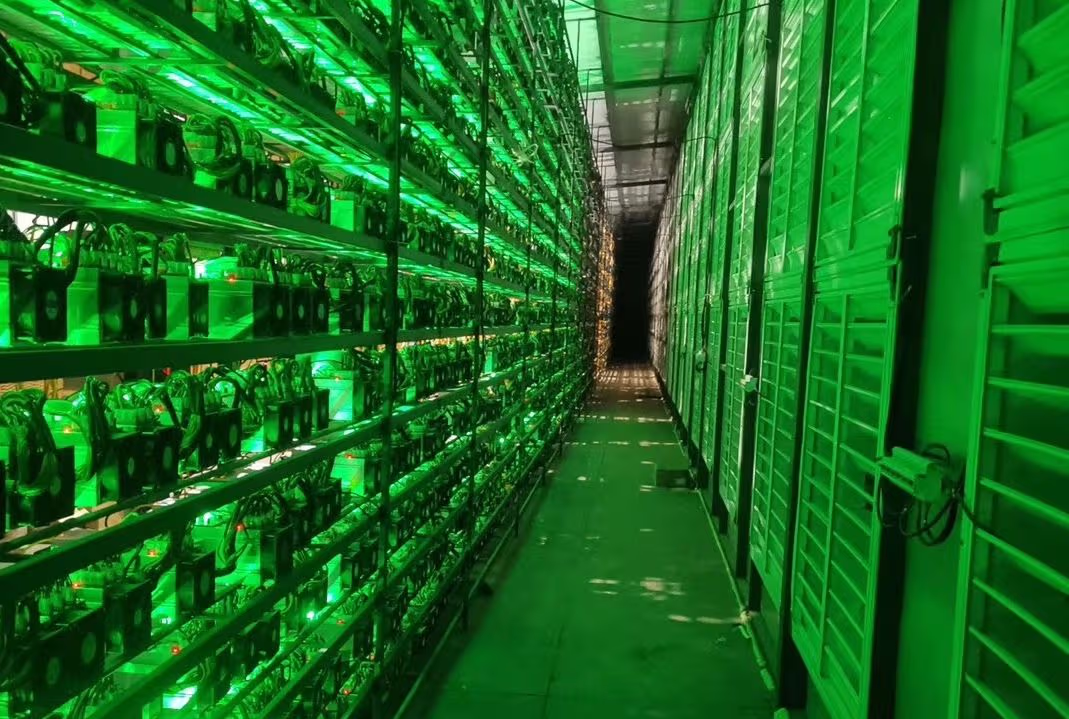 Bitcoin Mining (Hashage)
Key points:
- The hash rate of the Bitcoin network has decreased approximately 8% over the past week to 920 EH/s, likely due to disruptions in the energy market in the Middle East.
- Bitcoin mining difficulty is projected to decrease by as much as 10%, representing one of the most significant downward adjustments in the last five years.
- A significant reduction in hash rate typically parallels phases of miner distress and downward pressure on Bitcoin prices.
Bitcoin’s hash rate is declining as the conflict in the Middle East elevates energy costs, intensifying challenges for the mining industry and the overall market.
Related Posts
This hash rate reduction is likely linked to geopolitical unrest resulting from the conflict with Iran and increasing oil prices, as an estimated 8% to 10% of global Bitcoin mining occurs in energy markets that are affected by energy prices.
With hash rate down nearly 8% over the last week to 920 EH/s, the network may be approaching another miner capitulation phase. Historically, such phases have been associated with downward pressure on Bitcoin’s price, which is presently trading below $72,000, about 5% lower than its peak on Monday.
Consequently, the network is expected to experience an approximate 8% downward adjustment in difficulty, marking the second-largest negative shift in the last five years, according to mempool.space.
This drop follows one of the largest recorded difficulty decreases in mid-February, underscoring substantial volatility in mining activities.
Due to increased competition, persistently low transaction fees, and Bitcoin price fluctuations, this has compressed margins, leading many publicly listed miners to diversify into AI and high-performance computing, in addition to increasing Bitcoin sales to sustain operations, creating a headwind for Bitcoin’s price.
