Disclaimer: Information found on CryptoreNews is those of writers quoted. It does not represent the opinions of CryptoreNews on whether to sell, buy or hold any investments. You are advised to conduct your own research before making any investment decisions. Use provided information at your own risk.
CryptoreNews covers fintech, blockchain and Bitcoin bringing you the latest crypto news and analyses on the future of money.

Bitcoin experiences a $110 billion decline despite favorable Wall Street developments in recent weeks.

Institutional interest continues to expand, yet a stronger dollar and changing expectations around interest rates are limiting the latest surge.
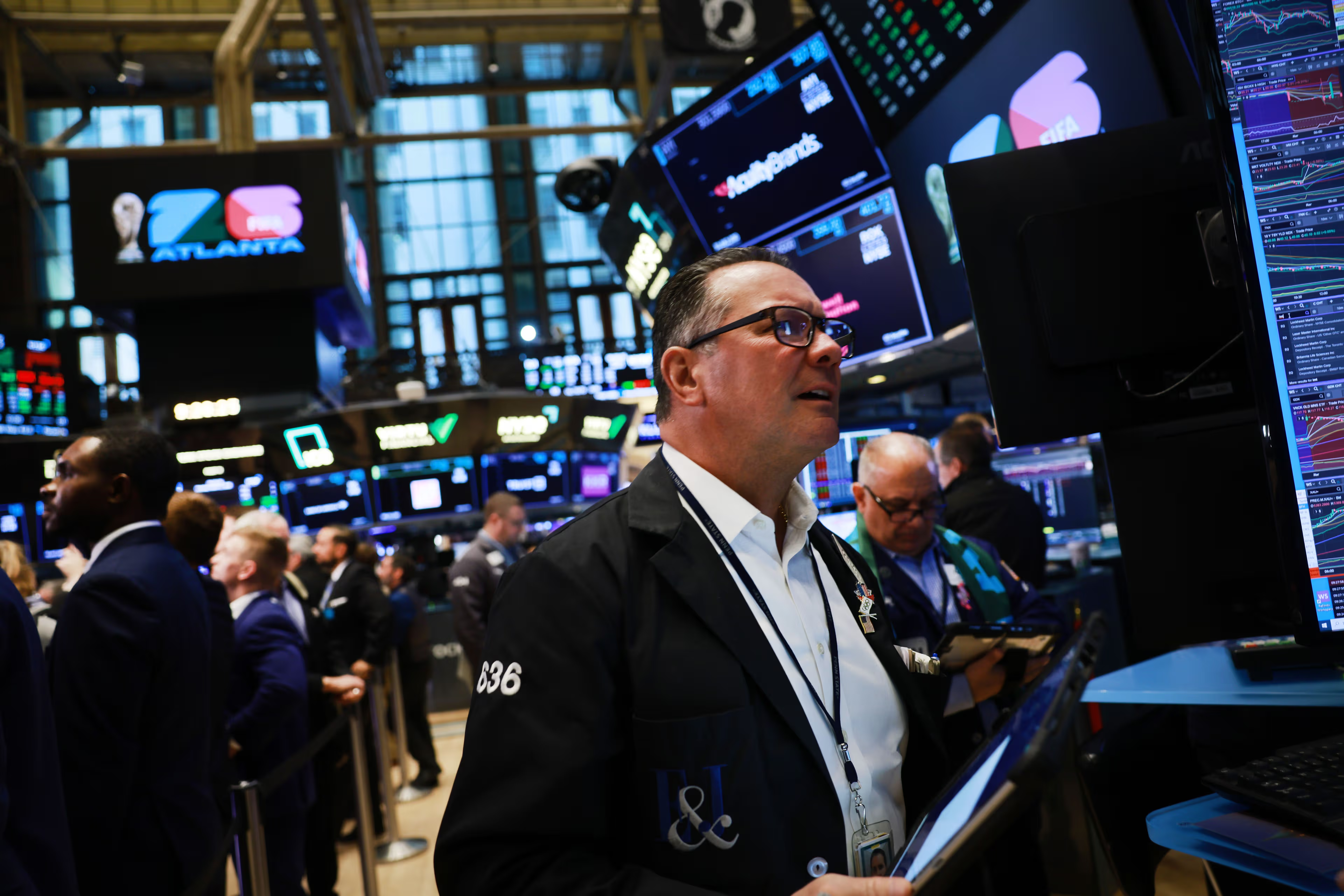 Bitcoin’s significant institutional week could not shield it from a macro reality check (Getty Images)
Key points:
- Despite a series of “crypto-native” achievements — such as BNY Mellon serving as an ETF custodian and Kraken gaining access to Federal Reserve payment systems — Bitcoin is increasingly disregarding favorable industry developments and responding to global trends like the U.S. dollar index and interest rates.
- The same Wall Street adoption that the sector has pursued for years has closely linked bitcoin with the Nasdaq, resulting in a selloff in crypto alongside declines in tech stocks.
- While the price is currently experiencing a downward trend, the foundational aspects of the industry are becoming more solid, with major players like ICE investing in exchanges and government encouragement for banks to engage with the sector.
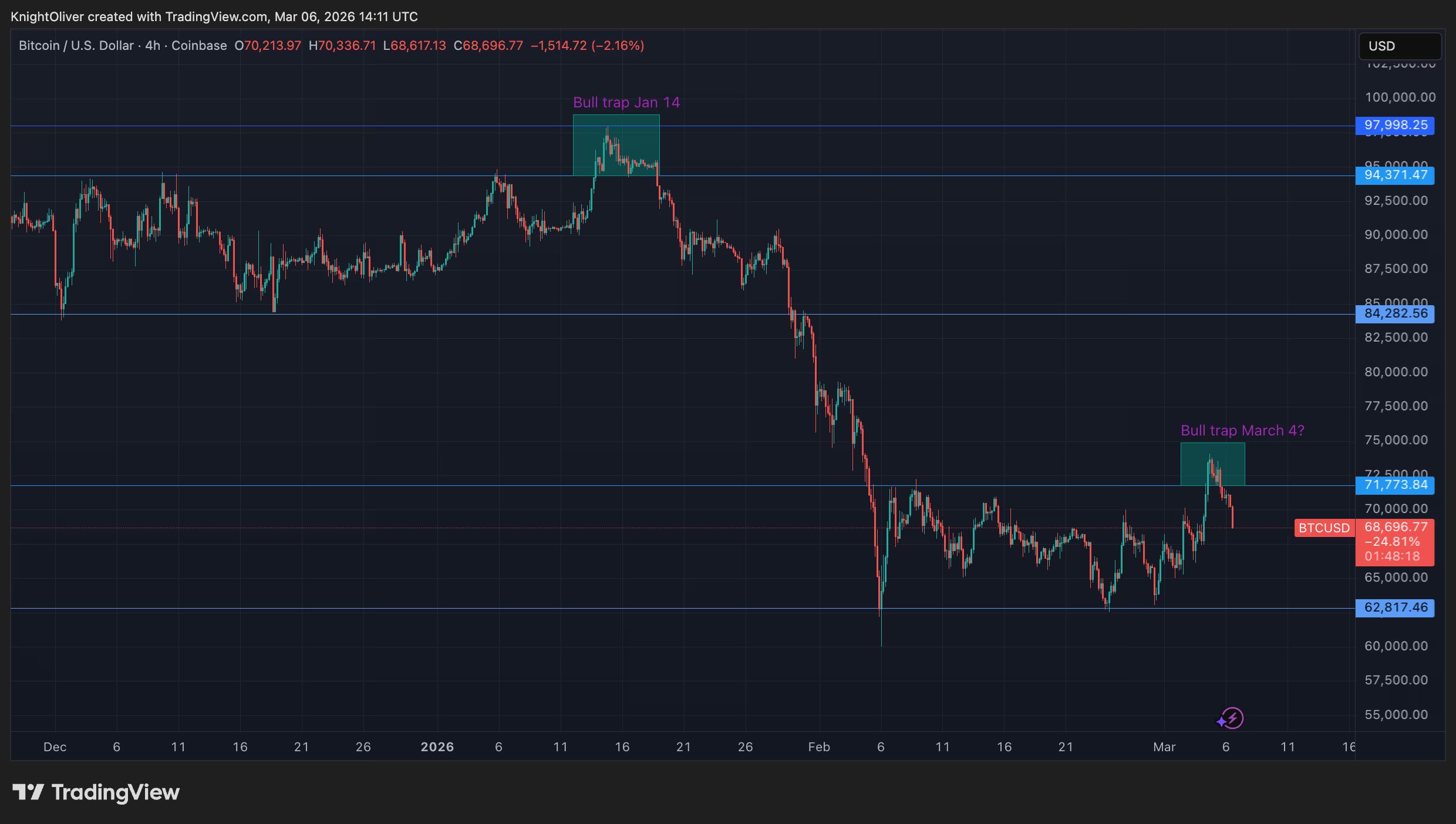
This week, Bitcoin made a brief attempt to reach $74,000, propelled by a series of positive developments that have increasingly connected the crypto sector with conventional finance.
Some market analysts began referring to this as a bullish rally, with one expert even suggesting that the new surge ‘has legs.’
However, the upward momentum was short-lived. By the week’s conclusion, the leading cryptocurrency had retreated below $69,000, resulting in a loss of $110 billion in market capitalization.
The downturn occurred despite what could have been perceived as one of the most encouraging periods of institutional news for the sector in recent months.
Morgan Stanley designated the Bank of New York Mellon as a custodian for its spot bitcoin ETF exposure, adding another layer of Wall Street infrastructure surrounding the asset class. Crypto exchange Kraken secured access to the Federal Reserve’s payment network, marking a significant step in the integration of crypto firms within the U.S. banking framework. Intercontinental Exchange (ICE), which owns the New York Stock Exchange, invested in crypto exchange OKX, valuing it at $25 billion, while U.S. President Donald Trump publicly recommended that traditional banks establish a functional relationship with the crypto sector.
Any one of these individual developments might have triggered a market rally in previous crypto cycles, when institutional adoption was viewed as the catalyst for a significant bullish trend. In contrast, now that adoption has materialized, the market appears to disregard it as macroeconomic factors take precedence.
 BTC/USD (TradingView)
Reasons for the selloff
The selloff was primarily instigated by a strengthening U.S. dollar as tensions in Iran escalated, following U.S. President Donald Trump’s apparent dismissal of any prospects for a negotiated resolution with Iran, stating, “There will be no deal with Iran.”
This prompted a surge in oil prices, renewed inflation concerns, and altered expectations regarding interest rates (despite labor data indicating a weakening market), which exerted pressure on risk assets worldwide. Equities declined as the dollar index increased, and cryptocurrencies — which have been increasingly correlated with technology stocks (i.e., risk assets) — followed suit.
Moreover, fractures in the global private credit market reached Wall Street giant BlackRock, which reportedly began restricting withdrawals from its $26 billion private credit fund in response to rising redemption requests. Following similar difficulties at Blue Owl, which sold $1.4 billion in loans last month to meet withdrawal demands, these occurrences started to unsettle investors.
Reality check
What does this week’s occurrence signify? A growing realization in crypto markets: macroeconomic factors are more influential than crypto-specific news.
In recent years, bitcoin has become more closely linked with the Nasdaq and other risk assets as institutional investors entered the scene. Hedge funds, asset managers, and ETF flows increasingly view bitcoin as part of a broader portfolio of macro-sensitive assets, responding to liquidity conditions, interest rates, and dollar strength.
Ironically, the institutional adoption that many within the industry have long pursued may be contributing to this trend.
Related Posts
As bitcoin becomes integrated into traditional financial portfolios, its price is increasingly swayed by the same dynamics that affect equities, commodities, and currencies. When the dollar strengthens or interest rate expectations rise, liquidity tightens across markets — and crypto often does not escape this influence.
This does not imply that the continuous stream of institutional developments is insignificant. The growth of custody services, banking access, and exchange investments indicates a more developed and mature crypto market structure forming beneath the surface.
Who is selling?
One question investors pose when faced with such conflicting price movements is: Who is selling?
The macro risk appeared to have primarily unsettled short-term bitcoin holders, who sold as bitcoin approached $74,000.
These short-term holders transferred over 27,000 BTC ($1.8 billion) to exchanges for profit in the last 24 hours — marking one of the largest spikes in recent months, according to CryptoQuant analyst Darkfost.
Short-term holders tend to be the most reactive group in the market, and their selling behavior reflects ongoing caution amid the continuing conflict in Iran and other macroeconomic uncertainties. These holders act more like traders, entering and exiting an asset to realize quick profits, in contrast to long-term investors who aim to buy and hold. With bitcoin’s limited liquidity, such actions significantly impact price movements.
The data corroborates this.
Currently, the only short-term investors in profit are those who acquired bitcoin between one week and one month ago, at a realized price of approximately $68,000, indicating that some recent buyers above that price are opting to secure gains rather than extend their holdings.
In the short term, with crypto entrenched in a bear market since early October and macroeconomic uncertainties, price is the primary concern for investors.
Positive developments
However, it is not entirely negative.
A recent report from Binance Research highlighted that U.S. spot bitcoin ETFs saw approximately $787 million in net inflows last week — their first positive weekly flows since mid-January — indicating that some institutional investors may be starting to re-engage with the market after several weeks of consistent outflows.
Moreover, in a recent conference, major university endowment funds, which typically focus on long-term returns, indicated that they are exploring other alternative investment options, including digital asset-related ETFs, given the exceptionally high valuations of traditional equities.
The report also suggested that signs of speculative excess may have already been eliminated.
Bitcoin funding rates have declined to their lowest levels since 2023, suggesting that leveraged long positions have largely been unwound — conditions that historically create a more stable foundation for enduring rallies driven by spot demand rather than short-term speculation.
Ultimately, it all hinges on conviction and market movements.
Some traders labeled the sharp rally earlier this week as a “bull trap” — a brief breakout that entices late buyers before reversing lower. While institutional confidence is on the rise, with limited liquidity, a nervous market, macro challenges, and a lack of clear catalysts, bitcoin’s price movements this week appear to have validated their concerns.
Read more: Bitcoin is stuck in a rut but JPMorgan says new legislation could be the ultimate spark
