Disclaimer: Information found on CryptoreNews is those of writers quoted. It does not represent the opinions of CryptoreNews on whether to sell, buy or hold any investments. You are advised to conduct your own research before making any investment decisions. Use provided information at your own risk.
CryptoreNews covers fintech, blockchain and Bitcoin bringing you the latest crypto news and analyses on the future of money.


Liquidation heatmap indicates a significant liquidity cluster around $66,000, suggesting a possible downside target.
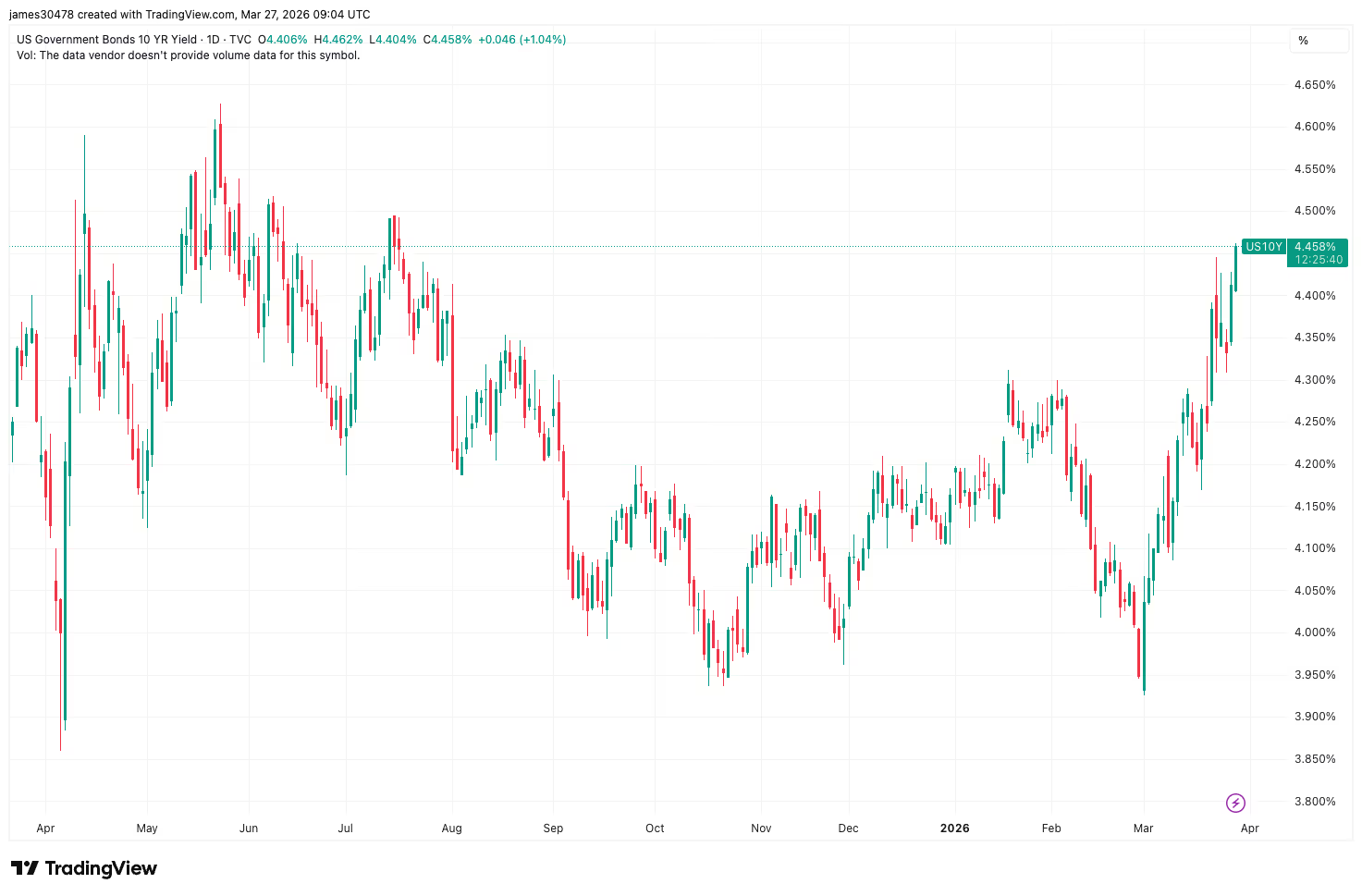 US10Y (TradingView)
Key points:
- More than $50 million in long liquidations occurred within an hour, primarily involving bitcoin.
- Increasing U.S. Treasury yields and a stronger dollar are putting pressure on risk assets, including cryptocurrencies and crypto-related stocks.
Bitcoin has decreased by an additional 2% in the last 24 hours, falling below $68,000 for the first time in four days. This drop triggered over $50 million in long liquidations within the past hour, as reported by Coinglass, with approximately 70% originating from bitcoin positions.
This decline affected shares of crypto-related firms such as Circle Internet (CRCL), Coinbase (COIN), and Strategy (MSTR), the largest publicly traded holder of Bitcoin, which saw a downturn in pre-market trading.
Related Posts
Traders holding long positions anticipate price increases. Liquidations take place when an exchange forcibly closes a leveraged position because the trader lacks sufficient collateral, referred to as margin, to maintain the position.
A review of the 48-hour liquidation heatmap, which indicates price levels where substantial clusters of forced liquidations may take place, reveals notable liquidity beneath $66,000, suggesting further downside for bitcoin could be imminent in the near term.
In another indicator of bearish market sentiment, funding rates are currently negative. Funding rates represent periodic payments between traders in perpetual futures contracts, which are derivatives that mirror an asset’s price without an expiration date. When negative, short traders, who are betting on falling prices, compensate long traders.
Macro conditions are worsening as the conflict in the Middle East continues. The 10-year U.S. Treasury yield, a key interest rate for government debt, is approaching 4.5%, its highest level since July, making risk assets like cryptocurrency less appealing.
The MOVE index, which gauges volatility in the U.S. bond market, has increased by 18% within the last 24 hours, reflecting heightened uncertainty.
Simultaneously, oil prices, including Brent and WTI crude, have risen by 3% as Ukraine’s disruption of Russian oil supplies affects President Donald Trump’s efforts to ease supply constraints.
The DXY index, which measures the dollar’s strength against a basket of major trading partners, is climbing toward 100, creating additional challenges for risk assets.
