Disclaimer: Information found on CryptoreNews is those of writers quoted. It does not represent the opinions of CryptoreNews on whether to sell, buy or hold any investments. You are advised to conduct your own research before making any investment decisions. Use provided information at your own risk.
CryptoreNews covers fintech, blockchain and Bitcoin bringing you the latest crypto news and analyses on the future of money.


The Bitcoin Cash (BCH) network experienced a significant upgrade on May 15, enabling developers to generate tokens that share the same characteristics as BCH. These tokens, referred to as “CashTokens,” can be created by anyone utilizing the network.
The blockchain upgrade was successfully implemented at block height 792,772. BCH developer Jason Dreyzehner noted that the new upgrade introduces support for CashTokens, which he views as a “tool for expanding financial access.” Additionally, the upgrade features future-proof multiparty vaults and enhancements for transaction validation.
Congrats on the 2023 upgrade, Bitcoin Cash!
Beginning with block #792773 (000000000000000002fc0cdadaef1857bbd2936d37ea94f80ba3db4a5e8353e8), $BCH supports #CashTokens, future-proof multiparty vaults (P2SH32), and several non-breaking technical improvements to TX validation.— Jason Dreyzehner (@bitjson) May 15, 2023
The developer emphasized that CashTokens could serve a variety of purposes, ranging from payment stablecoins and commodities to gift cards and event tickets. Dreyzehner also indicated that the underlying technology would enable sophisticated on-chain applications, including decentralized exchanges (DEXs), security vaults, and bridged sidechains.
Related: Ordinals good or bad for Bitcoin? Supporters and opposers raise voices
Related Posts
The price of BCH experienced a spike on the same day as a result of the new update. Data indicates that the tokens increased from $114 to a peak of $120 on May 15. However, despite the initial excitement, the price movement was short-lived, as it quickly reverted to the $113 to $114 range following the upgrade.
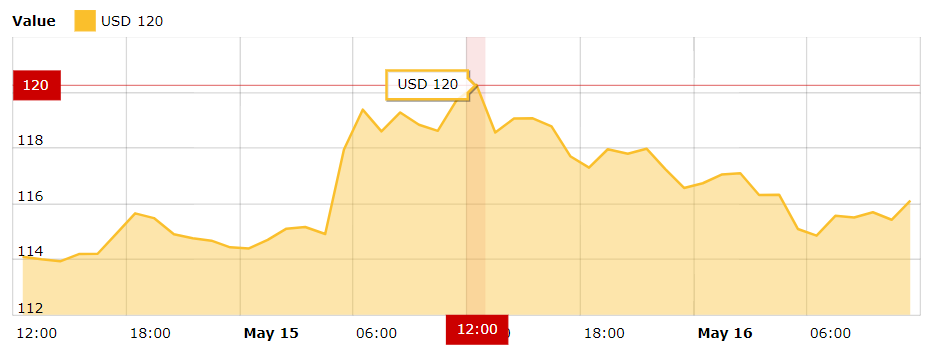 Bitcoin Cash price index from May 14–16. Source: Cointelegraph
The CashTokens upgrade on the Bitcoin Cash network coincides with the rising popularity of BRC-20 tokens. On May 9, BRC-20 tokens exceeded a market capitalization of $1 billion. This rapid growth occurred two months after the creation of the Bitcoin token fungibility protocol and was driven by the rise of tokens such as Ordi (ORDI), Nals (NALS), VMPX (VMPX), Pepecoin (PEPE), and Meme (MEME).
While this new development generated excitement for many, it also introduced a new set of challenges for the network. On May 10, CryptoQuant analyst Axel Adler noted that increased fees and a backlog of transactions have plagued the Bitcoin network due to the new token standard.
Magazine: $3.4B of Bitcoin in a popcorn tin: The Silk Road hacker’s story
