Disclaimer: Information found on CryptoreNews is those of writers quoted. It does not represent the opinions of CryptoreNews on whether to sell, buy or hold any investments. You are advised to conduct your own research before making any investment decisions. Use provided information at your own risk.
CryptoreNews covers fintech, blockchain and Bitcoin bringing you the latest crypto news and analyses on the future of money.

Bernstein reports that Circle could experience a 60% increase in stablecoin adoption driven by AI-enabled financial services.

Analysts from Bernstein indicated that stablecoins are becoming detached from cryptocurrency market cycles as their usage for digital payments increases, which is favorable for USDC issuer Circle.
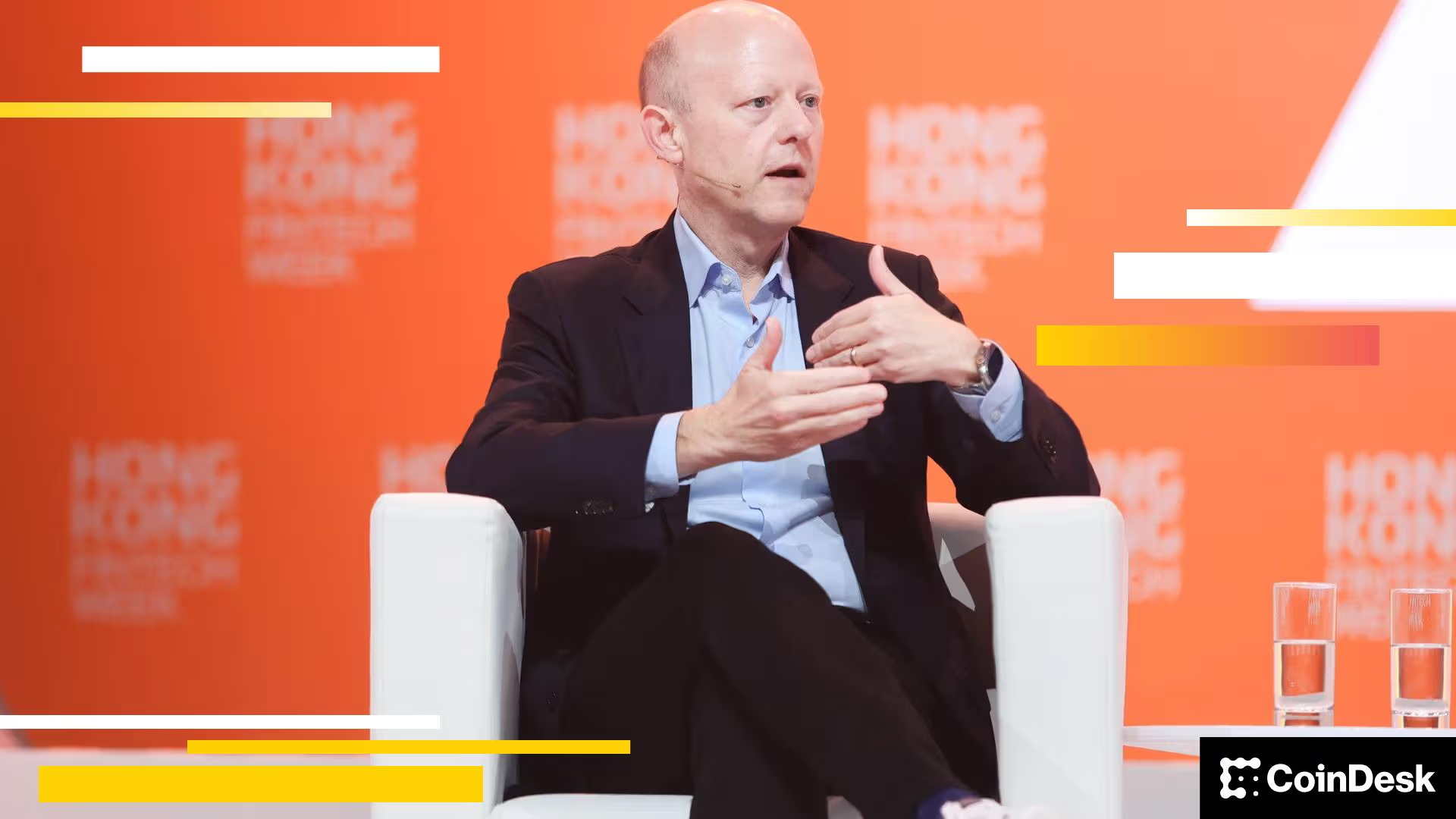 Jeremy Allaire, Co-Founder, Chairman and CEO, Circle Speaks at Hong Kong Fintech Week in 2024 (HK Fintech Week, modified by CoinDesk)
Key Points:
- Analysts from Bernstein stated that shares of USDC stablecoin issuer Circle (CRCL) could rise to $190, indicating a potential upside of approximately 60% after the stock has doubled in recent weeks.
- The adoption of stablecoins is diverging from the cycles of the cryptocurrency market, with USDC supply nearing record levels of $78 billion despite the ongoing bear market in crypto.
- Growth in payments and the emergence of AI-driven micropayments are noted as new demand factors, according to the report.
Circle (CRCL), the company behind the USDC (USDC) stablecoin, may continue its recent impressive rise, according to analysts at brokerage Bernstein.
The team, headed by Gautam Chhugani, rates the stock as outperform with a target price of $190, suggesting an upside of about 60% from the current level of $120. This comes after the stock increased by over 100% in recent weeks following a positive earnings report, which likely led to a short squeeze.
Bernstein’s analysis focuses on how stablecoin adoption is increasingly separating from the overall cryptocurrency market.
Related Posts
Circle’s USDC supply saw a temporary decline after the liquidity shock in the crypto markets in October, but it has since bounced back to just below its record of $78 billion, even as bitcoin and the wider crypto markets remain significantly lower than their peaks. The overall market for U.S. dollar-backed stablecoins has also stayed stable at around $270 billion, despite the ongoing bear market, as noted in the report.
There is also a noted increase in transaction activity, according to the report. Adjusted stablecoin volumes have surged over 90% year-over-year, while transaction velocity, a metric indicating how often tokens are exchanged, has also risen, indicating that stablecoins are being utilized more for purposes beyond crypto trading.
The adoption of stablecoins for payments is a significant factor driving this trend, as they are increasingly integrated with traditional card networks, facilitating everyday transactions. For instance, Visa (V) now supports more than 130 stablecoin-linked cards across 50 countries, processing approximately $4.6 billion in annualized settlement volume, as noted in the report.
Circle is also broadening its Circle Payments Network, which enables institutions to transmit USDC internationally and convert it into local currencies via banking partners. The network currently comprises around 55 institutions, with annualized volumes reaching $5.7 billion earlier this year, according to the report.
Looking forward, Bernstein also pointed out a potential new growth area: AI-driven “agentic finance.” As autonomous software agents increasingly engage in online transactions, stablecoins may serve as a natural payment method for micropayments between machines, including for API calls or automated services.
To support this vision, Circle is developing a high-throughput, payment-centric blockchain named Arc, which is intended for rapid, cost-effective transactions.
Read more: Why Circle and Stripe (And Many Others) Are Launching Their Own Blockchains
