Disclaimer: Information found on CryptoreNews is those of writers quoted. It does not represent the opinions of CryptoreNews on whether to sell, buy or hold any investments. You are advised to conduct your own research before making any investment decisions. Use provided information at your own risk.
CryptoreNews covers fintech, blockchain and Bitcoin bringing you the latest crypto news and analyses on the future of money.

Base by Coinbase to prioritize tokenized markets, stablecoins, and developer initiatives this year.

The initiative is part of the chain’s strategy to move away from Optimism technology and develop its own infrastructure in pursuit of enhanced autonomy and scalability.
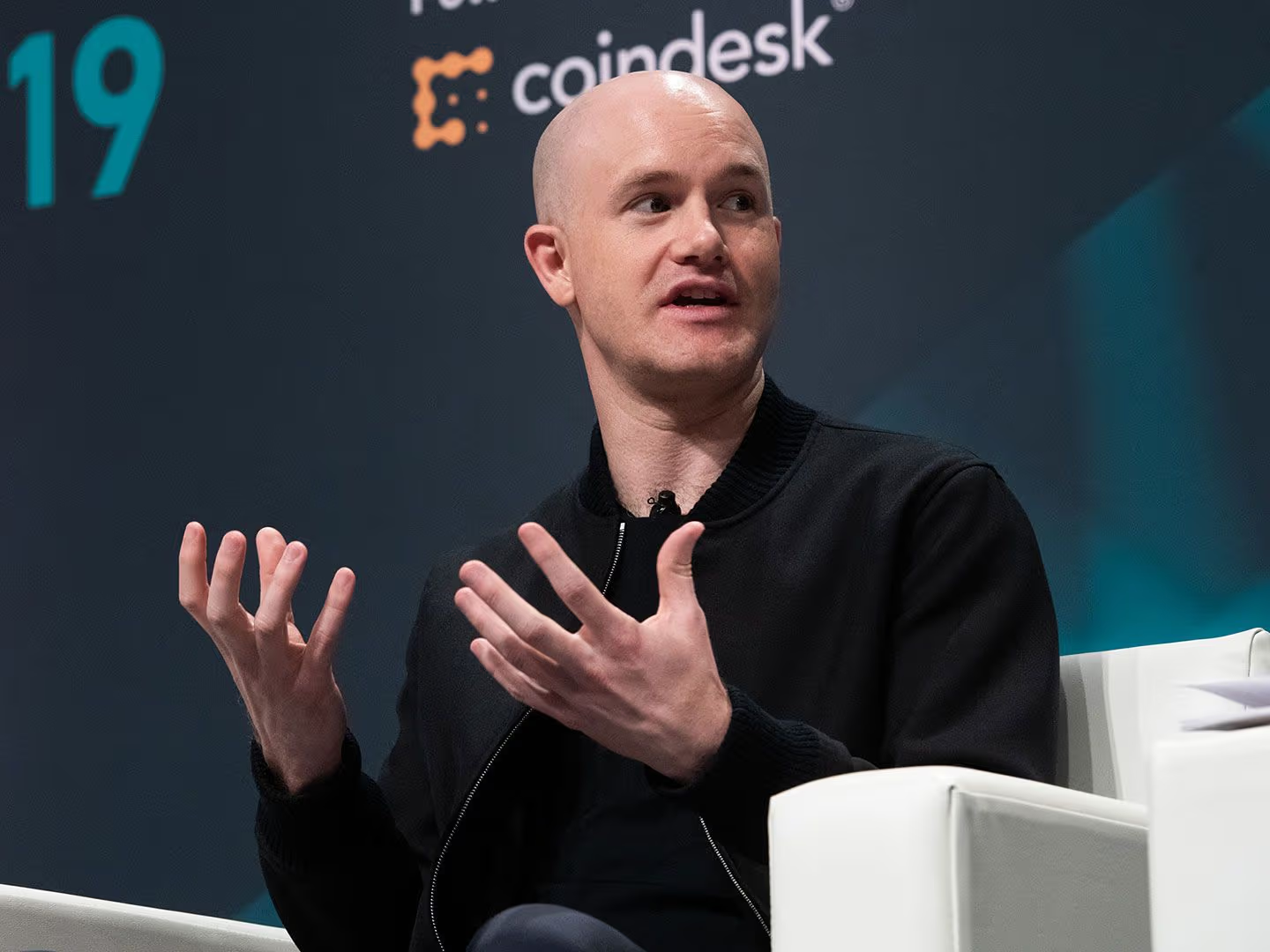 Coinbase CEO Brian Armstrong at Consensus 2019 (CoinDesk)
Key points:
- Base announced its intention to enhance tokenized asset markets, improve stablecoin payment scalability, and cultivate its developer ecosystem in response to increasing institutional interest in on-chain finance.
- The Ethereum layer-2, launched in 2023, is transitioning from Optimism’s technology stack to its proprietary infrastructure in pursuit of heightened independence and scalability.
Base, the layer-2 network developed by Coinbase (COIN), is reinforcing its commitment to establish what it describes as a “global on-chain economy,” presenting a strategy for 2026 that focuses on markets, payments, and developers.
Base is among the most widely utilized layer-2 networks within the Ethereum ecosystem, having become publicly accessible in August 2023. Initially constructed using Optimism’s OP Stack as a component of the larger “Superchain” ecosystem, the project has recently indicated its intention to evolve its infrastructure as it expands. In February, the Coinbase team communicated that the chain will increasingly depend on its own in-house code.
Related Posts
Layer-2 blockchains are built atop Ethereum and are designed to enhance transaction speed and reduce costs by handling transactions independently, while still relying on Ethereum for security. This model has become integral to Ethereum’s scaling strategy, facilitating quicker and less expensive transactions without entirely removing activity from the network. However, some Ethereum leaders, including co-founder Vitalik Buterin, have recently indicated a shift in focus toward scaling the base layer itself, raising questions about how layer-2 networks will integrate into Ethereum’s evolving framework.
For 2026, Base stated it will concentrate on three primary areas: expanding on-chain markets, enhancing stablecoin-based payment systems, and fostering its developer ecosystem — initiatives that arise as on-chain trading venues and stablecoins experience growing adoption among institutional participants.
Regarding markets, the network aims to develop infrastructure to accommodate tokenized forms of assets like equities and commodities, in addition to existing crypto-native markets such as perpetuals and predictions. It also seeks to enhance settlement speeds and minimize costs, while positioning its Base App as a platform for trading a diverse array of assets.
In terms of payments, Base is emphasizing stablecoins, with upcoming enhancements that include privacy features, stablecoin-based transaction fees, and improved payment tools. The company also mentioned plans to increase liquidity for stablecoins linked to various currencies and to integrate additional financial functionalities into its app, such as savings and borrowing.
With respect to developers, Base committed to ongoing investments in initiatives like Base Batches and new tools, including support for AI-driven applications interfacing with on-chain markets. The company intends to introduce new standards and incentive structures aimed at boosting user engagement and transaction volumes.
Read more: Optimism’s OP token falls after Base moves away from the network’s ‘OP stack’ in major tech shift
