Disclaimer: Information found on CryptoreNews is those of writers quoted. It does not represent the opinions of CryptoreNews on whether to sell, buy or hold any investments. You are advised to conduct your own research before making any investment decisions. Use provided information at your own risk.
CryptoreNews covers fintech, blockchain and Bitcoin bringing you the latest crypto news and analyses on the future of money.

Bank of Korea includes two additional banks in digital won trials as practical testing commences.

Korea’s central bank, along with nine commercial banks, has initiated real-world testing of deposit tokens, which encompass subsidy payments and peer-to-peer transfers.
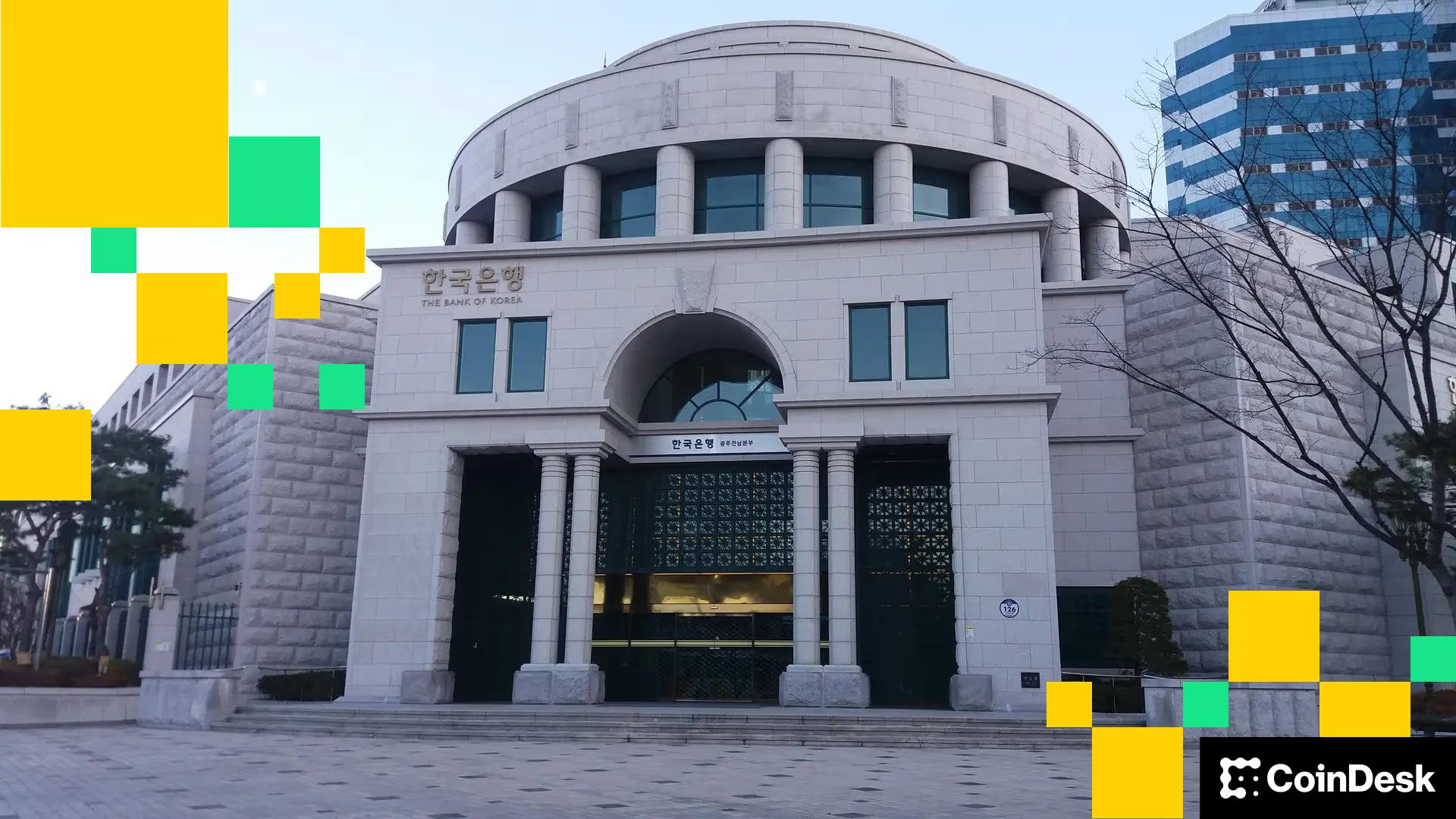 The Bank of Korea has commenced the next stage of its digital won project with real-world trials. (Neoalpha-Wikimedia Commons/Modified by CoinDesk)
Key details:
- The Bank of Korea has initiated phase two of its digital won pilot, broadening its collaboration with nine commercial banks to evaluate bank-issued deposit tokens for nationwide payment systems and governmental subsidies.
- This new phase will assess large-scale, won-pegged deposit tokens developed on a wholesale CBDC framework, aiming to lower transaction costs for both large enterprises and small vendors encumbered by credit card charges.
- The pilot progresses as South Korea’s comprehensive Digital Asset Basic Act experiences delays due to conflicts regarding the issuance of KRW-pegged stablecoins.
The Bank of Korea and nine commercial banks have entered phase two of a digital won pilot, assessing bank-issued deposit tokens supported by central bank infrastructure to evaluate if the system can facilitate government subsidy distributions and enable transfers and payments nationwide.
The second phase of Project Hangang introduces two additional banks, Kyongnam Bank and iM Bank, to the initial seven institutions involved in the program. These banks will commence extensive testing of the won-pegged deposit tokens constructed on a wholesale central bank digital currency (CBDC) framework, according to various local news reports.
Related Posts
“Participating banks are proactively establishing diverse use cases, targeting large companies and small merchants with high public significance and notable payment fee challenges, concentrating on the potential for significantly reduced fees when utilizing digital currency for transactions,” stated Kim Dong-sub, who leads the Bank of Korea’s digital currency planning division, as reported by the news outlet Chosun.
A primary objective is to decrease transaction expenses. By employing the deposit tokens, the BOK intends to provide a more economical payment option for both large corporations and small businesses that currently face credit card processing fees, as per the bank’s statements.
The initiation of Phase 2 coincides with delays in South Korea’s Digital Asset Basic Act (DABA), a broad regulatory framework designed to govern cryptocurrency trading and issuance in one of Asia’s most dynamic digital asset markets, due to disagreements among regulators concerning stablecoin issuance. The most contentious issue revolves around who should possess the legal power to issue KRW-pegged stablecoins.
In the upcoming tests, peer-to-peer transfers, which posed challenges in Phase 1, will be made feasible.
Kim also mentioned that “the government plans to start distributing subsidies in digital currency during the first half of this year,” with electric vehicle charging infrastructure subsidies anticipated to be among the initial applications.
The Bank of Korea further indicated intentions to incorporate digital currency as a payment method for ‘AI agents,’ which refer to artificial intelligence systems that search for and procure goods and services.
