Disclaimer: Information found on CryptoreNews is those of writers quoted. It does not represent the opinions of CryptoreNews on whether to sell, buy or hold any investments. You are advised to conduct your own research before making any investment decisions. Use provided information at your own risk.
CryptoreNews covers fintech, blockchain and Bitcoin bringing you the latest crypto news and analyses on the future of money.

Bank of Japan broadens blockchain settlement testing environment and confirms continuation of CBDC initiatives.

The BOJ is evaluating blockchain settlement for reserves and investigating tokenized central bank currency as it prepares to determine in 2026 whether to launch a retail digital yen.
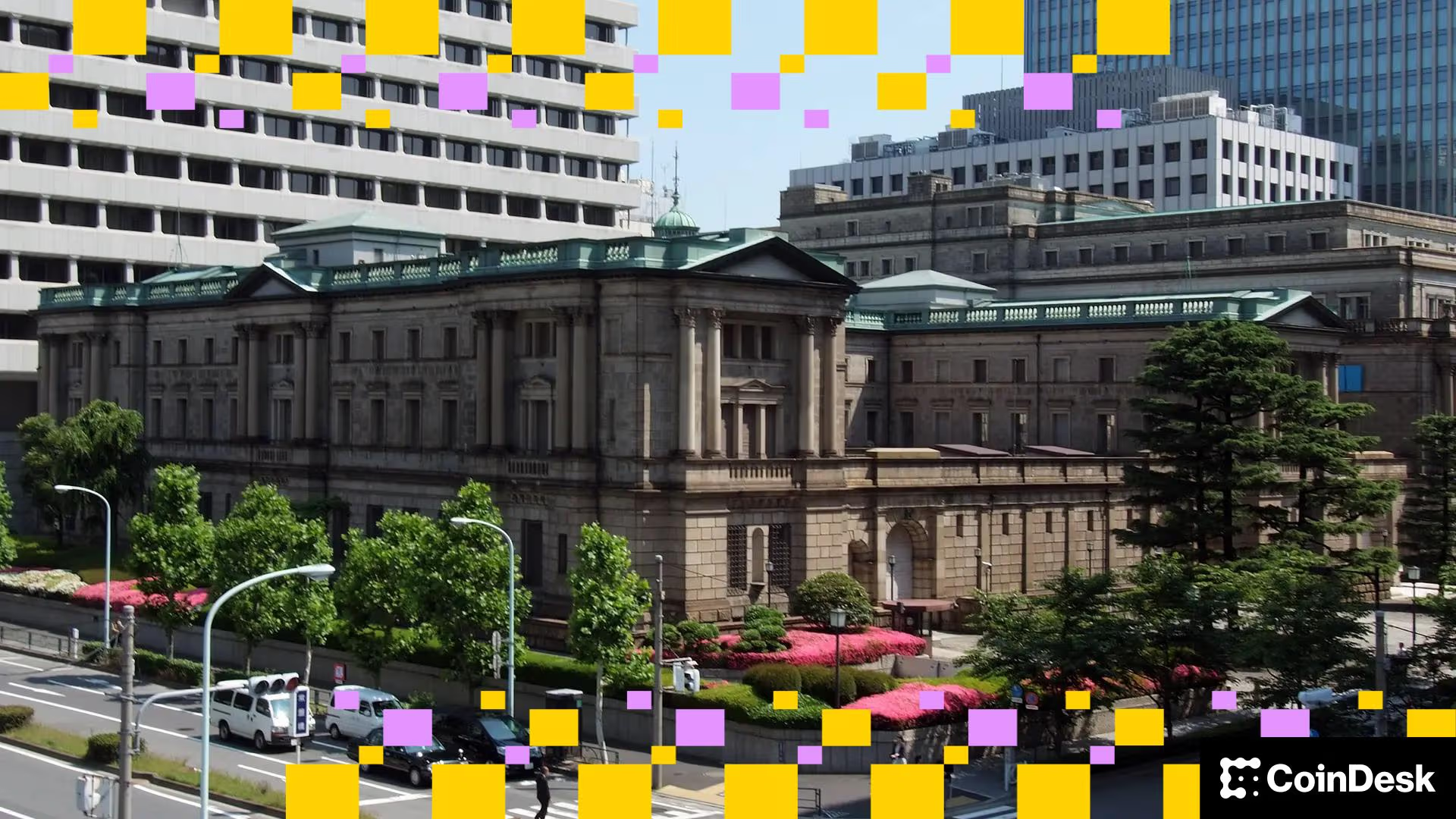 BOJ announces an expansion of its blockchain sandbox for settlement and bank deposits. (Credit: By Wiiii-Wikimedia Commons/Modified by CoinDesk)
What to know:
- The Bank of Japan has initiated a blockchain-based sandbox initiative to test settlements utilizing central bank reserves maintained as current account deposits.
- The initiative will investigate how blockchain systems can integrate with existing frameworks for applications such as domestic interbank and securities settlement, which analysts believe could facilitate immediate, continuous transactions and lessen gridlock risks.
- Governor Kazuo Ueda mentioned that the BOJ’s pilot program for a retail central bank digital currency is still in progress, while Japan is also involved in Project Agorá to evaluate tokenized wholesale central bank deposits for more effective cross-border payments.
The Bank of Japan (BOJ) has reported an expansion of its blockchain experimentation for the settlement of central bank reserves, while underscoring that efforts for a retail central bank digital currency (CBDC) are ongoing.
The BOJ has introduced a “sandbox project” to test settlements and bank deposits using central bank assets, Governor Kazuo Ueda stated on Tuesday during a presentation titled “The New Financial Ecosystem and the Role of Central Banks.”
Related Posts
“In this experimental initiative, the Bank will undertake technical trials on settlement utilizing central bank currency in the form of current account deposits on a blockchain-based system,” Ueda remarked.
The bank aims to explore “integration methods with the existing system and to analyze use cases like domestic interbank settlement and securities settlement,” he continued. Analysts indicate that incorporating blockchain for reserves settlement could enable instantaneous, round-the-clock settlement and mitigate gridlock risks during stressful situations.
Ueda reiterated that the retail CBDC project remains active. “First, the ongoing pilot program for retail central bank digital currency (CBDC) involves the bank’s sustained technical trials, which will enable the provision of … a digital version of cash when demanded by the broader public.”
Japan commenced CBDC experiments in 2021 and initiated a pilot program in 2023. However, the central bank has not yet committed to launching a digital yen. Previous reports suggest that the BOJ will decide this year on the issuance of a retail CBDC.
Ueda also referenced Project Agorá, an international initiative involving several central banks and major private financial institutions. He indicated that participants are considering “developing a framework that would allow central banks, including the Bank of Japan, to issue central bank currency as tokenized deposits on the blockchain.” If successful, he noted, this effort “could lead to innovations in streamlining cross-border payments.”
In contrast to a retail CBDC, which would serve as a digital version of yen for the general populace, tokenized central bank deposits would embody wholesale central bank currency utilized by financial entities on blockchain-based systems, according to Ueda’s address.
The initiative to employ blockchain technology for reserves settlement follows similar decisions in the U.K. and Hong Kong regarding the issuance of sovereign debt via blockchain.
