Disclaimer: Information found on CryptoreNews is those of writers quoted. It does not represent the opinions of CryptoreNews on whether to sell, buy or hold any investments. You are advised to conduct your own research before making any investment decisions. Use provided information at your own risk.
CryptoreNews covers fintech, blockchain and Bitcoin bringing you the latest crypto news and analyses on the future of money.

Australia implements cryptocurrency regulations mandating exchanges to secure financial services licenses.

Exchanges and custody platforms are required to secure financial services licenses within six months according to the new regulations.
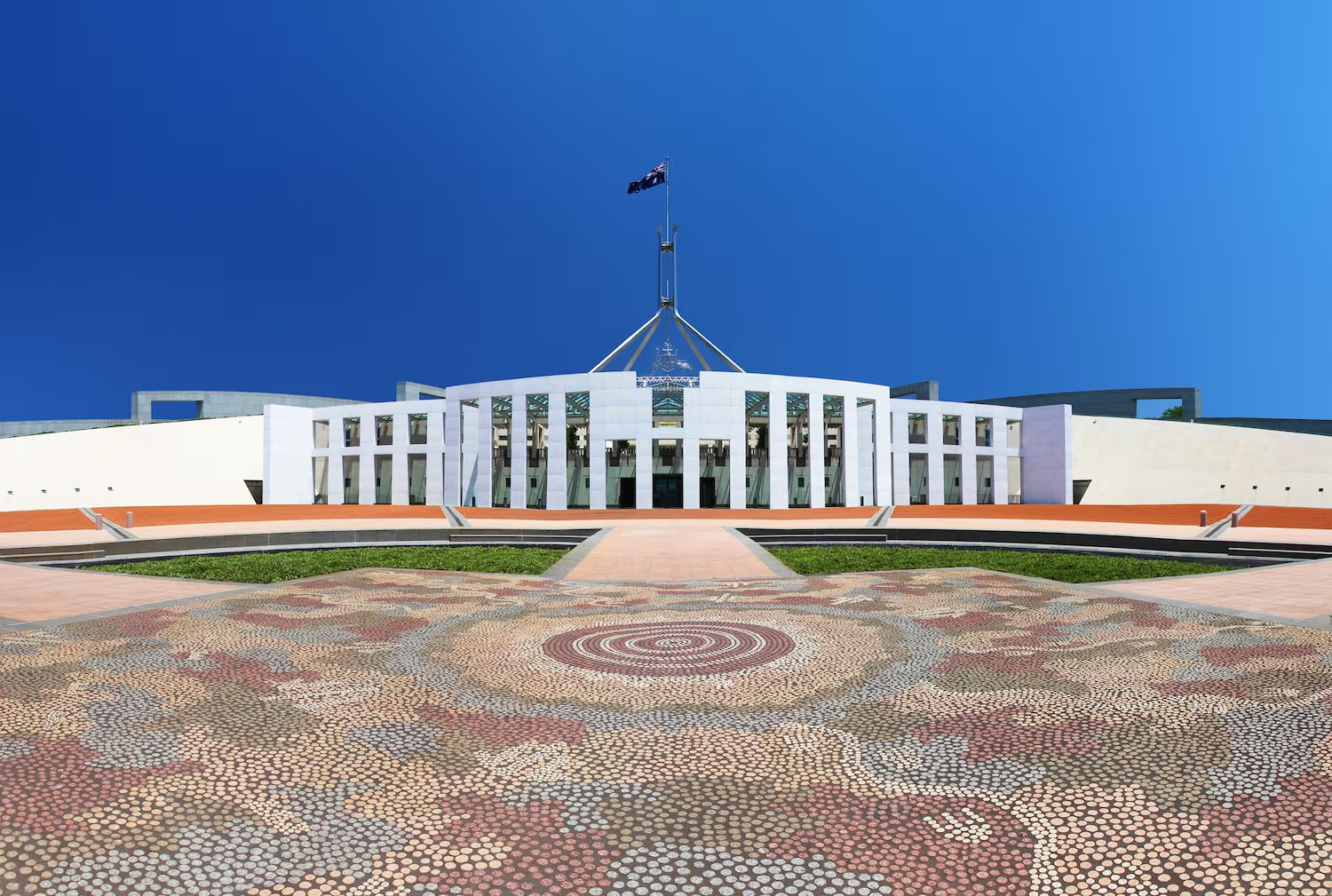 Australia Parliament Building Canberra
Key Points:
- Australia has enacted its first all-encompassing digital-asset legislation, mandating that cryptocurrency exchanges and custody service providers acquire Australian Financial Services Licenses.
- The new law establishes two additional regulated categories—digital asset platforms and tokenized custody platforms—subjecting them to the same fundamental regulations applicable to brokers and fund managers.
- Lawmakers aim to mitigate risks such as the commingling and inappropriate use of customer assets, while positioning Australia to capture a greater portion of an anticipated A$24 billion yearly digital finance opportunity.
On Wednesday, Australia enacted legislation that introduces its inaugural comprehensive regulatory framework for digital assets, necessitating that cryptocurrency exchanges and custody providers secure financial services licenses.
The Corporations Amendment (Digital Assets Framework) Bill 2025 was approved by both legislative houses on April 1, integrating firms that manage digital assets on behalf of clients into the existing Australian Financial Services License system.
Related Posts
This legislation establishes two new regulated categories within the Corporations Act: digital asset platforms, which manage cryptocurrency on behalf of users, and tokenized custody platforms, which hold tangible assets and issue corresponding digital tokens.
Both types of operators are required to obtain an Australian Financial Services License from ASIC, aligning them with the same foundational regulations as brokers or fund managers, including obligations to protect client assets, provide standardized disclosures, avoid deceptive practices, and maintain systems for dispute resolution and compensation.
Rather than regulating cryptocurrency itself, the legislation focuses on the entities in the intermediary role that manage customer funds, striving to diminish risks such as commingling, insolvency, and asset misuse that have led to losses in previous cryptocurrency failures.
Research from the Digital Finance Cooperative Research Center and industry associations suggests that Australia could potentially generate up to A$24 billion annually from tokenized markets, payments, and digital assets, approximately 1% of its GDP. Following the previous regulatory approach, the nation was projected to capture only A$1 billion of that by 2030.
A spokesperson for Kraken indicated that the legislation sends a “top-down signal” that Australia is committed to digital assets, noting that clearer regulations would instill confidence in firms to invest and expand domestically.
Kate Cooper, CEO of OKX Australia and co-chair of the Digital Economy Council of Australia, described the bill as a “pivotal moment,” asserting that it lays the groundwork for institutional involvement and long-term capital investment.
