Disclaimer: Information found on CryptoreNews is those of writers quoted. It does not represent the opinions of CryptoreNews on whether to sell, buy or hold any investments. You are advised to conduct your own research before making any investment decisions. Use provided information at your own risk.
CryptoreNews covers fintech, blockchain and Bitcoin bringing you the latest crypto news and analyses on the future of money.


The flagged blockchain data indicates a notable increase in liquidations within the last 24 hours. Some analysts suggest that this incident may be associated with a pricing update in an oracle system utilized by Aave to assess the value of collateral.
 (Getty Images)
Key Points:
- Approximately $27 million in borrower positions were liquidated on the DeFi lending platform Aave on March 10, as per data from the risk management firm Chaos Labs.
- Some analysts indicate that the liquidations might have been initiated by a temporary pricing inconsistency of wstETH in relation to ETH as reported by Aave’s oracle, which appeared undervalued compared to the market ratio at that time.
About $27 million was cleared on the decentralized lending platform Aave within the last 24 hours, which some market participants attribute to a temporary pricing issue related to the wstETH token.
Blockchain data identified by the risk management firm Chaos Labs reveals an increase in liquidations during the past 24 hours. Some analysts believe this occurrence may be tied to a pricing update within the oracle system Aave employs to assess collateral value.
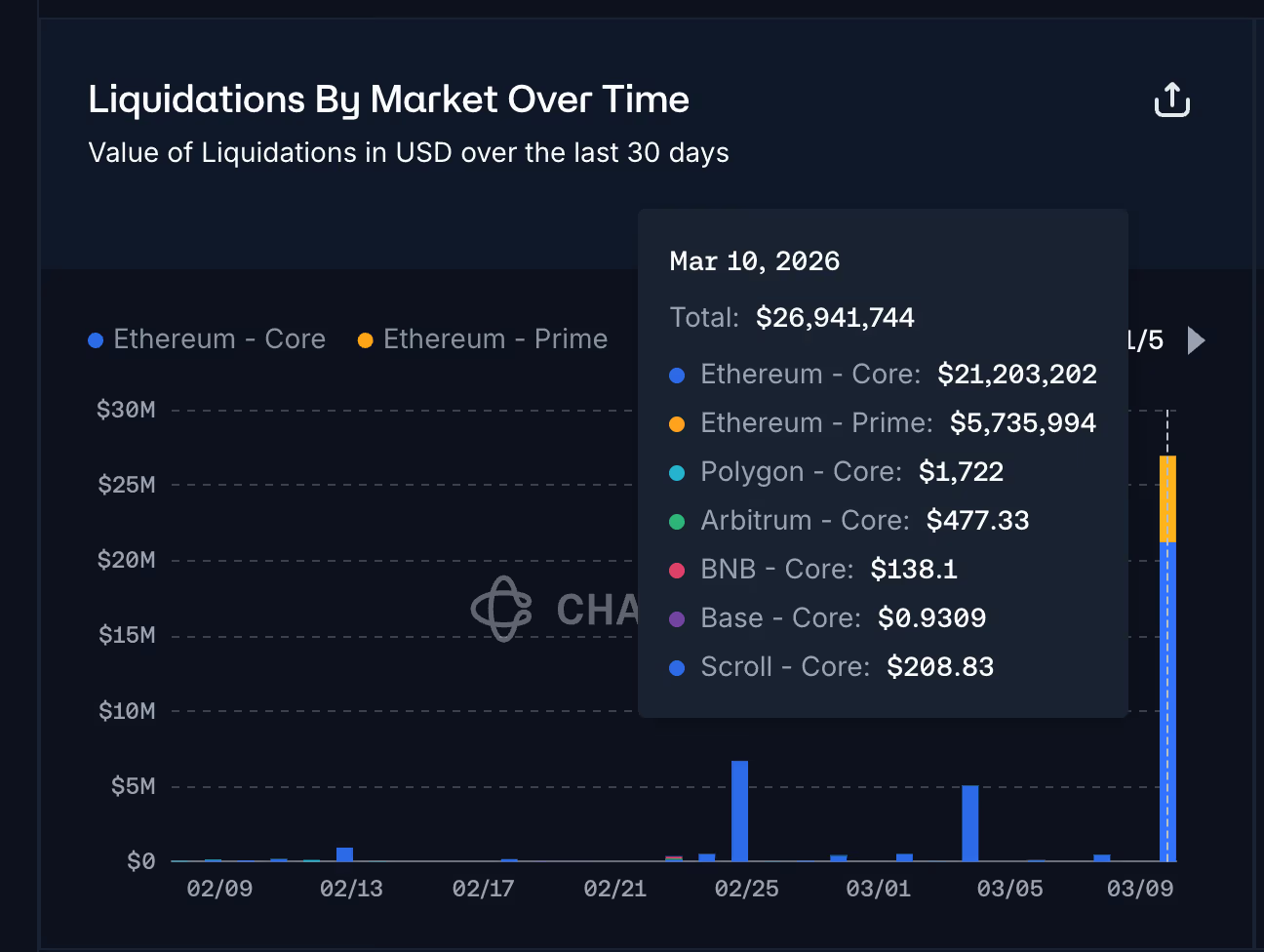 (AAVE liquidations over last 24 hours/ Chaos Labs)
Oracles serve as mechanisms that relay price information from external sources to blockchain applications. Lending protocols like Aave depend on these oracles to determine when a borrower’s collateral no longer sufficiently supports their loan, at which point liquidation can occur.
Although such situations are infrequent, a recent incident involved a misconfigured price oracle by DeFi lender Moonwell, which briefly assigned a value of about $1 to Coinbase Wrapped ETH (cbETH) instead of approximately $2,200, resulting in nearly $1.8 million in bad debt for the protocol.
In the case of Aave, some analysts suggest that the problem might have been related to wstETH, a token created by Lido that represents staked ether. Due to its accrual of staking rewards over time, one wstETH is generally valued slightly higher than one ETH.
Related Posts
According to a post from LTV Protocol on X, during the time of the liquidations, Aave’s oracle seemed to value wstETH at around 1.19 ETH, while the overall market placed its value nearer to 1.23 ETH.
Trading volume for wstETH pairs remained relatively modest, with only $10 million traded over the last 24 hours, making it unlikely that any savvy traders took advantage of the pricing discrepancy before it corrected.
A spokesperson for Aave did not respond to CoinDesk’s inquiry for comments.
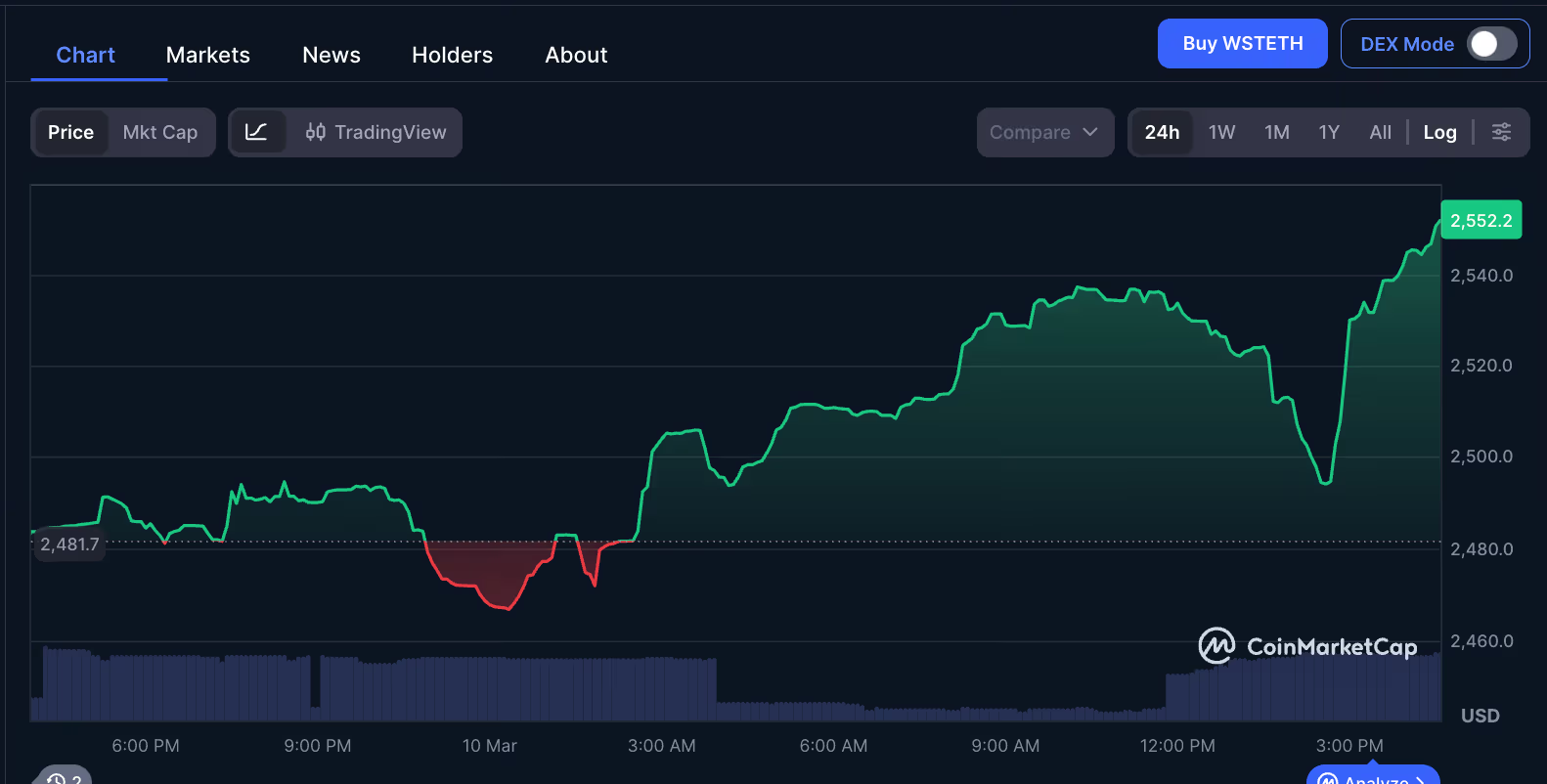 (24-hour trading volume of wstETH/ CoinMarketCap)
Earlier in the day, the risk management firm LlamaRisk had briefly posted on the AAVE forum, attributing the liquidations to a complication with Chaos Labs’ risk oracle before retracting the statement.
Chaos Labs later clarified that the oracle itself reported the accurate market values, and that the liquidations were actually instigated by a configuration issue within the protocol’s CAPO risk oracle, designed to limit how rapidly the value of yield-bearing tokens like wstETH can escalate.
According to Chaos Labs, the problem stemmed from a discrepancy between outdated parameters stored in a smart contract, which included a reference exchange rate and its timestamp. Since these values were not synchronized, the CAPO system temporarily computed a maximum permissible exchange rate that was lower than the actual market value of wstETH.
This effectively led the protocol to regard wstETH as approximately 2.85% less valuable than its true worth, causing some borrowing positions to drop below their safety thresholds, resulting in liquidations.
Chaos Labs stated that the protocol did not incur any bad debt; however, liquidators—traders or bots that settle risky loans in exchange for discounted collateral—acquired about 499 ETH in bonuses and profits from the brief pricing error.
A contributor from Lido informed CoinDesk, "We acknowledge the liquidations resulting from an incorrect wstETH to USD price reported by this oracle mechanism. The root cause is unrelated to wstETH itself, its functionality, or the Lido protocol, which continues to operate normally.”
Oliver Knight contributed reporting to this story.
Read more: Aave governance rift deepens as major governance group exits $26 billion DeFi protocol>
