Disclaimer: Information found on CryptoreNews is those of writers quoted. It does not represent the opinions of CryptoreNews on whether to sell, buy or hold any investments. You are advised to conduct your own research before making any investment decisions. Use provided information at your own risk.
CryptoreNews covers fintech, blockchain and Bitcoin bringing you the latest crypto news and analyses on the future of money.

Why a $60,000 threshold could determine the sustainability of Bitcoin’s recent gains as almost 50% of the market experiences losses.

Bitcoin’s price continues to trade significantly above the lows experienced in previous bear markets, creating a sense of disorientation in the current environment. However, beneath the surface, a substantial portion of the market is already experiencing distress.
On-chain analytics indicate that by early April, approximately 46% of Bitcoin’s supply was being held at a loss, suggesting that nearly half of the coins in circulation were last purchased at prices exceeding the current market value.
Markets often become emotionally volatile when a large number of participants find themselves in losing positions, leading to a considerable disparity between what price charts indicate and the sentiments of the holder base.
This is why the $60,000 mark is particularly noteworthy. The figure is not only round and memorable, but its true significance lies in its impact on market behavior. A return to this level could push even more of the market into negative territory, transforming a gradual decline into a steep drop, directly testing whether holders will continue to wait or begin to sell.
Individuals who purchased during the price surge have shifted their focus from aiming for a new all-time high to grappling with more challenging questions: whether they misjudged the market, if they should reduce their risk exposure, and whether this downturn has further to go. This is typically where market bottoms form, and where panic can spread once it gains traction.
The deeper floor remains intact
The market is under pressure, yet the fundamental levels that characterized previous cycle downturns are still holding firm.
A prime example of this is the realized price, one of Bitcoin’s most straightforward long-term benchmarks. It reflects the average price at which the network’s coins last changed hands, currently positioned around $54,100. Bitcoin remains above this level even after the recent decline, indicating that the average holder across the network is not incurring any losses.
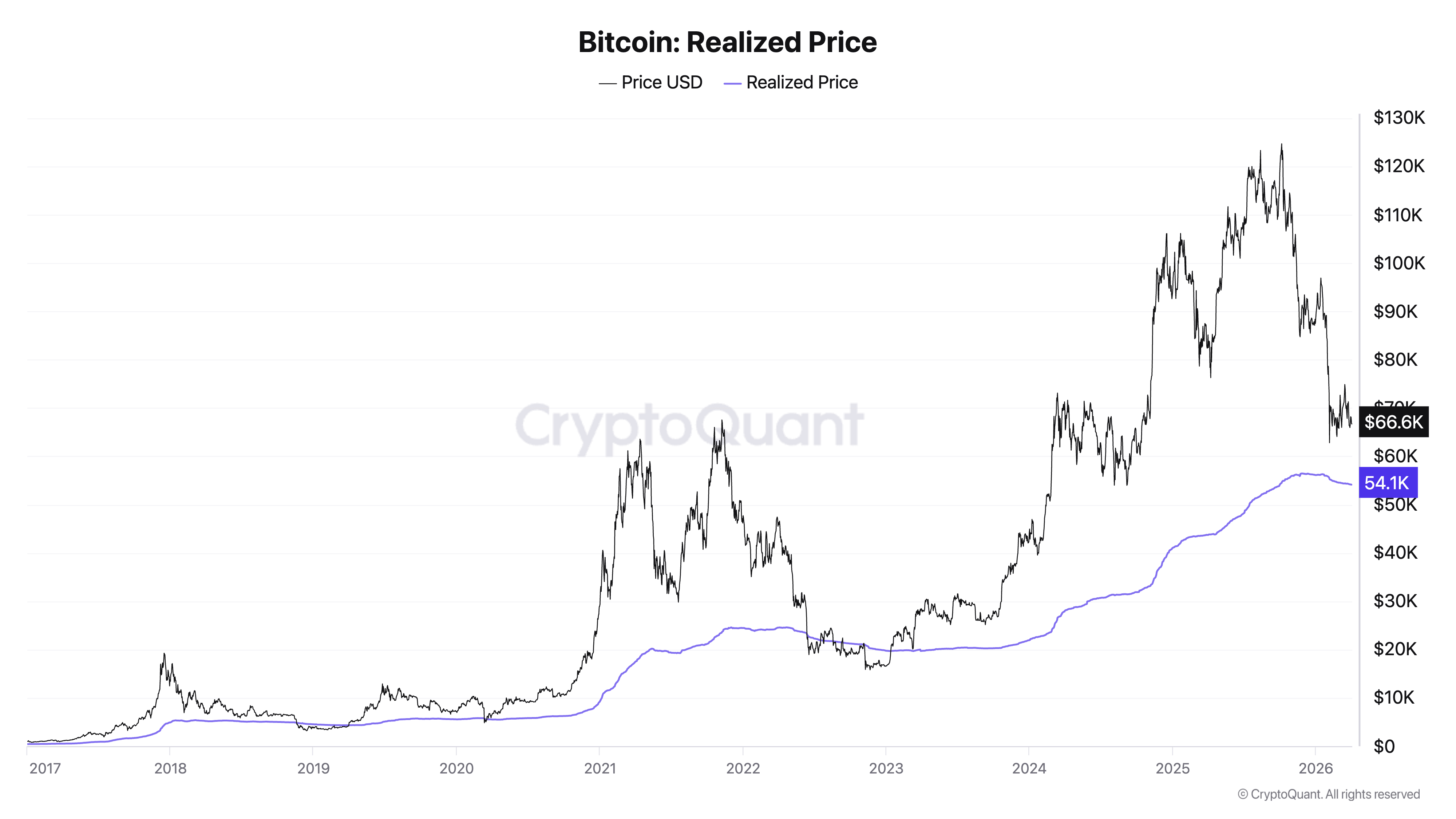 Graph illustrating Bitcoin’s realized price from Jan. 1, 2017, to Apr. 2, 2026 (Source: CryptoQuant)
Related Posts
The weekly chart supports this observation. Bitcoin is also maintaining its position above the 200-week moving average, which is situated in the high $50,000s, placing the market in an atypical situation. It appears weak enough to instill fear, dampen sentiment, and leave a significant portion of holders in a losing position, while the foundational levels established in prior bear markets remain unbroken.
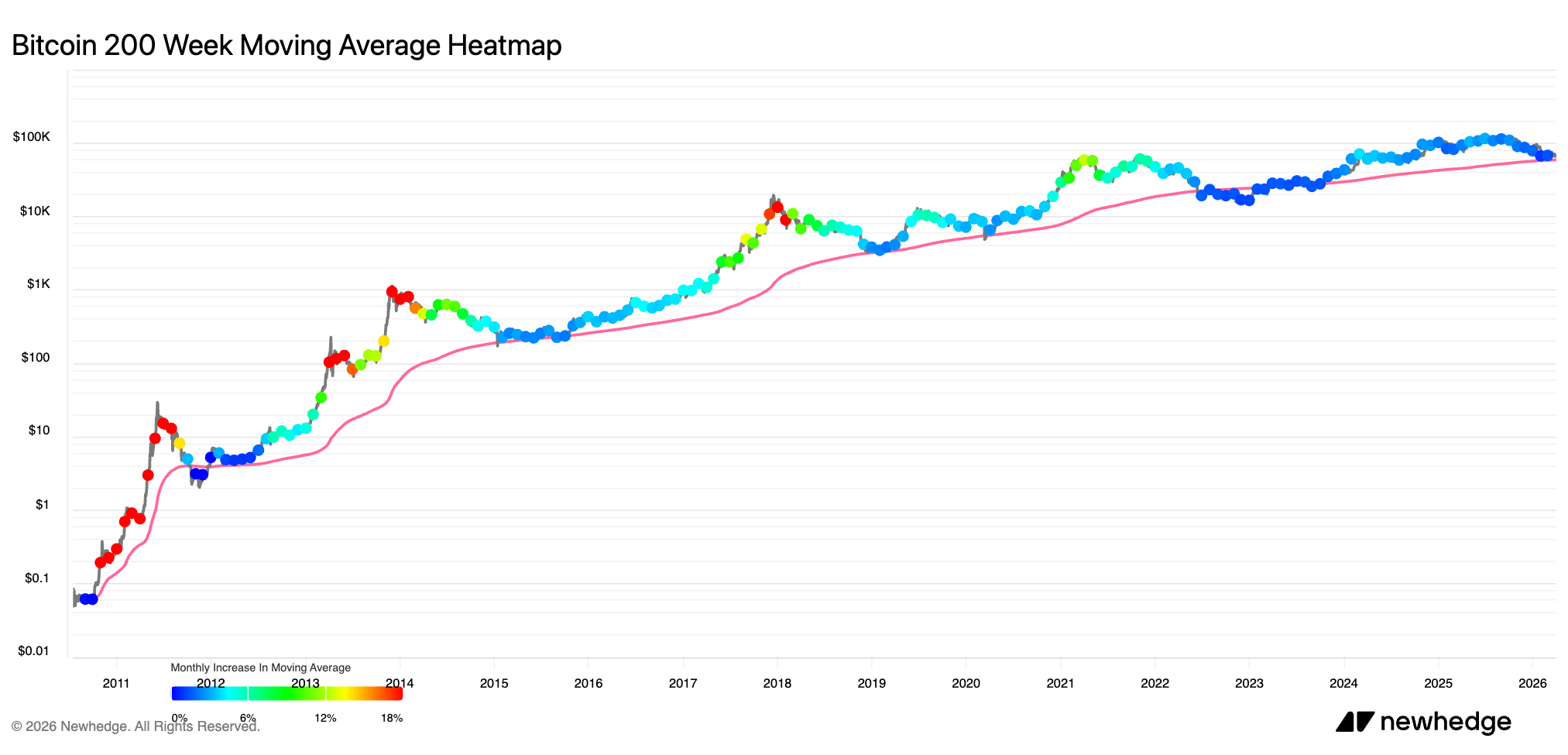 Graph depicting Bitcoin’s 200-week moving average from July 2010 to April 2026 (Source: Newhedge)
This distinction may represent the most apparent difference between the current cycle and those that preceded it. Bitcoin continues to exhibit volatility, and drawdowns still inflict tangible damage, but the level at which this damage occurs has significantly increased. The pain is manifesting at higher points on the chart than in the past.
This elevation likely stems from a broader and more resilient ownership base. Over recent years, Bitcoin has attracted more long-term capital and greater institutional involvement. This provides the market with more structural support than it had in earlier cycles, where fear could easily push prices through historical support levels with minimal resistance.
The crucial question, therefore, is whether this market can withstand additional discomfort before it leads to forced selling.
If Bitcoin approaches $60,000 and maintains that level, this cycle will have illustrated something significant: nearly half the market is already underwater, yet the deeper foundation remains intact. Should this level falter and widespread selling commence, it would not be long before the familiar bear-market pattern reemerges.
The visible and structural challenges are currently operating on different levels. Bitcoin may still appear relatively stable on a long-term chart, while a large portion of holders already feels pressured, and for observers outside the asset, this tension is the most informative way to comprehend the current situation.
The market is enduring considerable pressure, and the extent to which it can sustain this before the foundational levels shift is a question that the coming weeks will begin to address.
The post Why $60,000 decides whether Bitcoin’s recent strength cracks as nearly half the market slips into loss appeared first on CryptoSlate.
