Disclaimer: Information found on CryptoreNews is those of writers quoted. It does not represent the opinions of CryptoreNews on whether to sell, buy or hold any investments. You are advised to conduct your own research before making any investment decisions. Use provided information at your own risk.
CryptoreNews covers fintech, blockchain and Bitcoin bringing you the latest crypto news and analyses on the future of money.

UK core inflation reaches highest level in 28 years, increasing Bitcoin’s appeal as a safe asset.

The core inflation rate in the United Kingdom reached 6.8% in April, marking its highest point since 1992, as reported by CryptoSlate in a recent analysis. This inflation spike has occurred against a backdrop of declining interest rates for more than 40 years, which has contributed to inflated asset bubbles across various sectors.
Core inflation reflects the changes in the prices of goods and services, excluding food and energy items. It tends to be more persistent than the overall headline inflation, as the U.K. has faced its tightest labor market in over 25 years, with an unemployment rate below 4%.
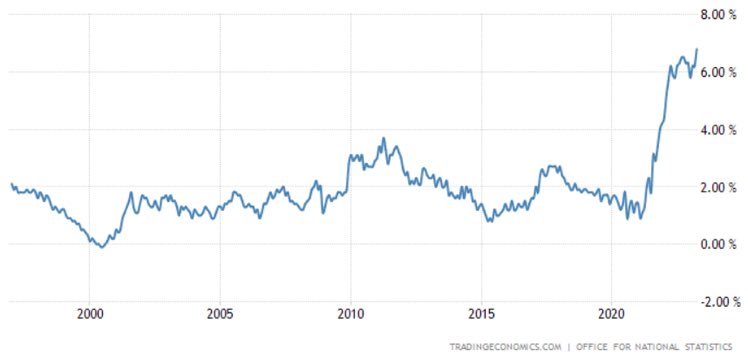 Core Inflation: (Source: Trading Economics)
The swift rise in core inflation has resulted in soaring bond yields, breaking a 40-year trend line for 10-year government bond yields. This situation has raised concerns regarding the implications for financial markets, especially as debt levels have exceeded 100% of GDP. In this context, it is essential to analyze the potential effects of the U.K.’s accelerating inflation on the cryptocurrency market, particularly Bitcoin (BTC).
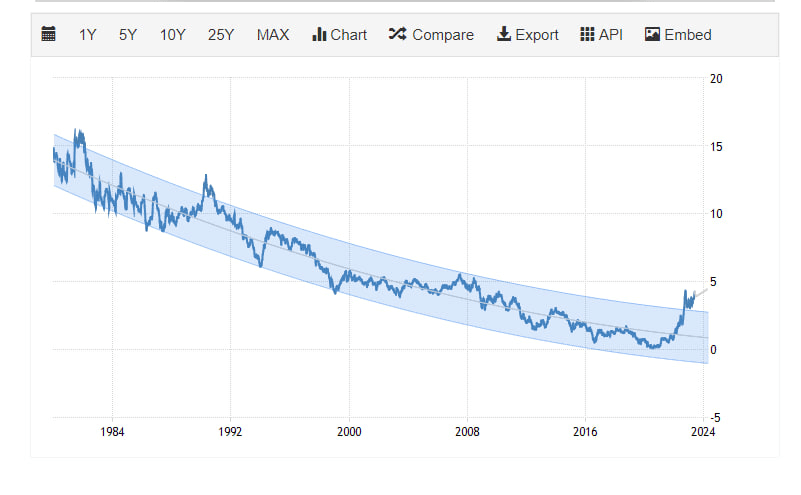 Source: Trading Economics
Inflation uncertainty driving Bitcoin adoption
Over the past year, investors have shown a preference for Bitcoin over fiat currencies during uncertain times. For example, Turkey’s lira has been in continuous decline since 2018, with cumulative inflation exceeding 100% in the last three years. This depreciation has led Turkish investors to diversify their portfolios, significantly increasing BTC/TRY trading volume.
Related Posts
In a similar vein, the British pound experienced a sharp decline on September 26, 2022, losing 4.3% of its value against the U.S. dollar in just one day. The Bank of England’s emergency intervention in the bond market resulted in a record BTC/GBP trading volume, which surged over 1,200% within 24 hours.
These instances highlight a growing trend among investors globally: during periods of macroeconomic uncertainty, inflation, and weakened fiat currencies, Bitcoin is increasingly viewed as a safe haven.
Equalizing the volatility landscape
In light of the U.K.’s soaring core inflation, investors in the region may adopt a similar strategy, turning to Bitcoin as a safeguard against rising consumer prices. This transition could enhance BTC trading volume and overall interest, especially among those looking to shield their wealth from diminishing value.
The increasing volatility in fiat currencies, primarily driven by inflation, could effectively level the playing field regarding the traditionally perceived volatility of cryptocurrencies. As a result, the difference between the stability of conventional currencies and the fluctuations of digital assets is becoming less distinct, altering how investors view and engage with both financial sectors.
Ultimately, the rapid increase in the U.K.’s core inflation serves as a reminder of the potential role Bitcoin can fulfill in offering a relatively stable store of value in uncertain economic conditions. Should investors increasingly gravitate towards digital assets like BTC amid rising inflationary pressures, the Bitcoin market may witness growth and enhanced significance within the global financial landscape.
The post UK core inflation hits 28-Year high, boosting Bitcoin adoption as safe haven appeared first on CryptoSlate.
