Disclaimer: Information found on CryptoreNews is those of writers quoted. It does not represent the opinions of CryptoreNews on whether to sell, buy or hold any investments. You are advised to conduct your own research before making any investment decisions. Use provided information at your own risk.
CryptoreNews covers fintech, blockchain and Bitcoin bringing you the latest crypto news and analyses on the future of money.

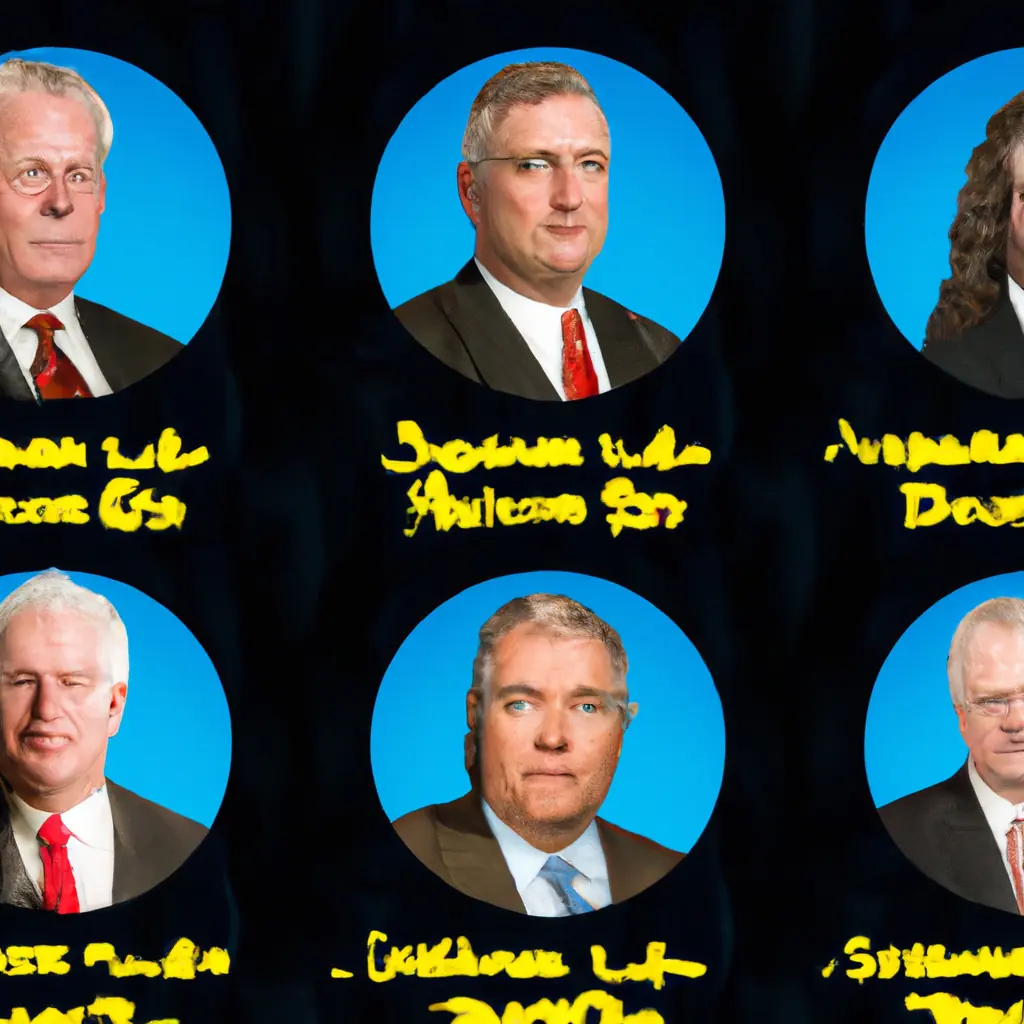
The six senators opposing the March digital dollar prohibition are Johnson, Lee, Murphy, Scott, Tuberville, and Van Hollen.

Washington has engaged in discussions about a US CBDC for years, treating it as a remote prospect. It was merely a theoretical policy concept, safely encapsulated within white papers and partisan rhetoric. However, the Senate has now assigned a specific figure to it, making it a tangible issue.
On March 2, senators cast their votes with an 84-6 majority to invoke cloture on the motion to advance H.R. 6644, a comprehensive housing and banking bill that would prevent the Federal Reserve from issuing a CBDC until the conclusion of 2030.
Only six senators opposed the motion. Cory Booker voted present, while nine senators abstained from voting.
This outcome indicates that a CBDC has transitioned from being a peripheral crypto-policy debate to a central topic in every Senate discussion regarding privacy, state authority, and control.
The procedural nuance remains significant for the legal interpretation of the vote. March 2 was not the final passage, and the roll call does not confirm that the six dissenters actually endorse a Fed digital dollar.
Nonetheless, it demonstrates that a Senate supermajority was willing to advance a package that contains anti-CBDC provisions.
The six dissenters and the implications of their votes
The six senators who voted against the motion were Ron Johnson of Wisconsin, Mike Lee of Utah, Chris Murphy of Connecticut, Rick Scott of Florida, Tommy Tuberville of Alabama, and Chris Van Hollen of Maryland.
All of them opposed the progression of H.R. 6644 at that stage, within a package that encompasses a wide range of issues beyond digital currency policy.
- Ron Johnson (R-Wis.). A Republican from Wisconsin first elected in 2010, Johnson’s Senate biography emphasizes manufacturing, fiscal policy, and oversight roles, having held significant positions on Budget and investigative committees.
- Mike Lee (R-Utah). A Republican from Utah first elected in 2010, Lee has largely shaped his public persona around constitutional principles, civil liberties, and limitations on federal authority, making his presence in this group particularly noteworthy in a debate over state control of currency.
- Chris Murphy (D-Conn.). A Democrat from Connecticut and one of only two Democrats in the March 2 dissenting group. Murphy is more widely recognized for his work in foreign policy and gun legislation than for discussions on crypto or payments, allowing for various interpretations of his vote in the absence of a direct explanation from his office.
- Rick Scott (R-Fla.). A Republican from Florida and former governor, elected to the Senate in 2018. Scott’s vote was particularly notable as anti-CBDC sentiments have found considerable support among Florida Republicans.
- Tommy Tuberville (R-Ala.). A Republican from Alabama elected in 2020. Tuberville retains the nickname “Coach Tuberville” from his extensive football career and joined the small faction that diverged from the larger Senate consensus on March 2.
- Chris Van Hollen (D-Md.). A Democrat from Maryland and the second Democrat in the dissenting group. Van Hollen serves on the Senate Banking Committee, which adds significance to his vote within a package that merges housing, finance, and CBDC provisions.
The extensive nature of H.R. 6644 is why a straightforward ideological scorecard does not fully apply in this context.
The anti-CBDC clause is part of the “21st Century ROAD to Housing Act,” and the substitute amendment extends well beyond the realm of digital currency.
The package encompasses measures for housing supply and affordability, disaster recovery block grant frameworks, rural housing data, modernization initiatives, and support for manufactured housing communities.
In essence, none of these senators were casting their votes on a singular referendum regarding a Fed digital dollar, but rather on whether to advance a much broader legislative package.
The significance of the CBDC language beyond the roll call
Related Posts
Nevertheless, the CBDC language is unusually explicit.
The Senate amendment characterizes a CBDC as a digital asset denominated in US dollars, regarded as US currency, treated as a direct liability of the Federal Reserve System, and made widely accessible to the public.
It further stipulates that the Fed Board or any Federal Reserve Bank is prohibited from issuing or creating such a currency, or a significantly similar digital asset, either directly or indirectly. This provision is set to expire on December 31, 2030.
This expiration date indicates that Congress aims to restrict this issue for the remainder of the decade, rather than permanently resolving the question of digital dollars.
However, the Federal Reserve’s own position on CBDCs renders this entire initiative nearly redundant.
The Federal Reserve has publicly stated that it has not made any determinations regarding the issuance of a CBDC. In a 2022 report, it outlined stringent criteria for any potential CBDC in the US, but emphasized that it does not authorize direct Fed accounts for individuals.
A subsequent research note reiterated this point, indicating that the central bank does not plan to advance a CBDC without clear backing from the executive branch and Congress, in the form of specific authorizing legislation.
Thus, senators are now attempting to obstruct a type of currency that the Fed claims it has opted not to issue and could not issue independently. This renders the vote an effort to establish the foundational rules early, while the concept of CBDCs remains sufficiently abstract to influence and contentious enough to garner support.
Regarding the implications for the crypto sector, the intriguing aspect begins here.
Every stringent stance against a government-backed digital dollar redirects focus back to private-sector dollar mechanisms: bank deposits, tokenized deposits, exchange cash infrastructure, and stablecoins.
CryptoSlate has already documented various facets of this discussion.
When the House passed its own anti-CBDC legislation in 2024, it aimed to prevent unelected officials from creating a digital dollar without explicit congressional authorization. More recently, CryptoSlate’s report on whether stablecoins could function as “CBDCs in disguise” advanced the conversation further, suggesting that private digital dollars could incorporate many of the same control mechanisms that people fear in a state-issued version.
Kraken’s establishment of a direct connection to Federal Reserve payment systems underscored the same argument, but from an operational perspective: whoever controls access to dollar settlement wields far more influence than mere branding.
Access influences speed, resilience, predictability, and competitive edge. This is part of the same Washington struggle, viewed from the infrastructure perspective rather than the Senate floor.
The same policy rationale is evident in the White House’s stablecoin timeline delays and the Senate’s broader CLARITY Act impasse. Washington is attempting to determine the nature of the digital-dollar system it desires, who will operate it, and the extent of federal oversight into the framework. The CBDC vote fits neatly within that larger conflict.
Then came the follow-up. On March 4, the Senate approved the motion to proceed with a vote of 90-8.
This subsequent vote provided the March 2 outcome with an additional reference point, demonstrating that it was not merely a temporary spike surrounding an 84-6 split. We can now observe that the second vote serves as evidence of genuine momentum in favor of a package containing anti-CBDC provisions.
While the six dissenters contribute to an engaging partisan discussion, the more significant narrative lies with the 84 senators who helped elevate anti-CBDC language to a central position in Senate politics, along with the broader implications of that vote. Washington seeks to confine the digital-dollar debate before the Fed approaches the point of testing its limits.
The post The six senators who voted against the March digital dollar ban: Johnson, Lee, Murphy, Scott, Tuberville, and Van Hollen appeared first on CryptoSlate.
