Disclaimer: Information found on CryptoreNews is those of writers quoted. It does not represent the opinions of CryptoreNews on whether to sell, buy or hold any investments. You are advised to conduct your own research before making any investment decisions. Use provided information at your own risk.
CryptoreNews covers fintech, blockchain and Bitcoin bringing you the latest crypto news and analyses on the future of money.


Following finance YouTuber Andrei Jikh’s recent discussion on the Bitcoin Power Model, a significant conversation has emerged within the Bitcoin community regarding its feasibility.
Jikh commenced his video titled “2024 Bitcoin Price Prediction (CRAZY!)” by stating,
“Today I want to demonstrate how a straightforward mathematical principle capable of predicting universal patterns has also effectively tracked Bitcoin’s price over the past 15 years, and I aim to reveal what this formula suggests Bitcoin’s value will be in a decade.”
He refers to a ‘rule’ derived from a model that illustrates Bitcoin’s price escalation as adhering to a power law principle over time. This model is grounded in the research of astrophysicist Giovani Santasi, who has examined 15 years of Bitcoin data.
A power law denotes a statistical correlation between two variables, where a relative change in one variable leads to a proportional relative change in the other, regardless of the initial magnitude of those variables. This indicates that one variable changes as a power of another. For instance, if the length of a side of a square is doubled, the area will quadruple, exemplifying a power law relationship.
Jikh elaborates on how power laws have been employed to forecast various occurrences, including Bitcoin’s price trends. The video posits that Bitcoin’s price could potentially attain $200,000 in the upcoming cycle and $1 million by 2033.
The importance of power laws in this context is that they purportedly enable precise predictions across diverse fields. In the case of Bitcoin, Santasi asserts they elucidate its price trends with a high level of accuracy, as evidenced by a 95.3% accuracy rate derived from regression analysis.
In a blog entry dated Jan. 12, Santasi proposed renaming the model the BTC Scaling Law for reference.
It is not surprising that comparisons with PlanB’s Stock to Flow (S2F) quickly surfaced, as both models present optimistic scenarios for the leading digital asset. On Jan. 30, Santasi shared a graph juxtaposing the Power Law prediction for Bitcoin with S2F and remarked,
“I wish S2F was accurate. However, I prefer to rely on a more realistic model that appears correct rather than on a model that is overly optimistic and leads to disappointment. Additionally, it is detrimental for BTC PR for the community to make these unrealistic assertions.
I don’t believe it is feasible to reach tens of millions by 2033 (as S2F predicts). 1 M is already impressive (more realistic Power Law in time prediction).”
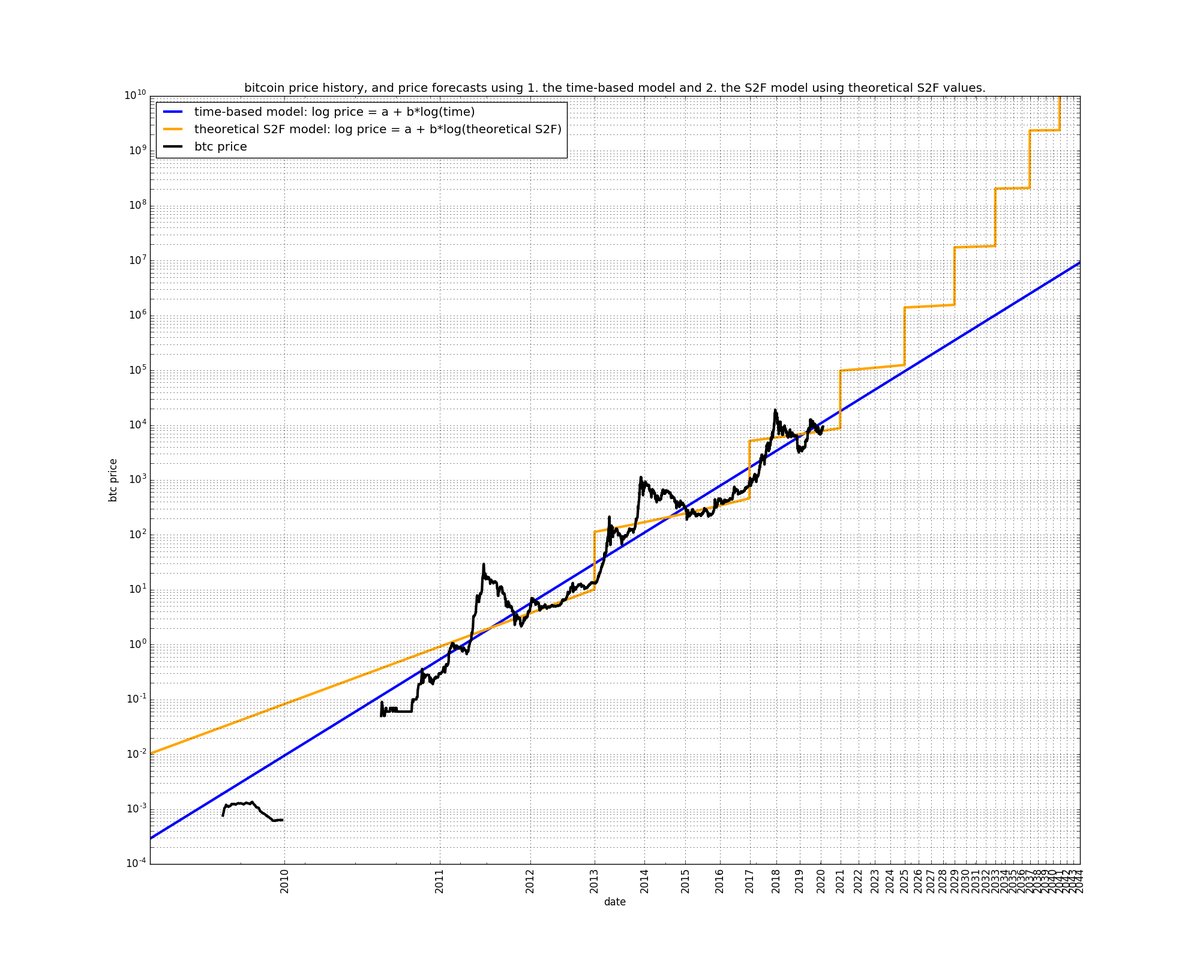 Power Law vs Stock to Flow (source: Giovani Santasi)
A considerable debate has unfolded on X regarding which model holds greater accuracy. Some contend that the S2F model has been discredited alongside the rainbow chart, while others maintain that global adoption will trigger a return to the trend.
Nevertheless, there has been limited discussion on the other power law models utilized to evaluate Bitcoin over time.
Other power law models for Bitcoin.
Santasi is not the first to apply power laws for Bitcoin analysis. In 2014, Alec MacDonell at the University of Notre Dame introduced the Log Periodic Power Law (LPPL) model, which has been significant in comprehending a Bitcoin bubble. This model emphasizes asset price growth leading up to a crash.
Related Posts
At the core of the LPPL model is the notion that Bitcoin’s price growth adheres to an exponential trend concerning log-time. Essentially, a consistent percentage increase over time correlates with a proportional rise in Bitcoin’s price. This model has proven beneficial in identifying critical support and resistance levels, guiding Bitcoin’s upward price movement. Despite the model’s predictive success, it is essential to acknowledge its foundational assumption that Bitcoin’s growth will continue to slow over time.
In 2019, Harold Christopher Burger expanded on this foundation with the Power Law Oscillator (LPO), a tool designed to identify optimal moments for Bitcoin investment, successfully predicting all four of Bitcoin’s all-time highs. Notably, Santasi suggests that Burger’s PLO model was influenced by his own work from 2018, referencing this Reddit thread. The thread features Santasi’s model against Bitcoin at that time. In the top comment, the OP asserted that “BTC will be around 150K in 2025.”
 Power law model (source: Reddit)
The Power Law Oscillator assesses Bitcoin’s relative valuation. With a scale ranging from 1 to -1, it indicates whether Bitcoin is overpriced or underpriced at any moment. The effectiveness of this tool arises from its alignment with several key factors: historical data analysis, network value correlation, complex system dynamics, and resistance to traditional financial models.
Bitcoin price and power/scaling laws.
When represented on a log-log graph, Bitcoin’s price trends exhibit a power law relationship. A regression model based on this data can account for much of Bitcoin’s price behavior, highlighting the model’s predictive capabilities. The model aligns with Metcalfe’s Law, which asserts that a network’s value is proportional to the square of its users. This relationship has been validated in Bitcoin’s case, particularly over medium to long-term periods.
The prevalence of power laws in complex systems, such as urban growth and network development, implies that Bitcoin, following a similar trajectory, is more than just a financial asset; it constitutes a complex system in its own right. Bitcoin’s distinctive attributes, including its decentralization and separation from traditional financial controls, make conventional currency models less effective. In contrast, the power law model provides a potentially more accurate depiction of Bitcoin’s market behavior.
The Stock-to-Flow (S2F) model presents a different yet complementary viewpoint. Popularized by an anonymous figure known as Plan B, this model evaluates Bitcoin’s value based on its scarcity, a concept inherent to commodities. The S2F model calculates the ratio of Bitcoin’s total supply (stock) to its annual production rate (flow). The relevance of this model is heightened by Bitcoin’s predetermined supply schedule, characterized by halving events that diminish mining rewards and, consequently, the flow, thereby increasing the stock-to-flow ratio.
The S2F model garnered considerable attention, particularly during the pandemic, as Bitcoin’s price appeared to align with its predictions. However, this model concentrates solely on the supply aspect, neglecting demand, a crucial element in price determination. Its forecasts, occasionally reaching astronomical figures, have ignited discussions within the financial community.
While the S2F model offers a standardized measure of scarcity, facilitating comparisons between Bitcoin and other scarce assets, it is vital to regard it as one of many factors in assessing Bitcoin’s investment potential. Market acceptance, technological advancements, regulatory changes, and macroeconomic conditions are equally important in influencing Bitcoin’s price.
Interestingly, Santasi’s models are more conservative than other forecasts. Many argue that Bitcoin is in the early stages of S-curve exponential growth. Santasi dismisses such models, asserting that exponential growth on log charts is not plausible.
“Because the middle part implies exponential growth given in a log linear chart a straight line is an exponential. BTC has never undergone exponential growth (I mean the general trend), the bubbles are exponential.”
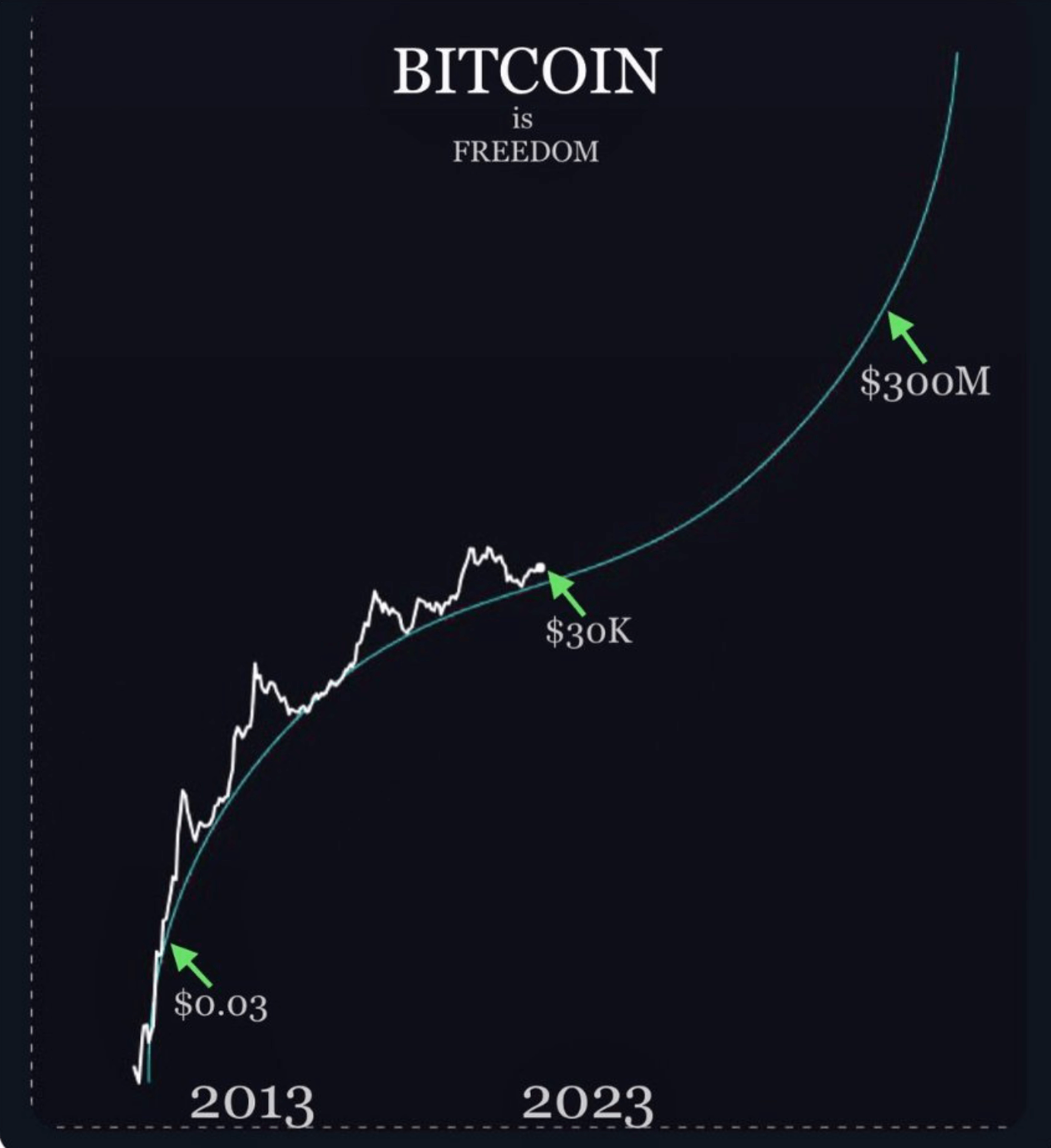 S-curve growth (source: Santasi X)
Thus, while all of these models are employed to forecast Bitcoin’s price, they vary in their specific methodologies and assumptions. The S2F model emphasizes supply and demand, Santasi’s model utilizes regression analysis to predict future prices, MacDonell’s LPPL model employs a calibration approach, and Burger’s Power Law Oscillator is primarily used as a technical analysis tool that fluctuates over time within a specific range.
If the BTC Scaling Law (power law model) continues to receive validation, Bitcoin’s current value is approximated at $60,000, and the next all-time high is projected to occur around March 2026, exceeding $200,000.
The post Is the Bitcoin Power Law model more realistic than Stock-to-Flow? appeared first on CryptoSlate.
