Disclaimer: Information found on CryptoreNews is those of writers quoted. It does not represent the opinions of CryptoreNews on whether to sell, buy or hold any investments. You are advised to conduct your own research before making any investment decisions. Use provided information at your own risk.
CryptoreNews covers fintech, blockchain and Bitcoin bringing you the latest crypto news and analyses on the future of money.


The sector has long recognized that a moment would arrive when an increase in fees would render Bitcoin transactions significantly impractical.
While many believed that the escalating transaction costs would coincide with widespread adoption, it was the emergence of the Ordinals that triggered a substantial rise in fees.
Inscriptions on the Bitcoin blockchain surfaced at the start of the year and rapidly gained traction. As of May 1, there are more than 3.2 million Inscriptions on Bitcoin, with the total continuing to grow as the quarter advances.
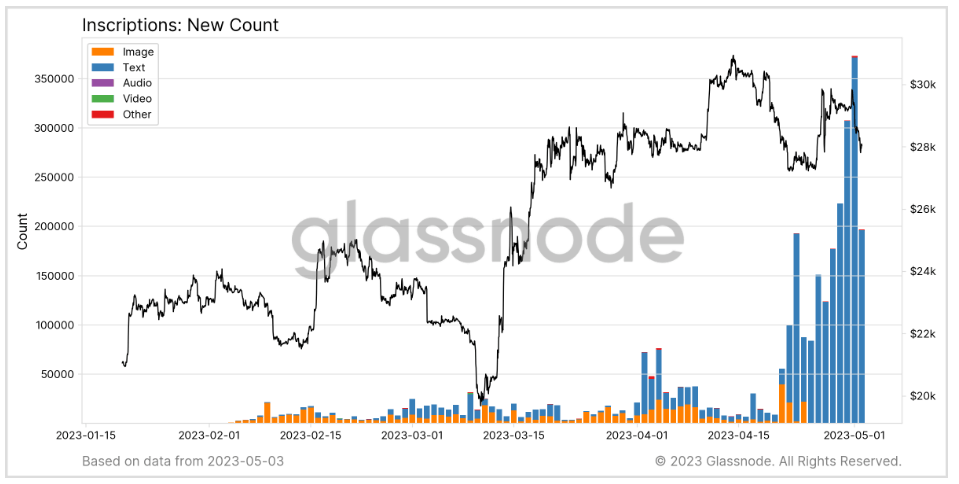 Graph illustrating the new count of inscriptions on the Bitcoin network (Source: Glassnode)
The Ordinal Inscriptions propelled Bitcoin transactions to an unprecedented peak in 2023, with the network recording over 682,000 transactions in a single day.
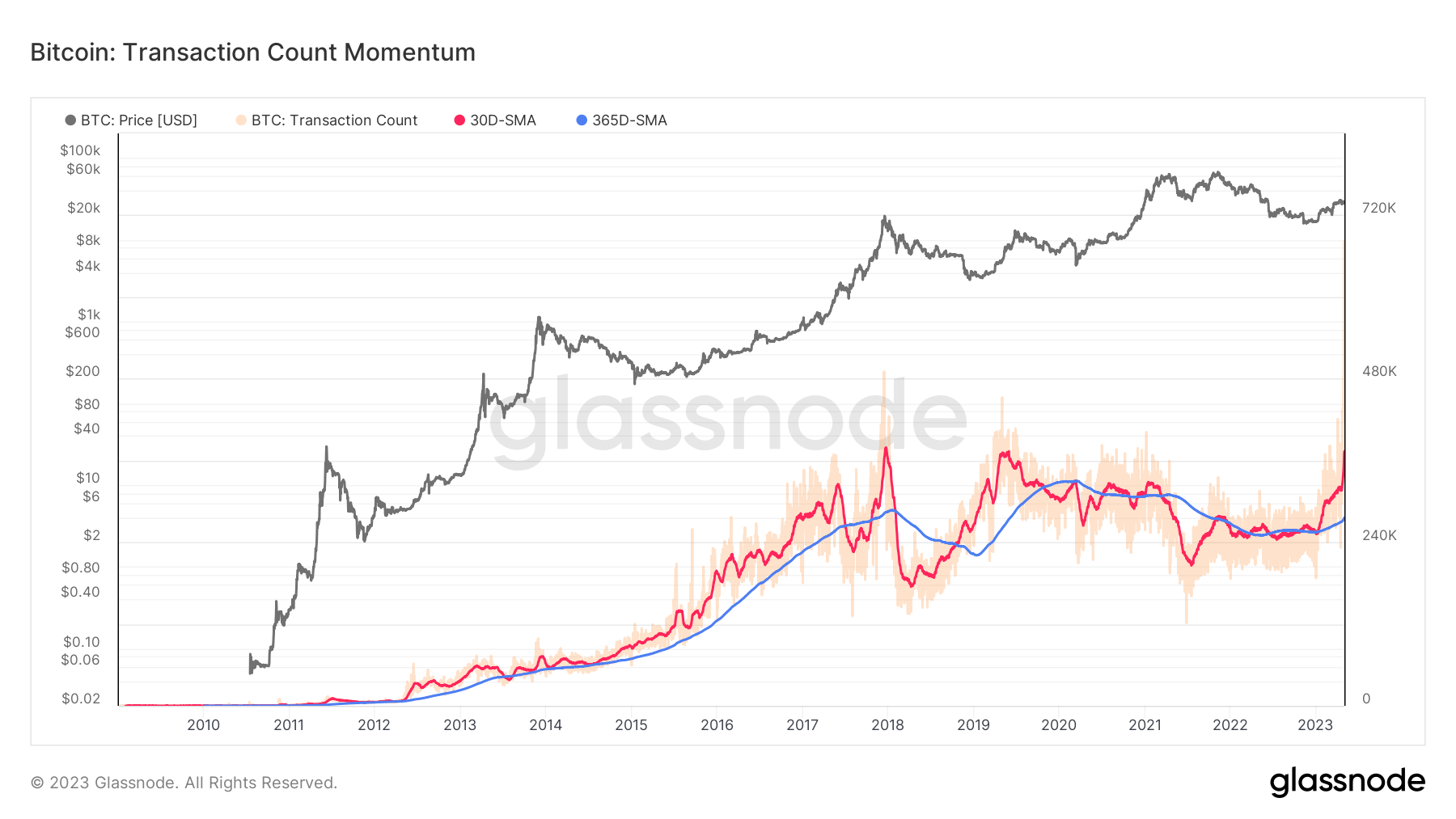 Graph depicting the transaction count momentum on the Bitcoin network from 2010 to 2023 (Source: Glassnode)
This significant surge in transactions has inevitably resulted in increased memory usage, with certain blocks being filled with tens of thousands of transactions. Data from Mempool indicated that the average fee for low-priority transactions reached $4.59 on May 2, narrowing the gap between the high-priority fee to under $0.40.
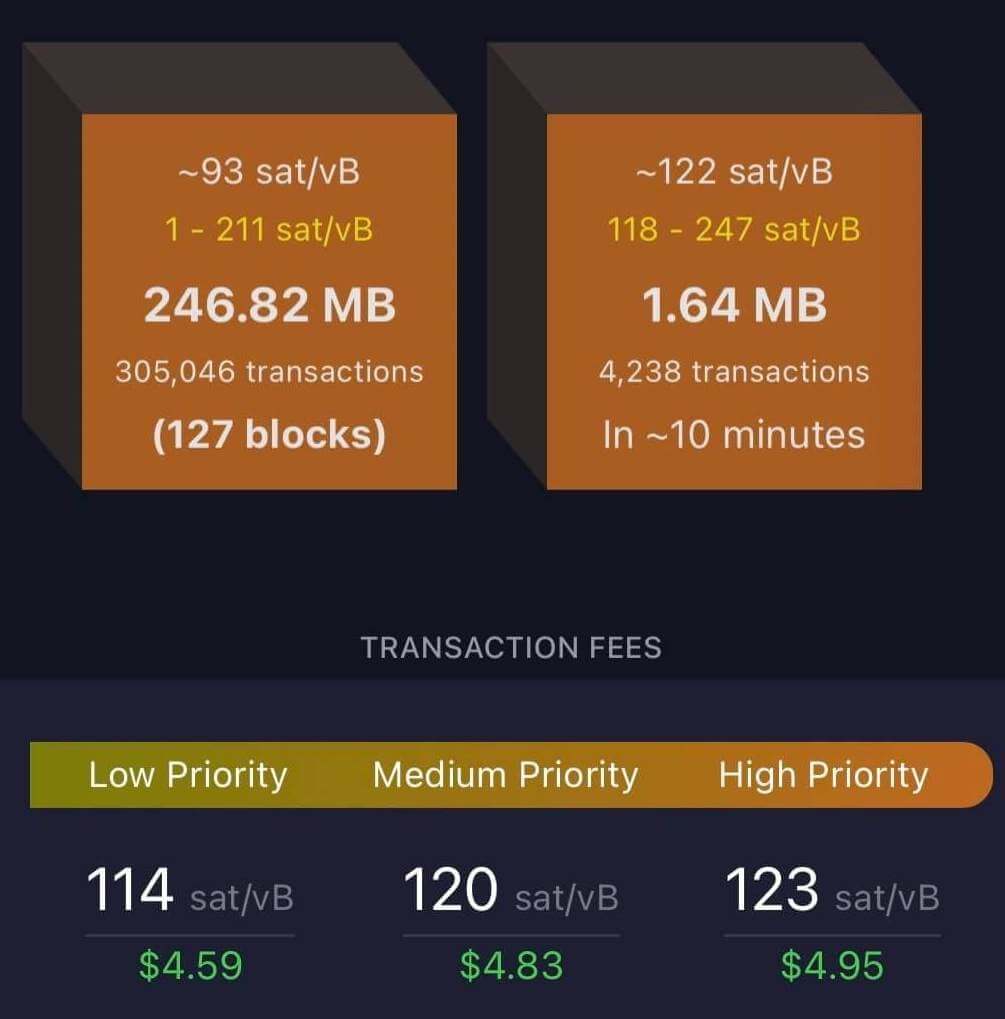 Data reflecting the average transaction fees and anticipated block sizes on May 2 (Source: Mempool.space)
The rising popularity of Ordinals and the subsequent fee increases have reignited discussions regarding Bitcoin’s declining block rewards. As the expenses associated with mining Bitcoin escalate with the influx of miners, there will eventually be a point when the reward will not suffice to motivate block production.
Related Posts
A suggested remedy for this challenge is to raise miner fees, which would ensure miners remain incentivized even when block rewards do not cover mining costs. However, for a fee increase to be viable, there must be a significantly higher level of activity on the Bitcoin network.
To date, Inscriptions have notably boosted the proportion of miner revenue generated from fees. Data reviewed by CryptoSlate revealed that approximately 12% of miner revenue currently originates from fees, a level previously observed only during bull markets.
Graph showing the mining revenue from fees and mempool transaction count from November 2021 to May 2023 (Source: Glassnode)
Bitcoin inscriptions have faced criticism from various sectors of the crypto market. Nonetheless, both sides appear to concur that they have underscored the necessity for a rapid settlement solution for BTC — namely, the Lightning Network.
This payment protocol facilitates swift transactions between participant nodes while maintaining remarkably low fees. Analysis from Bitcoin Magazine indicated that the median fee for a Bitcoin lightning transaction was around 0.003%. This is considerably lower than the minimum average credit card processing fee in the U.S., which is approximately 1%.
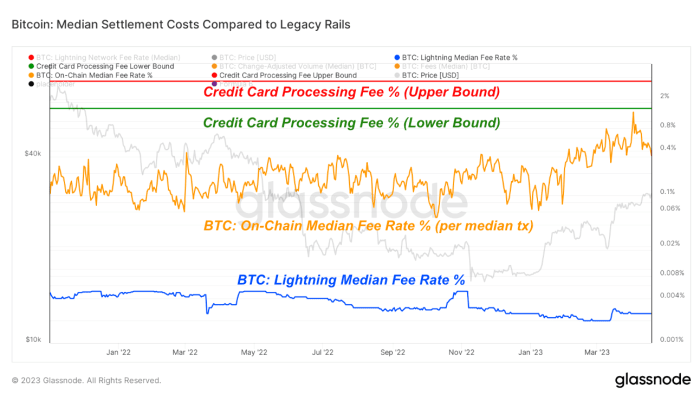 Graph illustrating the logarithmic scale of median settlement costs for payment processing of sending the equivalent of 1 BTC (Source: Bitcoin Magazine)
Although the popularity of Ordinals is likely to diminish over time, the network is expected to encounter another project that utilizes even more block space. With a capacity of 5,400 BTC, 15,400 nodes, and over 72,700 channels, the Lightning Network stands out as an ideal solution for Bitcoin payments.
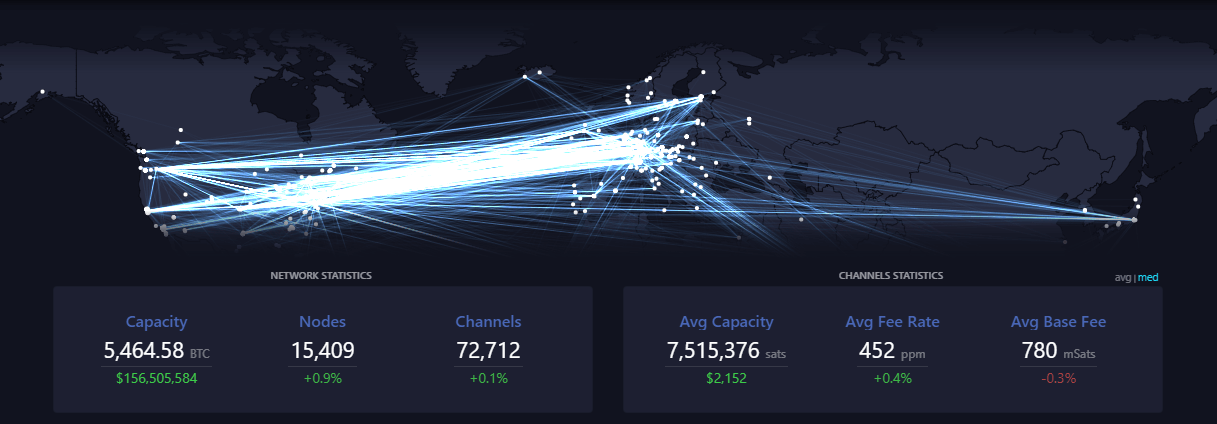 Illustration depicting the capacity of the Lightning Network
The post Growing Bitcoin transactions highlight Lightning Network’s importance appeared first on CryptoSlate.
