Disclaimer: Information found on CryptoreNews is those of writers quoted. It does not represent the opinions of CryptoreNews on whether to sell, buy or hold any investments. You are advised to conduct your own research before making any investment decisions. Use provided information at your own risk.
CryptoreNews covers fintech, blockchain and Bitcoin bringing you the latest crypto news and analyses on the future of money.

Congress seeks to simplify the use of digital currencies compared to Bitcoin, reinforcing the ‘digital gold’ concept.

Washington is creating a more streamlined path for digital currencies, and the implications for Bitcoin are becoming clearer.
In the past year, U.S. legislators, regulators, and the White House have aligned their efforts. The GENIUS Act framework progressed in the Senate, focusing on payment stablecoins, reserve backing, consumer protection, and cross-border efficiency.
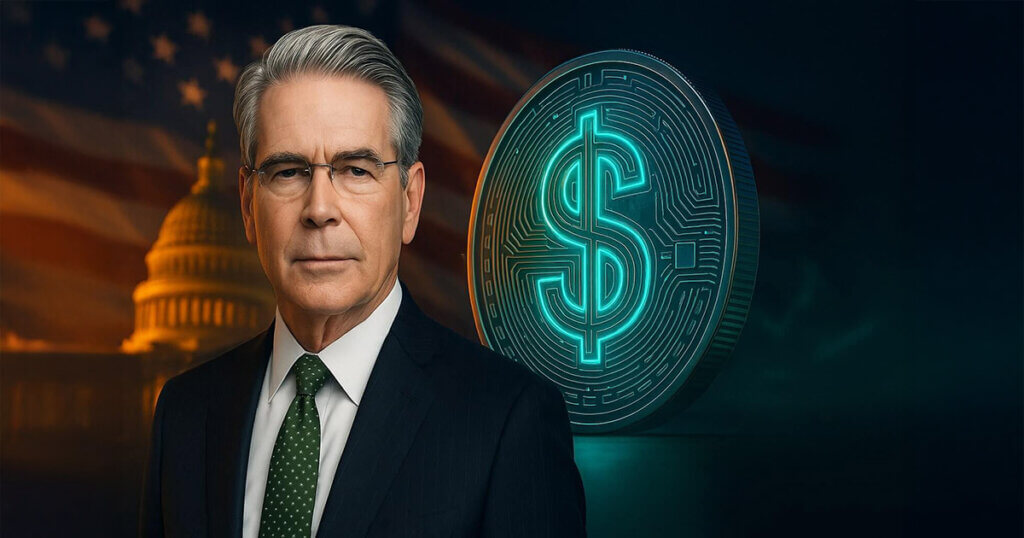
The White House’s report on digital assets characterized dollar-backed stablecoins as the “next wave of innovation in payments” and directly linked them to the U.S. monetary influence. Treasury Secretary Scott Bessent later remarked that the legislation provides the dollar with an “internet-native payment rail.”
Subsequently, the OCC’s proposed rule in February translated this political guidance into operational structure, detailing how authorized issuers, reserves, redemption, custody, supervision, and approval processes would operate under federal oversight.
The alignment is unmistakable.
Washington seeks a regulated digital dollar product that can navigate established legal frameworks, bolster demand for Treasuries, and enhance dollar settlement through faster, more cost-effective, and globally accessible channels. This preference does not eliminate Bitcoin; rather, it categorizes Bitcoin into a separate lane.
Stablecoins are being developed as money-like instruments. Bitcoin continues to be the scarce external asset, valued for its position outside state liabilities and the direct monetary framework of the dollar.
This raises a more intriguing question for the markets.
If the U.S. government is enhancing legal and tax frameworks for digital dollars, what becomes of the long-held aspiration for Bitcoin to serve as everyday transactional currency in major developed markets?
The answer increasingly appears unfavorable for that use case. Bitcoin retains its scarcity, portability, censorship resistance, and reserve-like appeal. However, its recent price movements complicate any simplistic “digital gold” narrative.
Nonetheless, policy direction continues to reinforce the same division: stablecoins for transactions, Bitcoin for savings, collateral, treasury reserve exposure, and macroeconomic expression. This delineation is narrower than some early Bitcoin proponents envisioned, yet it is also clearer and potentially more sustainable.
Washington’s stablecoin initiative is constructing digital cash around the dollar
The initial layer of this structure is a clear state interest. The White House report positions dollar-backed stablecoins as a strategic payments technology. The language is straightforward.
Dollar stablecoins can bolster U.S. financial leadership, facilitate real-time cross-border transactions, and maintain the dollar’s relevance as digital finance evolves globally.
The Treasury’s statement following the enactment of GENIUS echoes this perspective from a market structure viewpoint, framing stablecoins as a new infrastructure for the dollar economy and a means to enhance demand for U.S. government debt through reserve holdings.
A Richmond Fed economic brief arrives at a similar conclusion, asserting that reserve-backed stablecoins can strengthen, rather than weaken, demand for dollars and Treasuries.
 Related Reading
Treasury Secretary Bessent says stablecoins are debt relief engine as Senate readies to vote on GENIUS Act
Scott Bessent indicated that forecasts suggesting stablecoins could achieve a $3.7 trillion market cap by 2030 become more plausible with the approval of the GENIUS Act.
Jun 17, 2025 · Gino Matos
The second layer involves implementation. The OCC’s proposed rule provides operational clarity for this direction.
It outlines who is authorized to issue payment stablecoins in the United States, how reserves should be managed, the redemption process, applicable supervisory standards, and how custody and approvals integrate into the framework. This structure indicates institutionalization. Markets typically respond to legal clarity with capital formation, product development, and distribution expansion.
A payments instrument gains significant credibility when issuers, banks, custodians, and service providers can visualize the infrastructure in advance.
The third layer pertains to tax treatment. The PARITY Act discussion draft introduces a specific rule for qualifying regulated payment stablecoins pegged solely to the U.S. dollar, with explanatory language suggesting a de minimis approach for routine transactions. In the same draft, lawmakers propose applying wash-sale rules across digital assets.
The sequencing is revealing. The product being simplified for everyday use is the regulated digital dollar. The asset class facing stricter tax regulations is the broader digital asset landscape, including Bitcoin exposure.
BDO’s analysis underscores this direction, highlighting both the expansion of wash-sale treatment and the specialized relief anticipated for regulated payment stablecoins.
When these layers are combined, a pattern emerges.
The United States is advocating for a version of crypto that can extend the dollar’s influence, enhance Treasury demand, and operate within conventional oversight. This policy mix naturally favors instruments characterized by price stability, issuer accountability, reserve transparency, and redemption design.
Bitcoin possesses few of these attributes, as governments typically define payment infrastructure. It represents an external monetary asset with a fixed supply and no sovereign issuer.
This distinction is central to the discussion.
Washington’s current trajectory enhances the likelihood of digital dollars becoming normalized currency on-chain. In contrast, Bitcoin maintains its claim to scarcity and neutrality while losing ground in the pursuit of becoming a frictionless everyday currency within the U.S. regulated framework.
Bitcoin’s payments role is diminishing, while its scarcity argument remains intact
Bitcoin’s role within this framework is more complex than either side of the ideological spectrum suggests.
The maximalist perspective argues that the state’s preference for dollar stablecoins validates Bitcoin by demonstrating that governments will always favor sovereign money. Conversely, the dismissive viewpoint contends that advancements in stablecoins leave Bitcoin isolated as a speculative artifact. Current evidence does not support either extreme.
Bitcoin continues to offer a significant and enduring monetary proposition as a scarce bearer asset. It still provides settlement outside banking hours, resistance to long-term debasement, and portability across borders without issuer risk. However, the conditions necessary for Bitcoin to become easy, routine, tax-light currency for mainstream U.S. consumers are becoming increasingly distant.
Senator Cynthia Lummis’s 2025 digital asset tax proposal indicates that at least some lawmakers recognize the compliance burden created when everyday transactions in digital assets trigger taxable events.
Related Posts
This acknowledgment reflects a practical barrier rather than an ideological one. Individuals are less likely to spend assets when every minor transaction incurs a reporting requirement.
The more recent PARITY draft starts from a narrower base and grants initial relief to regulated payment stablecoins. The draft also leaves the possibility open for future treatment of other digital assets, keeping the long-term landscape fluid.
Even so, the immediate preference is evident. Washington is prioritizing the payment token first, and that payment token is designed around the dollar.
This has direct implications for Bitcoin’s narrative. The term “digital gold” has always served multiple purposes.
It conveys scarcity. It indicates a separation from sovereign monetary systems. It suggests long-term holding behavior rather than transactional use. It also invites comparisons with an asset that can retain value across regimes, even when short-term performance is inconsistent.
Recent Bitcoin market activity complicates any simplistic application of that label. Gold and Bitcoin do not always move in tandem through every risk scenario. Bitcoin remains more volatile, more sensitive to liquidity, and more susceptible to cross-asset de-risking than physical gold.
 Related Reading
Why investors sold gold to raise cash as Bitcoin failed its “safe haven” test
Markets prioritized cash flow over safe-haven narratives as weekly shocks continue to drop.
Mar 23, 2026 · Liam 'Akiba' Wright
These differences warrant clear consideration. Simultaneously, the state’s stablecoin agenda may ultimately reinforce the core of the “digital gold” narrative by eliminating one of Bitcoin’s most debated ambitions: becoming regulated digital cash for everyday transactions.
This transition could clarify Bitcoin’s role for mainstream users with some market exposure.
A more defined framework would resemble this: stablecoins serve as the transactional layer, optimized for payments, remittances, exchange settlements, and digital-dollar mobility. Bitcoin functions as the savings and reserve layer, held for its scarcity, distance from sovereign influence, treasury diversification, collateral, and macro hedging over extended periods rather than everyday checkout transactions.
The market is already trending in that direction. Corporate treasury adoption, ETF inflows, and reserve-asset discussions all align more closely with the savings aspect than the payments aspect. U.S. policy now appears to be reinforcing that distinction rather than obscuring it.
Stablecoins enhance monetary reach, Bitcoin enhances monetary distance
There exists a tension within that outcome.
Bitcoin’s broadest monetary aspirations diminish as states and banks construct a more efficient digital-dollar framework. Bitcoin’s scarcity proposition gains clarity when its role is more defined. Investors can acknowledge both realities simultaneously.
A more limited use case can still support substantial value when the remaining application is global, transparent, and increasingly institutional. Gold itself serves as an obvious parallel. It does not dominate payments but still holds a significant position in reserves, savings psychology, and macro hedging.
Bitcoin’s volatility, liquidity characteristics, and technological framework differentiate it from gold, although the structural comparison remains valuable when considering role assignment rather than short-term price alignment.
The deeper implications extend beyond crypto branding.
Washington’s preference for digital dollars also reflects a preference for monetary reach. A regulated payment stablecoin extends the dollar into software, settlements, wallets, and cross-border networks while maintaining reserve backing, redemption rights, and supervisory control.
This architecture serves the state. It bolsters financial influence internationally. It aids in sustaining demand for dollar instruments. It keeps the center of gravity within regulated intermediaries.
Senate Banking Committee discussions regarding faster, cheaper transactions and the White House’s focus on payment innovation and dollar leadership align perfectly with that goal.
Bitcoin fulfills a different demand function. Its value proposition begins where state monetary control concludes.
It is scarce by design. It settles without issuer redemption guarantees. It exists outside the Treasury market rather than contributing to its funding.
From a governmental perspective, these characteristics render Bitcoin considerably less useful as a tool for monetary expansion. From an investor’s viewpoint, those same traits can make Bitcoin appealing in a landscape where sovereign systems continue to broaden their digital reach.
This is why the emerging distinction is significant. Stablecoins and Bitcoin are increasingly being categorized into complementary rather than competing roles: one closer to currency under sovereign endorsement, the other as an external reserve asset existing alongside sovereign money.
For crypto markets, this categorization could eliminate a long-standing ambiguity. For years, the sector attempted to market the same broad category as a payment network, savings technology, speculative instrument, and anti-sovereign monetary alternative simultaneously.
Capital ultimately prices clearer categories more effectively. Regulators also manage clearer categories with greater confidence.
In this context, the U.S. initiative surrounding stablecoins could achieve two objectives simultaneously. It could simplify the use of digital dollars in everyday economic activities, and it could leave Bitcoin with a more focused identity rooted in scarcity, reserve behavior, and monetary independence.
This identity still faces challenges. Bitcoin must demonstrate that scarcity alone can sustain significant and lasting value through shifting macroeconomic conditions. It must show that its correlations with risk assets can loosen sufficiently over time to maintain reserve-like demand. It must accept the reality that governments are increasingly supportive of blockchain-based dollars while expressing far less enthusiasm for Bitcoin-based payments.
These are tangible constraints. They also sharpen the central analytical question. The issue is no longer whether Washington embraces crypto in general. The question is which segment of crypto Washington aims to expand.
Currently, the answer points in one direction.
The United States is formulating policy for digital dollars because digital dollars extend the dollar system. Bitcoin exists outside that ambition. This positions Bitcoin with a more challenging, narrower, and in some respects, stronger proposition.
It remains scarce. It remains globally recognized. It remains outside sovereign issuance.
If U.S. policy continues to facilitate the issuance, holding, settling, and spending of digital dollars, Bitcoin’s identity as digital gold gains clearer contours, even if its price behavior continues to challenge any simplistic narrative. The next test will be whether markets begin to value that clarity as an asset rather than a limitation.
The post Congress aims to make digital dollars easier to use than Bitcoin solidifying the ‘digital gold’ narrative appeared first on CryptoSlate.
