Disclaimer: Information found on CryptoreNews is those of writers quoted. It does not represent the opinions of CryptoreNews on whether to sell, buy or hold any investments. You are advised to conduct your own research before making any investment decisions. Use provided information at your own risk.
CryptoreNews covers fintech, blockchain and Bitcoin bringing you the latest crypto news and analyses on the future of money.

Charles Schwab introduces Bitcoin access to its 39 million customers, though lacking anticipated safeguards.

Charles Schwab revealed this week that it will start offering Bitcoin and Ethereum directly to its 39 million brokerage clients. These cryptocurrencies will be displayed in the same account view as stocks, ETFs, and retirement funds, all within the same app and brand, just a click away from the S&P 500 index fund that a customer purchased for their IRA.
The significance of this arrangement lies in the fact that these assets will be introduced in one of the most recognized and trusted environments in American finance, albeit with a distinctly different set of protections than what customers typically expect.
Schwab’s own disclosures make this clear: the cryptocurrencies available on its platform are not deposits, are not FDIC-insured, are not SIPC-protected, are not backed by any central bank, and carry the risk of complete loss of principal. This disparity, between how crypto will be perceived by a Schwab customer and its actual nature, is the most critical aspect here. It also serves as a clear illustration of how crypto is becoming integrated into mainstream American finance.
 Related Reading
US Bitcoin ETFs pull in $664M in largest daily inflow since January, because Iran reopened Hormuz for a few hours
The reopening of the Strait of Hormuz alleviated energy shock concerns and prompted institutional shifts towards Bitcoin exposure.
Apr 18, 2026 · Oluwapelumi Adejumo
Charles Schwab’s crypto rollout, and what it actually changes
The product, named Schwab Crypto, will initiate a phased launch in the upcoming weeks. At the outset, it will support only two assets: Bitcoin and Ethereum, which together represent approximately three-quarters of the total crypto market capitalization.
While a significant portion of the crypto sector expressed disappointment over the omission of major altcoins like Solana and XRP, the limited selection of supported coins is a strategic and prudent choice. A firm managing $12.2 trillion in client assets has every incentive to avoid the headline risk associated with a more speculative token failing within a retirement account.
Transaction fees will be set at 75 basis points, or 0.75 percent, which Schwab claims is among the lowest rates available at a major brokerage. This undercuts Fidelity Crypto’s $1 fee and competes with Robinhood and Coinbase, although it remains significantly higher than the near-zero commissions Schwab charges on stocks.
A separate crypto account, provided through Charles Schwab Premier Bank, will be linked to the standard brokerage account. Paxos, a federally regulated blockchain infrastructure provider, will manage execution and sub-custody behind the scenes. Residents of New York and Louisiana will be excluded at launch.
Deposits and withdrawals of external crypto will be disabled, meaning customers can only trade what they acquire through Schwab.
If this were Coinbase or Kraken introducing a new feature, it would largely remain confined within the crypto industry. The involvement of a company as large and influential as Schwab alters the entire context, as Schwab is where average Americans maintain retirement funds, college savings, and the accumulated wealth from a lifetime of work.
Its brand is heavily regulated, familiar, and, in the best sense, unremarkable. This is more significant than the product offerings or fee structure, because the real story is not merely that Schwab is providing crypto, but that it is integrating crypto into an environment that customers already associate with stability, oversight, and safeguards.
 Related Reading
Why the SEC just gave self custody crypto apps 5 years to get traditional broker licenses
A recent SEC staff statement provides certain wallet-linked crypto trading interfaces a limited pathway to operate without broker registration, while leaving most DeFi protocols and tokenized markets awaiting Congressional action.
Apr 16, 2026 · Gino Matos
When a platform with such a substantial customer base incorporates crypto into its core offerings, access becomes an integral part of the default financial experience rather than something users must actively pursue.
Related Posts
Approximately 20% of all US spot crypto ETP assets are already held by Schwab clients, according to the company’s own figures, indicating considerable demand for crypto exposure within its customer base. The new offering eliminates most of the barriers that previously separated that demand from direct ownership.
This is the most significant change here, as the barrier being removed did more than exclude crypto. It also maintained a clearer distinction between assets that investors regarded as part of the traditional brokerage world and those that existed outside of it.
Schwab has built its reputation on investor protection. Deposited cash is swept into FDIC-insured programs, and securities are covered under SIPC up to statutory limits. The psychological contract a user has with a traditional brokerage like this is that when something goes wrong, whether due to a firm failure, a bank collapse, or fraud, there is a well-established framework of protections backing the account. Crypto does not automatically enter that framework simply because it appears in the same interface.
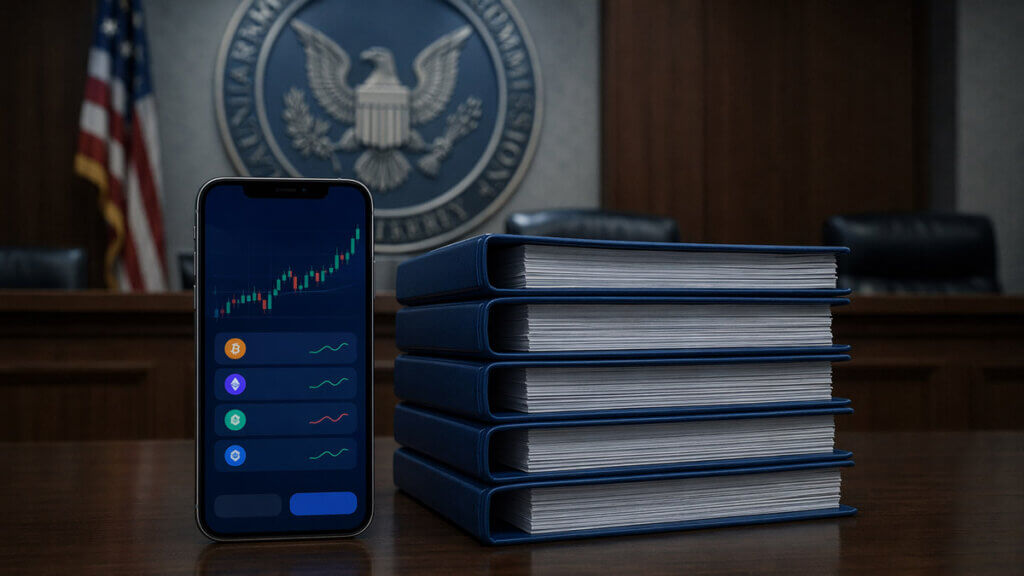
Schwab clearly articulates this in its disclosures, as required by regulators, so the legal distinction is presented in straightforward language. The more pressing issue is behavioral. An investor accessing the app sees a unified portfolio, where the Bitcoin tile resembles the ETF tile and is positioned alongside the same retirement holdings, cash balances, and stock positions they have learned to trust over the years.
The interface creates a perception of operational similarity among the assets, even though the protections associated with them are fundamentally different. This is where the real risk begins, as the mismatch resides less in the legal details and more in the expectations shaped by the environment itself.
What mainstream absorption actually means
Schwab is not a pioneer in the realm of crypto adoption. The company is joining a trend that began a few years ago and has gained significant momentum more recently. Morgan Stanley launched its Bitcoin Trust ETF last week, Goldman Sachs filed for a Bitcoin Premium Income ETF shortly thereafter, and Fidelity already provides crypto to retail clients.
Regulators cleared much of the path in 2025: the SEC revoked Staff Accounting Bulletin 121, eliminating the accounting penalty for custodians holding client crypto, and the Office of the Comptroller of the Currency reaffirmed that national banks can manage crypto custody and stablecoin activities.
For a firm the size of Schwab, the calculus has changed. Offering crypto now appears less as a demonstration of institutional conviction and more as a competitive response to demand that has already manifested elsewhere.
Clients seeking Bitcoin and Ethereum can already obtain them through Robinhood, Coinbase, or a competitor’s ETF. Choosing not to provide direct access in that context begins to resemble less of a cautious approach and more of a strategic delay.
This is what the mainstreaming of crypto looks like from within a large organization like Schwab. Bitcoin treasuries and crypto ETPs were once products linked to firms willing to signal conviction in a relatively niche market. Now, crypto exposure is transitioning into the large, regulated platforms that define ordinary investing for millions.
What changes under these circumstances is not only the number of buyers but also the conditions under which the asset is encountered. Crypto begins to be presented within the visual language and institutional context of traditional finance, even though the existing protections do not automatically accompany it.
This shift has implications beyond mere convenience. A unified brokerage interface facilitates the movement among stocks, ETFs, and Bitcoin within a single account structure and familiar brand environment.
Over time, this type of access is likely to draw crypto further into the same portfolio behaviors that govern the rest of retail investing, particularly concerning rate decisions, employment reports, geopolitical events, and broad risk-off movements. In stable conditions, this may appear as increased efficiency and deeper integration. During a selloff, it means that the same investors can reduce equities, sell ETFs, and liquidate crypto from one consolidated portfolio in a single moment of stress.
What is being normalized here is not just ownership but also expectation. Schwab is facilitating the integration of spot crypto deeper into the retail infrastructure of American finance, into the same screens, habits, and mental frameworks that customers already utilize for protected savings and conventional investments.
The launch will likely be recognized as another milestone for adoption, and in one sense, it is. More importantly, it signifies the moment when uninsured, fully loss-bearing crypto begins to be introduced within one of the most trusted brokerage environments in the nation, alongside assets that customers have been conditioned for decades to view as part of a safer, more regulated system.
This distinction may not seem significant on launch day, and it may remain easy to overlook while markets are stable and enthusiasm is high.
However, it becomes much more crucial during the next period of stress, when customers view one account containing retirement funds, ETF positions, cash programs, and direct crypto, all under the same brand, and realize that the protections they associate with the account cease at the boundary of the Bitcoin allocation.
Schwab is providing its customers with direct access to Bitcoin and Ethereum in the coming weeks, but the broader significance of that decision lies in the expectations that this access will reshape. The question is not whether crypto has entered mainstream American finance, as it clearly has.
The question is how this newfound familiarity will withstand the first real downturn, forcing investors, under pressure, to discern which components of the modern portfolio were never protected in the same manner to begin with.
The post Charles Schwab is bringing Bitcoin to its 39 million clients – but without the protections they expect appeared first on CryptoSlate.
