Disclaimer: Information found on CryptoreNews is those of writers quoted. It does not represent the opinions of CryptoreNews on whether to sell, buy or hold any investments. You are advised to conduct your own research before making any investment decisions. Use provided information at your own risk.
CryptoreNews covers fintech, blockchain and Bitcoin bringing you the latest crypto news and analyses on the future of money.

Tether’s market capitalization approaches all-time high following a recovery to 65% dominance in the stablecoin sector.

Tether (USDT) has positioned itself as a prominent beneficiary during the current banking turmoil and regulatory scrutiny in the U.S.
As of April 17, the circulating market capitalization of the U.S. dollar-pegged stablecoin approached nearly $81 billion, just 1.5% shy of its all-time high of $82.29 billion recorded a year prior. It has experienced approximately 20% growth year-to-date (YTD) and is now targeting new peak values.
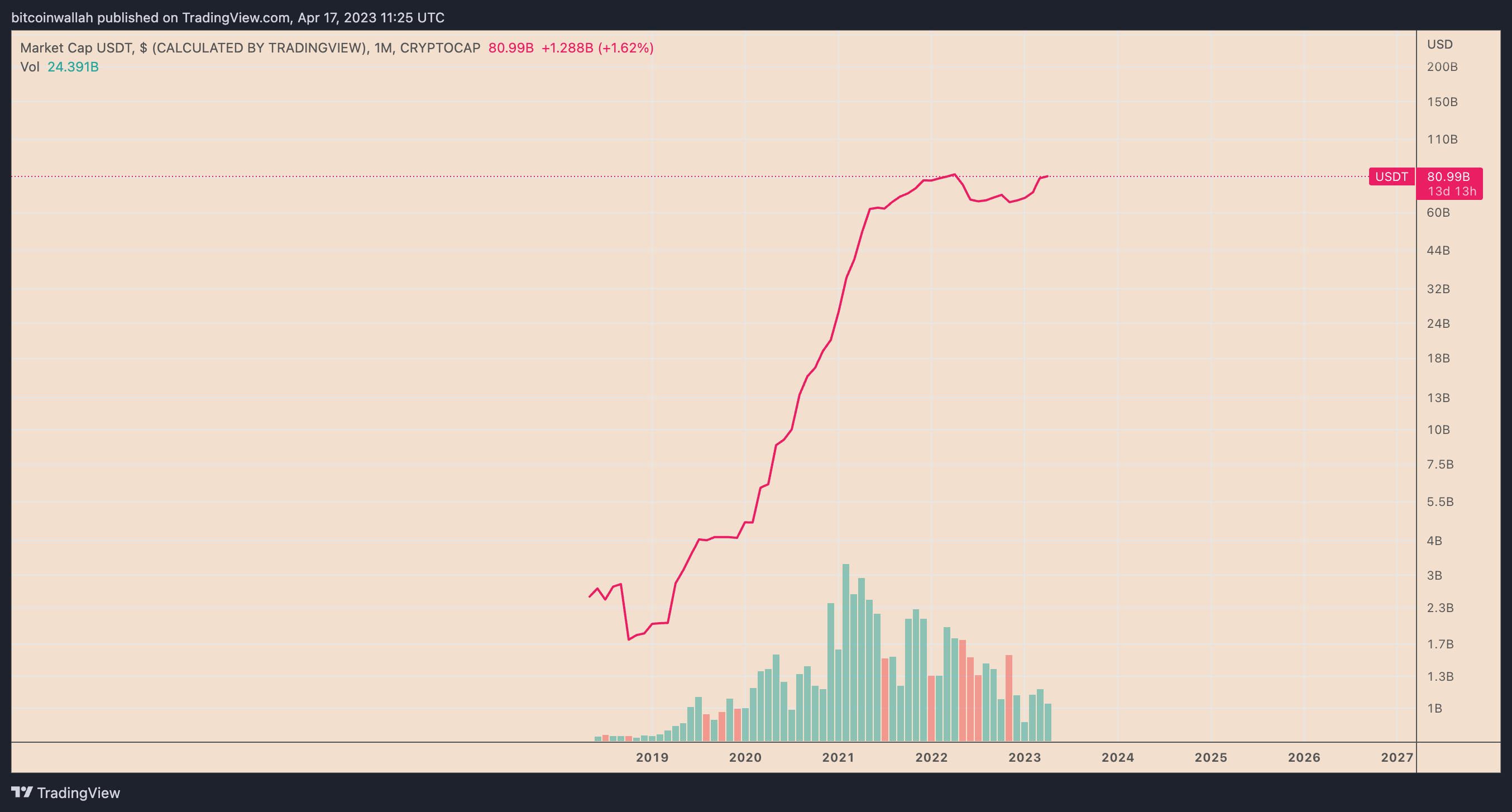 USDT market capitalization monthly chart. Source: TradingView
Tether competitors reach new annual lows
The rise of USDT has occurred as Tether has captured market share from its stablecoin competitors, USD Coin (USDC) and Binance USD (BUSD). This trend is attributed to crypto traders’ perception that Tether’s operations are insulated from the potential fallout of the banking crisis.
For example, the circulating market capitalization of USD Coin, the second-largest stablecoin, has plummeted over 25% YTD to $31.82 billion, marking its lowest point since October 2021, largely due to its ties to the collapsed Silicon Valley Bank.
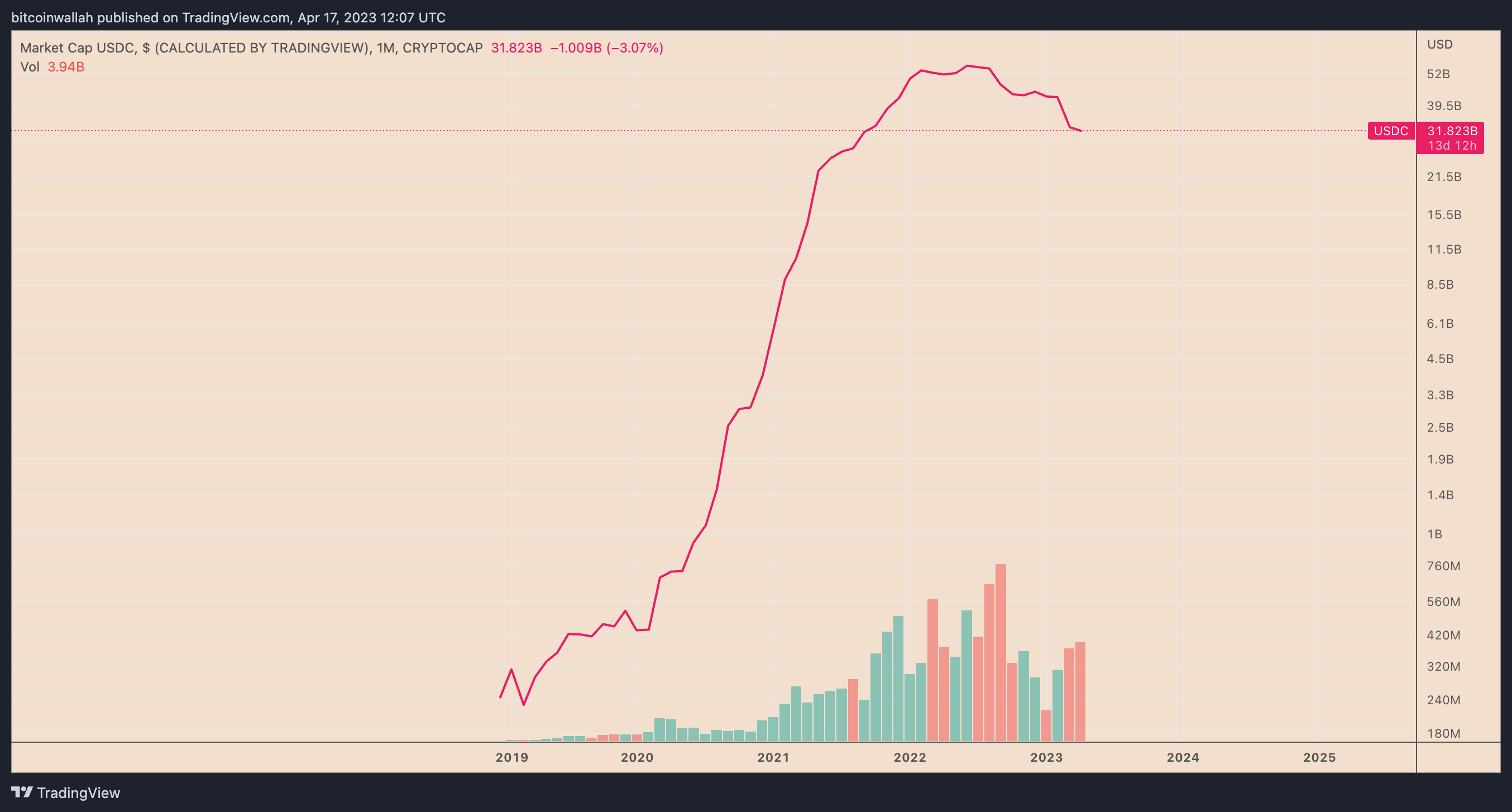 USDC market capitalization monthly chart. Source: TradingView
BUSD, in contrast, has experienced a 60% decline in market capitalization in 2023, now standing at $6.68 billion, its lowest level since April 2021, following an order from the New York Department of Financial Services (NYDFS) for Paxos, a regional crypto entity, to cease its minting and issuance activities.
Additionally, the U.S. Securities and Exchange Commission (SEC) claims that BUSD qualifies as a “security,” while the U.S. Commodity Futures Trading Commission (CFTC) contends that the stablecoin is a “commodity.”
Related Posts
This shift in capital likely contributed to Tether’s dominance exceeding 65% in the global stablecoin market for the first time since May 2021, as per data from Glassnode.
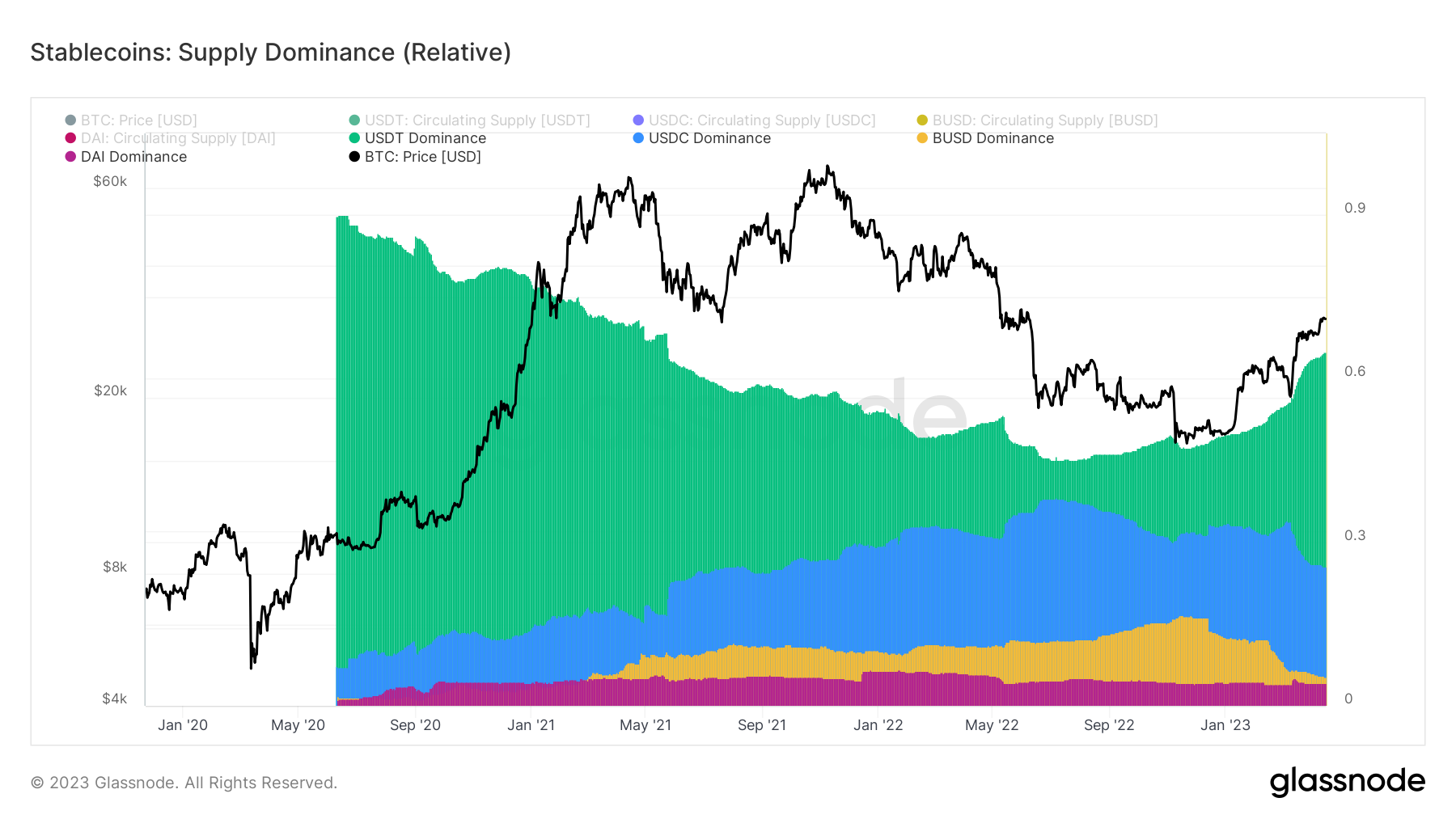 Stablecoin supply dominance. Source: Glassnode
On April 16, the U.S. House Financial Services Committee released a draft of its proposed stablecoin legislation aimed at establishing definitions for issuers. It indicates that non-U.S. companies like Tether must register if they serve American customers, although it does not specify which agency would oversee stablecoin regulation.
Exchange stablecoin supply at its lowest since June 2021
Despite the increase in Tether’s market capitalization, its supply on cryptocurrency exchanges has been decreasing in 2023.
Related: BTC price heading under $30K? 5 things to know in Bitcoin this week
As of April 16, cryptocurrency exchanges held 12.94 billion USDT in their reserves, down from 17.89 billion USDT at the start of the year. Overall, the stablecoin supply across exchanges has fallen by 42% YTD to $21.53 billion.
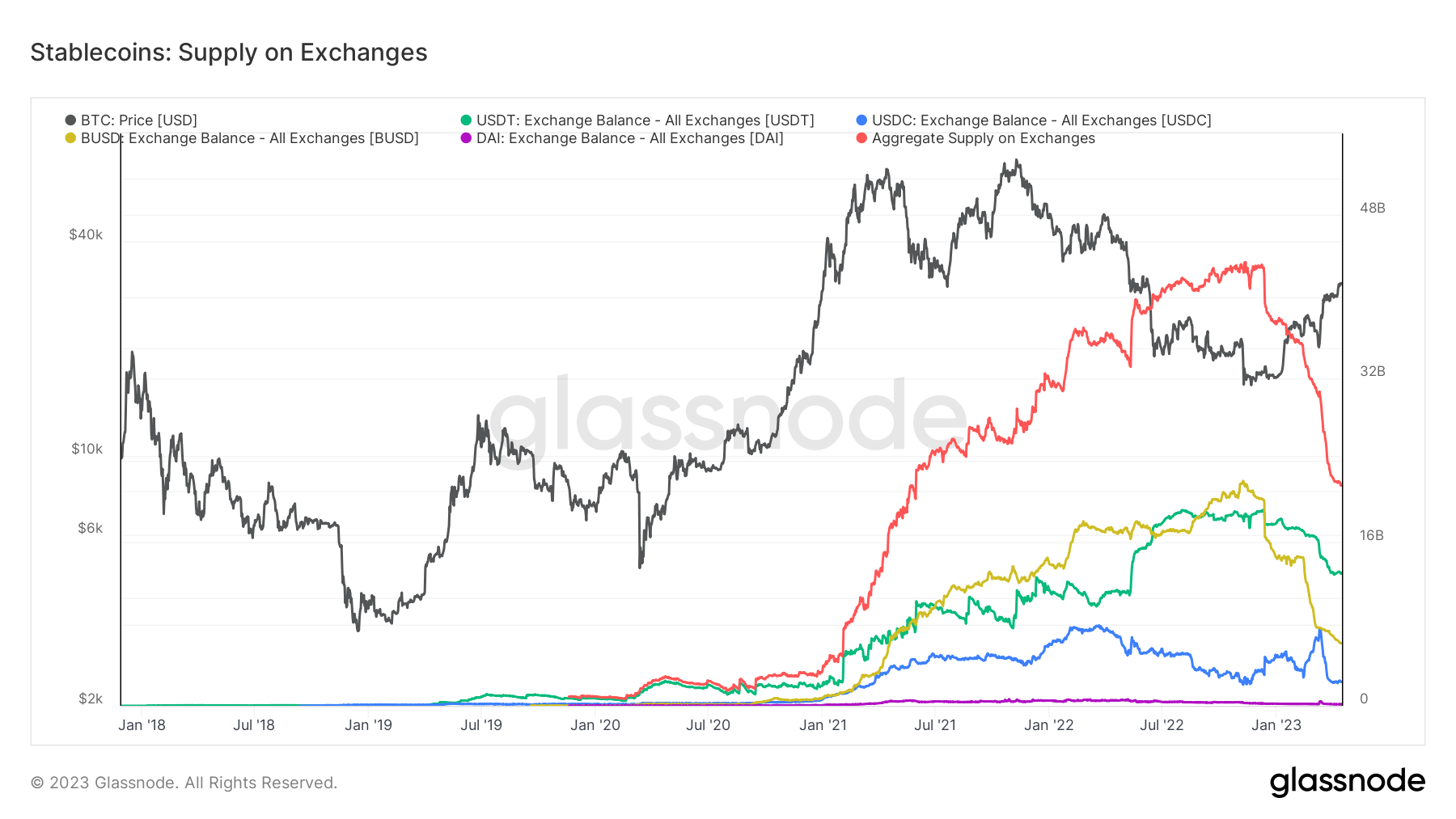 Stablecoin supply across exchanges. Source: Glassnode
This trend aligns with the 21% YTD rise in the valuation of the crypto market, increasing from $1 trillion in January to $1.21 trillion, indicating a shift in Q1 from “safe” stablecoins to risk-oriented cryptocurrencies.
This article does not provide investment advice or recommendations. All investment and trading activities carry risks, and readers should perform their own research before making decisions.
