Disclaimer: Information found on CryptoreNews is those of writers quoted. It does not represent the opinions of CryptoreNews on whether to sell, buy or hold any investments. You are advised to conduct your own research before making any investment decisions. Use provided information at your own risk.
CryptoreNews covers fintech, blockchain and Bitcoin bringing you the latest crypto news and analyses on the future of money.


Ethereum’s long-awaited Shanghai and Capella upgrade was launched on April 12, with total withdrawals reaching 142,425 ETH in the first 40 hours post-upgrade, according to data from Nansen. This aligns with prior forecasts.
For a brief period on April 12, at the time of Shapella’s activation, deposits into ETH staking contracts surpassed withdrawals. However, as of April 13, deposit activity has diminished while withdrawals continue robustly.
ETH moved for withdrawals
Validators must update their staking software clients with withdrawal credentials switched to 0x01 from 0x00 and direct them to a valid Ethereum address. Once this is accomplished, partial withdrawals, specifically those exceeding 32 ETH, will be processed automatically.
More than 70.1% of validators have transitioned to 0x01, with 407,851.20 ETH valued at over $850 million queued for withdrawal.
In addition, 875,325 ETH, amounting to $1.85 billion, is pending for a full exit. Including the amount already processed in the initial 40 hours, over 1.42 million ETH will be withdrawn from the staking contract.
ETH withdrawals will be limited to 1,800 validators daily, equating to a daily withdrawal of 57,600 ETH based on 32 ETH per validator. With 875,325 ETH awaiting full exit, this corresponds to potential daily selling pressure of around $120 million.
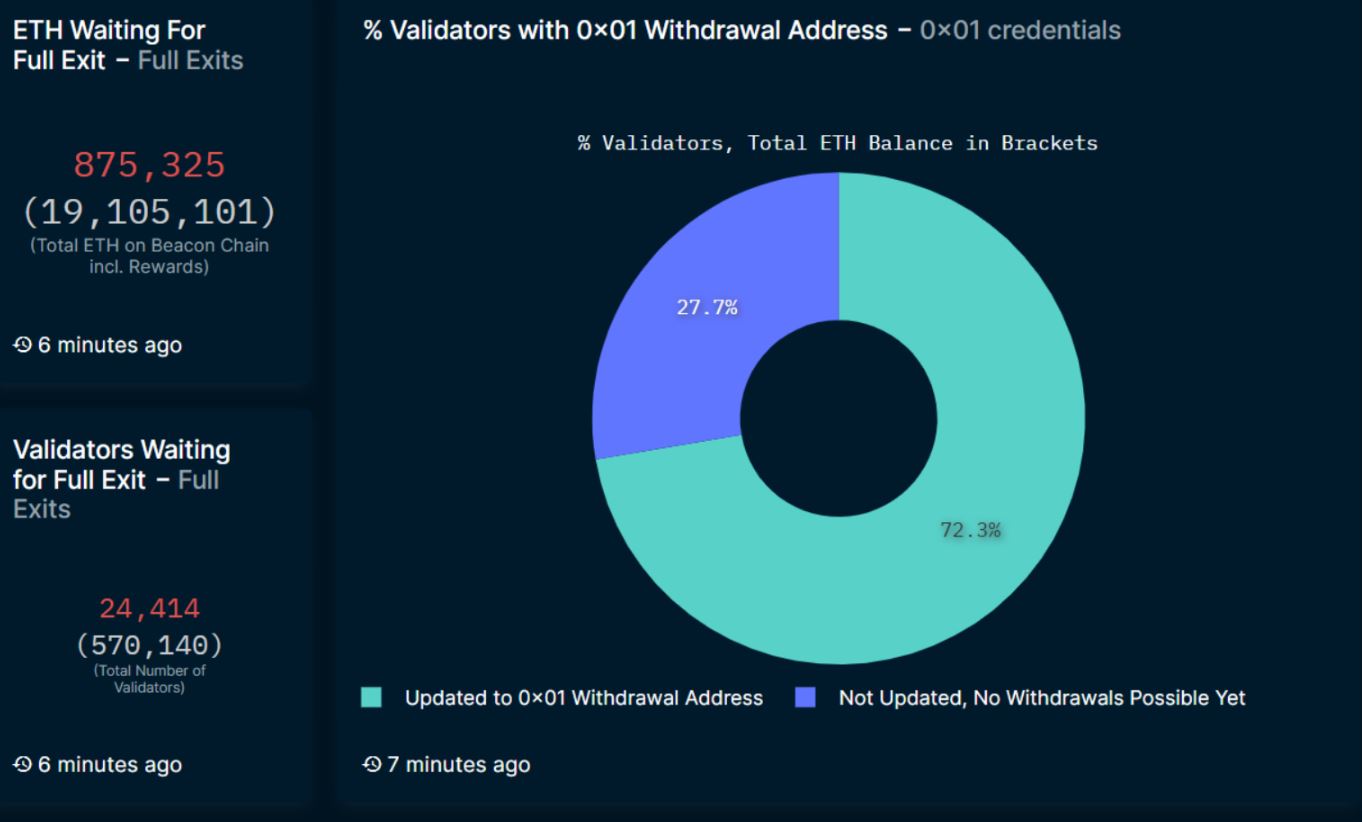
During the first three days, when partial withdrawals are also processed, the total daily withdrawals will range between 136,000 and 173,000 Ether per day.
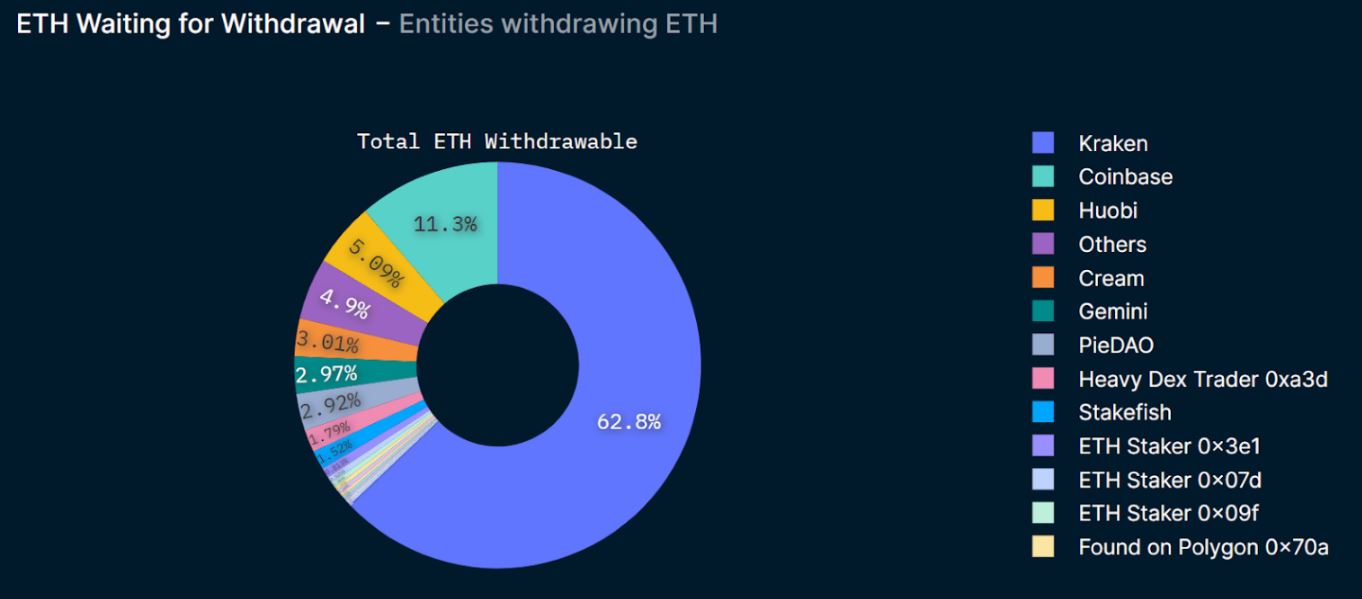
However, these figures should be interpreted cautiously, as 62.8% consist of mandatory withdrawals from the U.S.-based cryptocurrency exchange Kraken, following a $30 million settlement with the U.S. Securities Exchange Commission to cease staking services.
There is a possibility that a considerable segment of Kraken withdrawals may transition to decentralized liquid staking platforms (LSD) such as Lido, Frax, and Rocket Pool rather than being sold on the open market.
Related Posts
Interestingly, Lido has accounted for 56.07% of the withdrawals processed thus far, which raises some concerns, as prior estimates indicated that withdrawals from liquid staking derivative (LSD) platforms like Lido would be minimal.
Currently, 9.6 million staked ETH is generating profits, making it more susceptible to a sell-off. It remains uncertain whether additional illiquid stakers will opt to withdraw their ETH, with over 34% of the total 17.4 million deposited by them.
Ethereum price analysis
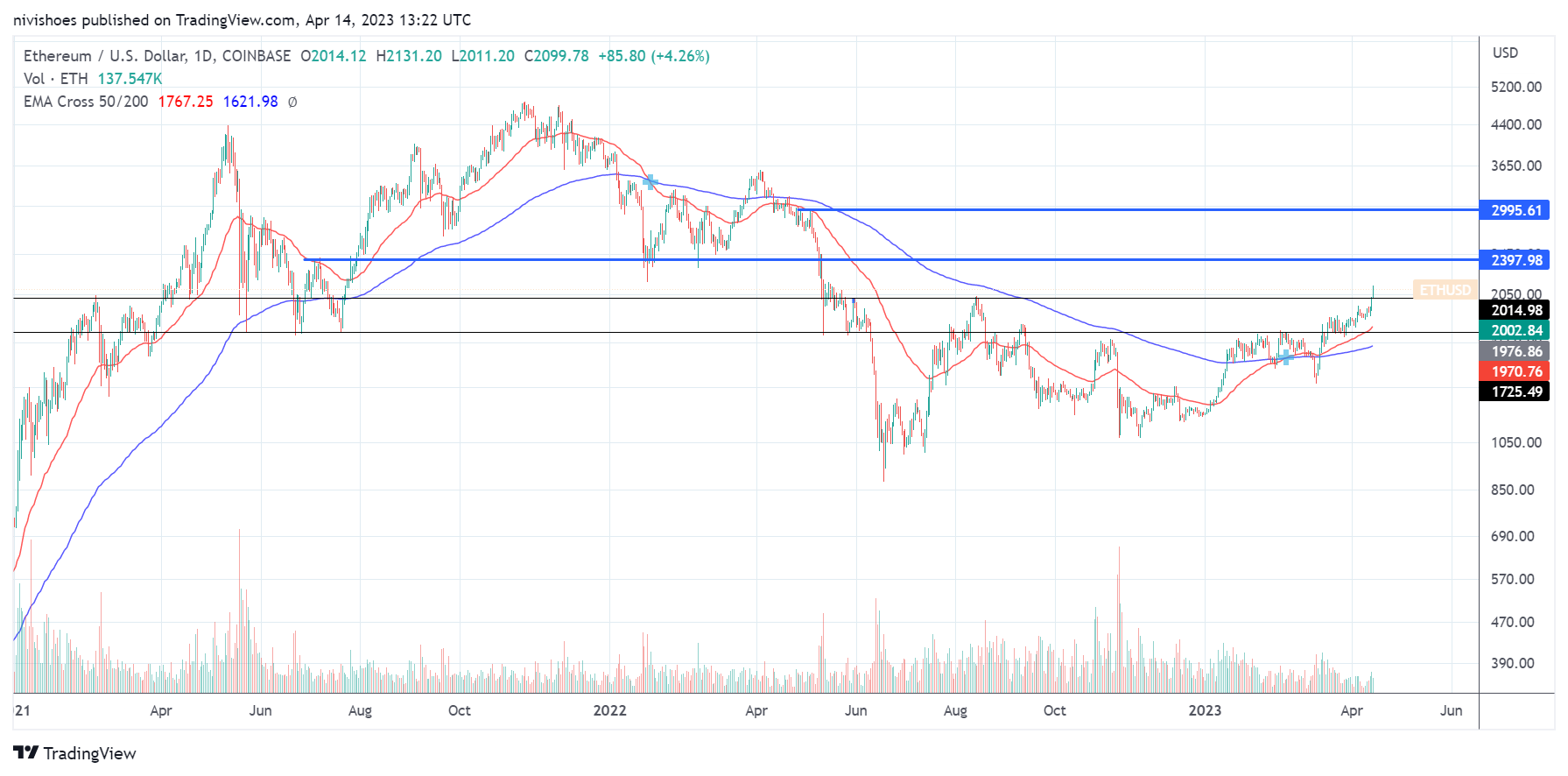
From a technical standpoint, the ETH/USD pair appears bullish, having surpassed the $2,000 resistance level. Buyers are likely to target the support and resistance levels around $2,300 and the May 2022 breakdown levels at approximately $2,900. Immediate support to the downside is around $1,725.
Related: Shapella could attract institutional investors to Ethereum despite risks
Funding rates for ETH perpetual contracts are currently in a neutral zone, following the price surge, according to Coinglass data. Typically, a neutral position in the perpetual market after a substantial price rise indicates that traders are not yet enthusiastic about the current rally, which is seen through a spike in positive funding rates. This also provides additional room for price appreciation.
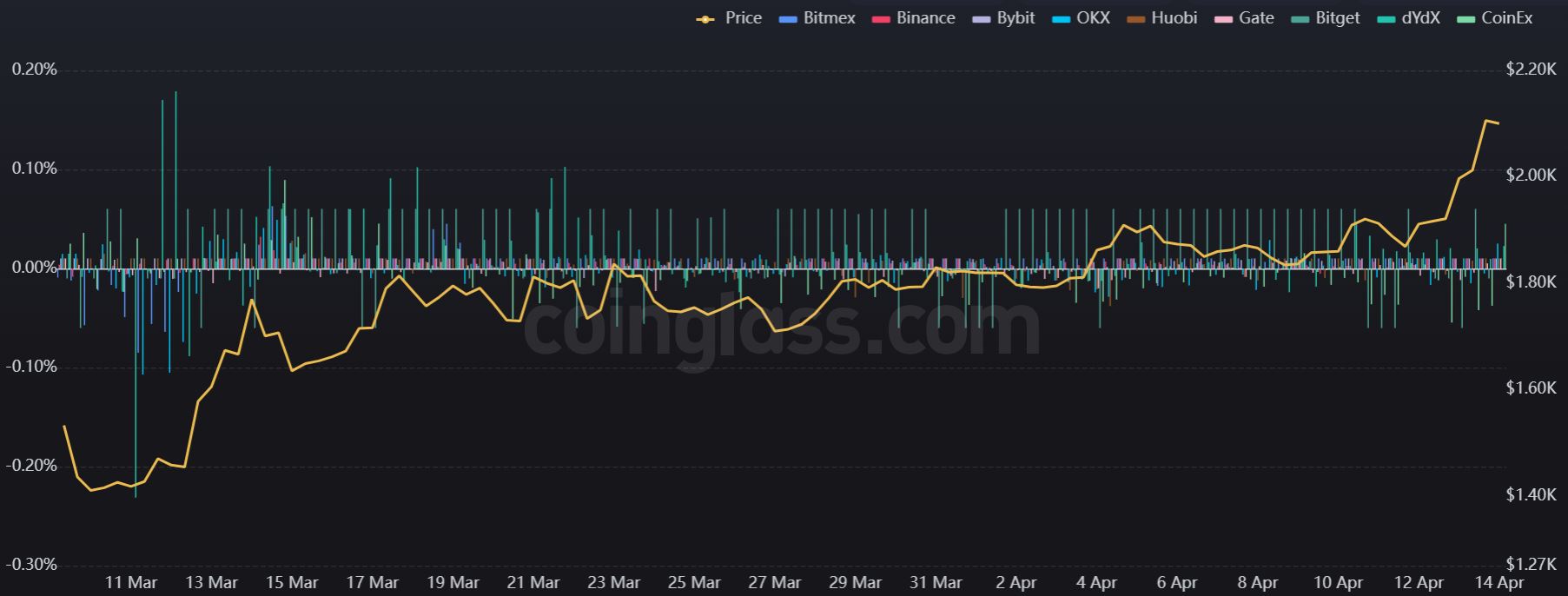
Nonetheless, given potential spot selling pressure from ETH withdrawals, it may likely hinder the upward trend in the market.
The views, thoughts, and opinions expressed here are solely those of the authors and do not necessarily reflect or represent the views and opinions of Cointelegraph.
This article does not offer investment advice or recommendations. Every investment and trading decision carries risk, and readers should conduct their own research when making decisions.
