Disclaimer: Information found on CryptoreNews is those of writers quoted. It does not represent the opinions of CryptoreNews on whether to sell, buy or hold any investments. You are advised to conduct your own research before making any investment decisions. Use provided information at your own risk.
CryptoreNews covers fintech, blockchain and Bitcoin bringing you the latest crypto news and analyses on the future of money.


Brazilian legislators are advancing a bill that would increase taxes on cryptocurrencies held abroad. As per local reports, a congressional committee has sanctioned amendments to a proposal that classifies cryptocurrencies as "financial assets" for taxation related to foreign investments.
Furthermore, the proposed legislation imposes taxes on profits derived from variations in crypto asset values against Brazil’s fiat currency, in addition to fluctuations in foreign exchange rates. Congressman Merlong Solano stated that the amendment aims to ensure equitable tax treatment, as crypto investments overseas currently benefit from lower tax incentives.
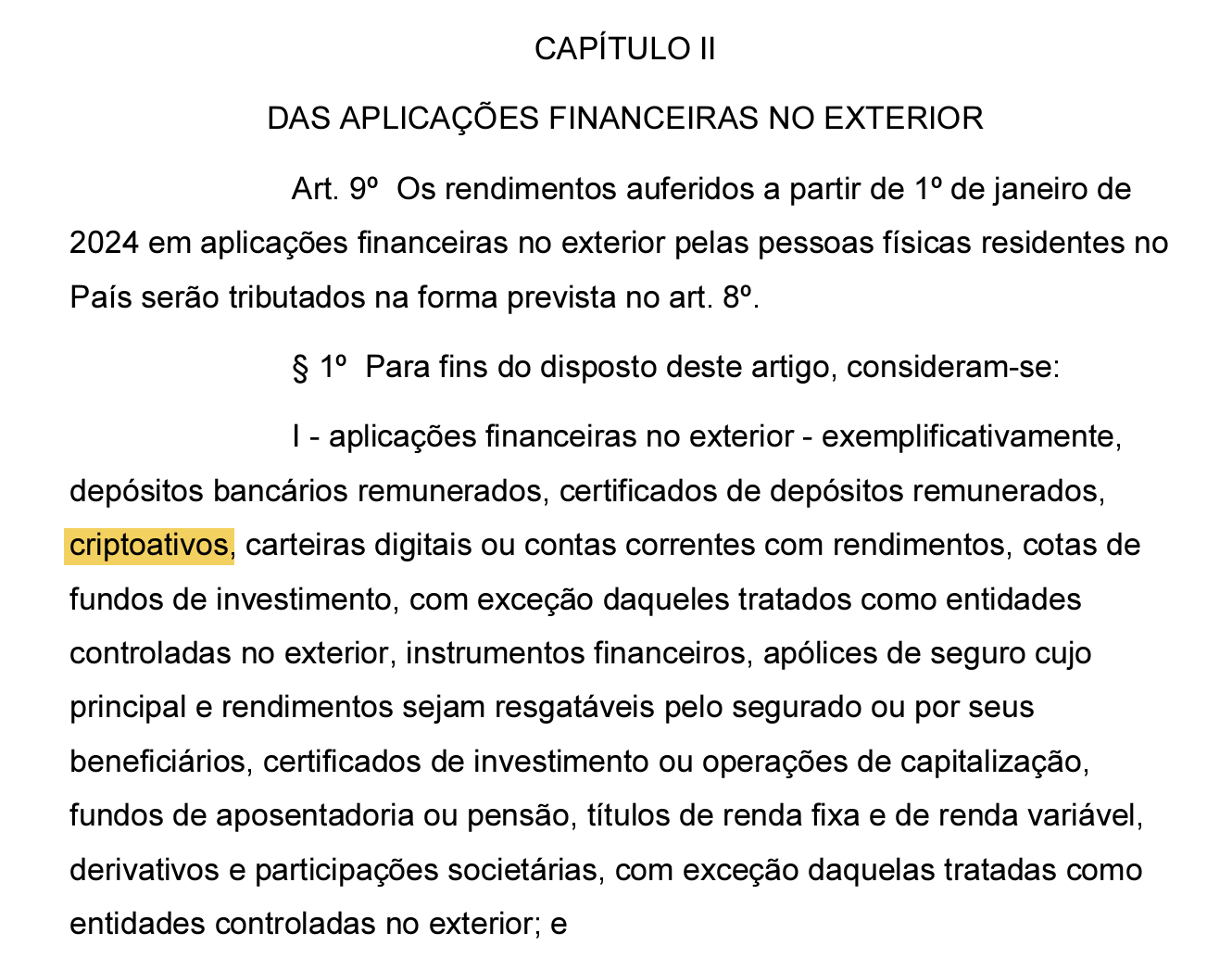 The proposed law subjects crypto assets owned by Brazilians abroad to the same tax regulations as conventional assets.
Under the new provisions, overseas earnings up to 6,000 Brazilian reais (~$1,200) will be exempt from taxes. Earnings ranging from 6,000 to 50,000 (~$10,000) will incur a tax rate of 15%. For amounts exceeding this limit, a tax rate of 22.5% will be applied.
Related Posts
The legislation specifies that these changes will only affect cryptocurrency exchanges that do not have offices in Brazil. Legal experts noted that the new regulations could render local exchanges a more economical option for certain investors, particularly those with profits exceeding the highest tax bracket. Additionally, the law may enhance crypto exchange activity domestically and entice foreign entities to set up offices in Brazil.
Several international crypto exchanges operate within the country, including Binance, Coinbase, Bitso, and Crypto.com, alongside local firms such as Mercado Bitcoin and Foxbit.
Brazil’s Congress is scheduled to vote on the bill on Aug. 28. If passed, the new tax measures will come into effect in January 2024.
In recent months, Brazil has experienced significant growth in crypto-related activities. The nation’s central bank has recently unveiled a rebranding of its central bank digital currency (CBDC), now referred to as Drex. As part of the Drex rollout, the central bank intends to implement a tokenization system designed to enhance business access to capital.
Magazine: Should you ‘orange pill’ children? The case for Bitcoin kids books
