Disclaimer: Information found on CryptoreNews is those of writers quoted. It does not represent the opinions of CryptoreNews on whether to sell, buy or hold any investments. You are advised to conduct your own research before making any investment decisions. Use provided information at your own risk.
CryptoreNews covers fintech, blockchain and Bitcoin bringing you the latest crypto news and analyses on the future of money.


The 90-day price volatility for Bitcoin (BTC) and Ether (ETH) reached a new multi-year low in August as the leading two cryptocurrencies remain below their significant resistance levels of $30,000 and $2,000, respectively.
As per information provided by crypto analytics firm Kaiko, the 90-day volatility for BTC and ETH registered at 35% and 37%, respectively, making them less volatile than oil, which has a volatility of 41%. This reduction in price momentum for these top two crypto assets was previously observed in 2016.
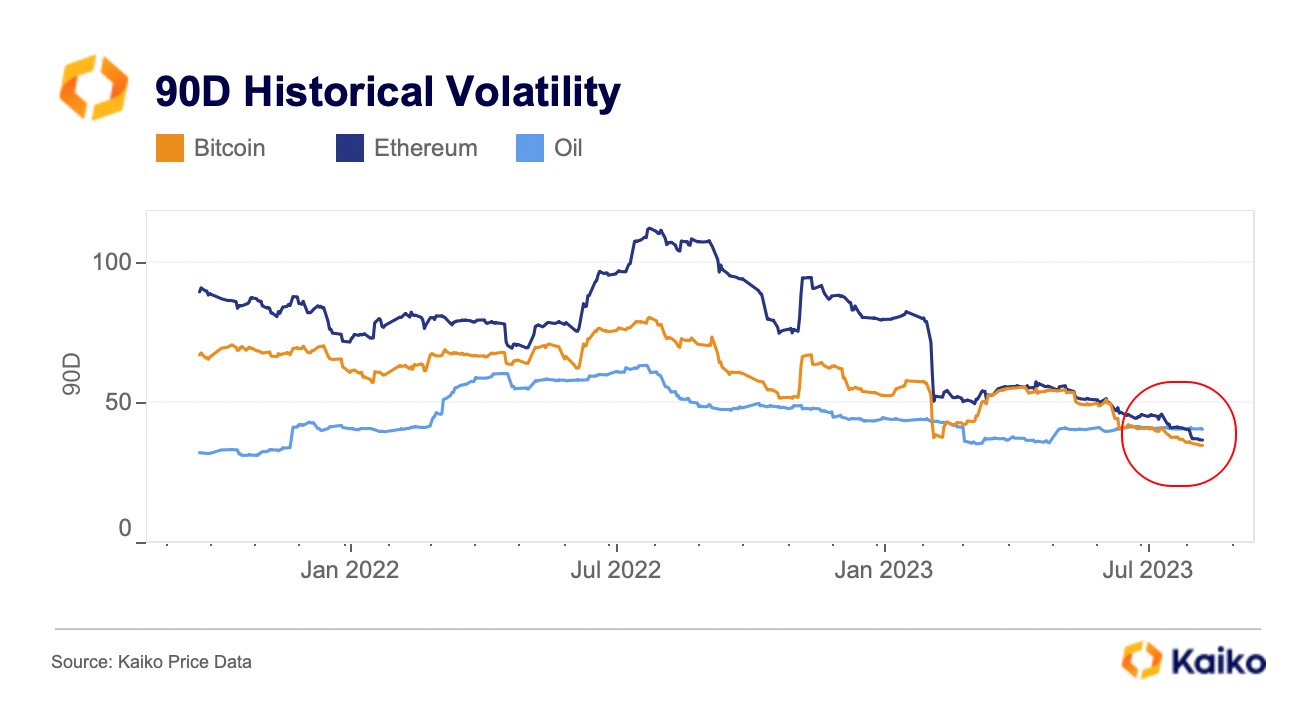
The above chart illustrates that the price volatility of BTC and ETH is less than half of what it was at the same point last year. While August is typically viewed as a positive month for the crypto market, many interpret the diminishing price fluctuations as a bullish sign.
In addition to the 90-day volatility being at its lowest in seven years, Bitcoin’s daily volatility is also at a five-year low.
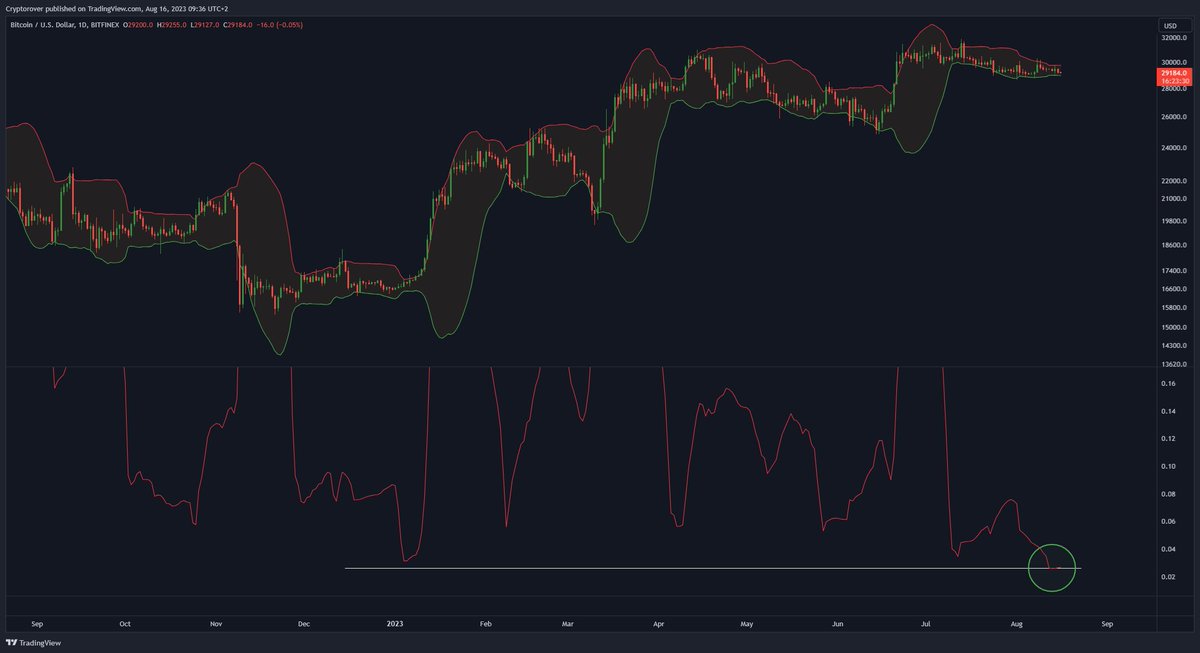
A Bitcoin technical analyst known on social media as “CryptoCon” took to the X platform to share insights regarding the decline in Bitcoin’s price volatility and the potential outcomes following such a period of low volatility.
Related Posts
Related: Bitcoin speculators now own the least BTC since $69K all-time highs
The technical analyst observed that Bitcoin experienced a comparable cycle of low price volatility in 2020 prior to the onset of a bull market; however, they cautioned against the sideways movement of the leading cryptocurrency.
#Bitcoin volatility continues to decrease, which I've shown is bullish
But the burning question is, when does the sideways grind end?
Upon reflecting on this, I was reminded of a time very similar to now… pic.twitter.com/psO50vxUWD— CryptoCon (@CryptoCon_) August 16, 2023
The analyst remarked that despite the Black Swan event of 2020, when BTC’s price plummeted over 50% in a single day below $5,000, Bitcoin rebounded the following month. However, when BTC approached the $10,000 level, the momentum dissipated, leading to another phase of very low volatility. After three months of subdued volatility, BTC’s price eventually broke out and reached new highs before encountering resistance once more and entering a sideways trend.
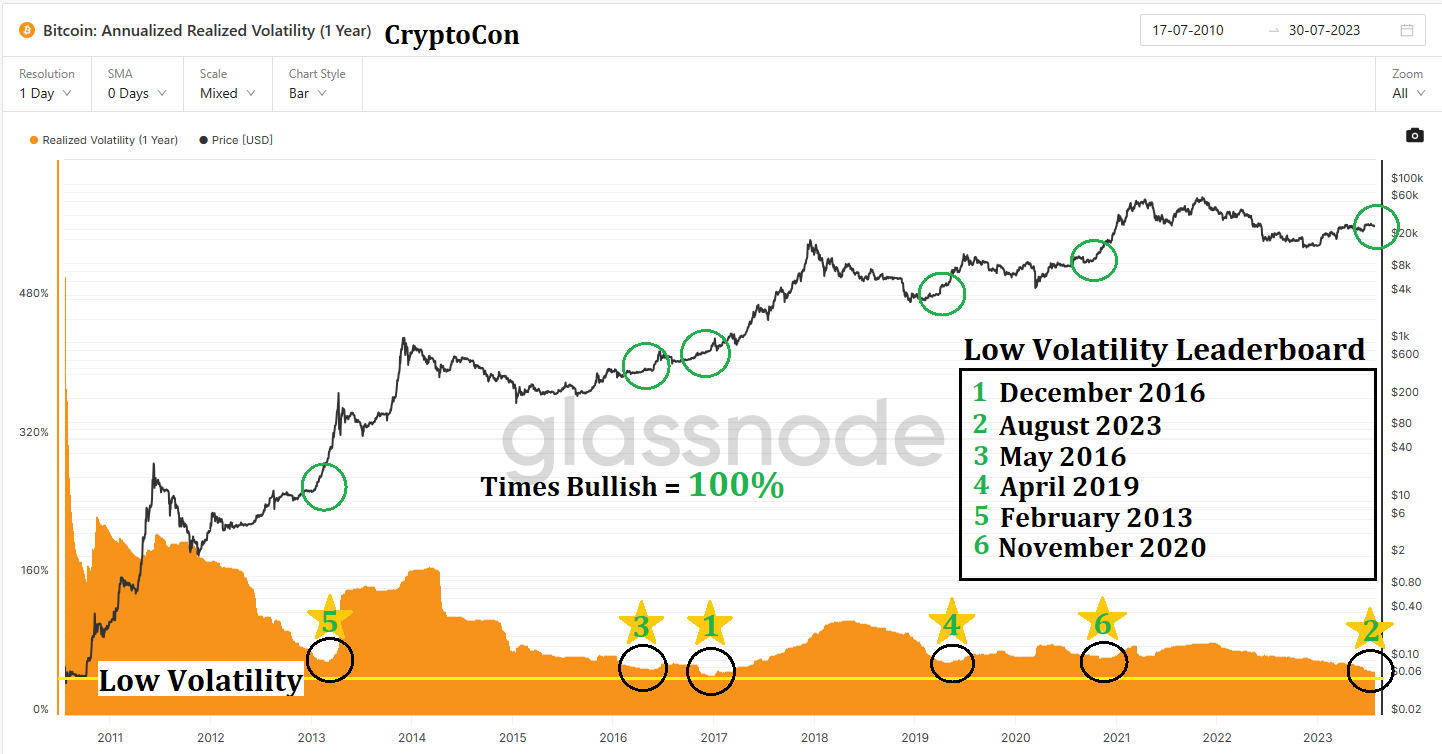
The analyst concluded that Bitcoin’s price tends to rise after a period of low volatility, creating an initial high, followed by a second high, with a third occurring against significant resistance. CryptoCon concluded that each notable period of low volatility for BTC is typically succeeded by a substantial move.
Magazine: Deposit risk: What do crypto exchanges really do with your money?
